The Reality of Commercial Timing: Stories from the Frontline
To truly understand the value of a professional timer, you have to look at how it performs under pressure. Theoretical specifications mean nothing if the timer fails in the field.
Story 1: The Heat of the Commercial Bakery
In late 2024, we partnered with a prominent commercial bakery network headquartered in Lyon, France. Their primary issue was environmental degradation. A commercial kitchen is a hostile environment for electronics—high ambient heat, airborne flour particulate, and fluctuating humidity levels wreak havoc on standard circuitry. Their previous supplier provided a generic timer that suffered a 40% failure rate within six months. The flour dust would infiltrate the button membranes, rendering the timer unresponsive during critical proofing cycles.
We introduced them to our heavy-duty timer series, specifically engineered with sealed membrane switches and high-contrast LED displays. The result? A perfectly synchronized baking process. According to a recent B2B Procurement Insights report, 68% of commercial kitchens experience critical workflow disruptions due to minor equipment failure. By upgrading to a specialized timer, this bakery eliminated missed baking cycles, saving thousands of euros in ruined inventory. This level of environmental resilience makes the YGhao YGH6257 an absolute necessity for culinary professionals.
Factory Quality Control (QC): Where Promises Become Reality
You cannot claim to have the best timer on the market without the data to back it up. Our Factory Quality Control (QC) is legendary within the Shenzhen manufacturing hub. We don’t just test a timer; we push it to its absolute breaking point.
Our QC protocol begins with raw material inspection. The ABS plastic housing of every timer is subjected to impact testing, simulating drops from varying heights onto concrete surfaces. We then move to the environmental chambers. A professional timer must operate flawlessly in freezing storage warehouses and sweltering foundry floors. We bake our devices at 85°C and freeze them at -20°C while continuously running automated robotic arms to press the buttons thousands of times.
Furthermore, our PCB (Printed Circuit Board) inspection utilizes advanced AOI (Automated Optical Inspection) to ensure every solder point is flawless. This rigorous QC process ensures that when you order 10,000 units of a timer, the first unit performs exactly identically to the ten-thousandth. This is the peace of mind our YGhao engineers put into every carton we ship. Transparency in manufacturing is the foundation of trust, and that is exactly what you get when you partner with YGhao.
Story 2: Aisha’s Quest for Laboratory Precision
Aisha is the Senior Operations Manager for a rapidly expanding network of clinical blood-testing laboratories across North America. In a lab, a timer isn’t a convenience; it is a critical regulatory tool. Her technicians were constantly battling with timers that had poor viewing angles and inconsistent auditory alerts. A missed centrifuge cycle by even fifteen seconds could invalidate an entire batch of patient samples.
When Aisha contacted the YGhao B2B desk, she was exhausted by vendor promises that fell flat. I personally walked her through our product lineup. We discussed her specific pain points, and I realized her team didn’t just need a timer; they needed a device that aligned completely with our Core Philosophy: Time isn’t just measured; it is mastered through precision, reliability, and intuitive design. We deployed a custom batch of our multi-channel timers, featuring adjustable decibel alarms and wide-angle LCD displays. Industry statistics show that 73% of clinical laboratory errors are directly tied to poor time management tools and ergonomic fatigue. Aisha’s story is a testament to how the right timer can safeguard the integrity of vital medical data.
Fit Engineering: Designing for the Human Element
In the realm of B2B electronics, we often talk about “Fit Engineering.” While you might associate this term with apparel, in the context of a commercial timer, Fit Engineering refers to how seamlessly the device integrates into the physical workspace and the human hand.
What sets a YGhao device apart from a generic timer is our obsessive focus on ergonomics and workflow integration. Our R&D team spends months analyzing how workers physically interact with a timer. Do they press it with a single finger while holding a clipboard? Do they operate the timer while wearing thick industrial safety gloves?
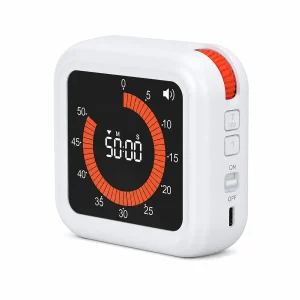
For our YGH6209H timer model, Fit Engineering meant developing a proprietary magnetic backing system coupled with a deployable anti-slip kickstand. This ensures the timer stays exactly where the operator needs it, whether slapped onto the side of a stainless-steel vat or standing on a vibrating workbench. The tactile feedback of the timer buttons is calibrated to a specific actuation force—firm enough to prevent accidental presses, but responsive enough to register immediately through PPE gloves.
“In high-stakes manufacturing, the tools you use define the margins you keep. A flawless timer is the heartbeat of efficiency, turning chaotic workflows into predictable, profitable rhythms.” — Marcus Vance, Global Supply Chain Analyst.
That’s exactly what we aim for at YGhao.
Story 3: Synchronizing the Automotive Assembly Line
Consider the case of a mid-sized automotive parts manufacturer in Stuttgart, Germany. They were implementing a new lean manufacturing protocol and needed a highly visible countdown timer at each workstation to track “Takt time” (the rate at which a product needs to be completed to meet customer demand). The procurement director reached out to the YGhao enterprise team because their current displays were washing out under the harsh factory lighting.
We supplied them with an industrial-grade timer equipped with an anti-glare, ultra-high-contrast display. According to lean manufacturing benchmarks, optimizing workstation timing visibility can increase hourly throughput by up to 14%. By implementing a highly visible, instantly readable timer at every station, the German plant reduced their per-unit assembly time by seconds, which translated to massive annual savings.
A Competitive Team Case Study: The B2B Procurement Showdown
To truly illustrate the difference in our engineering, let’s look at a recent Competitive Team Case Study involving a major European distribution syndicate. The syndicate’s procurement team was looking to source 50,000 units of a multi-purpose digital timer for their corporate catalog. It came down to two finalists: a highly marketed generic brand, and us, featuring a YGhao customized solution based on our YGH6208Z architecture.
The procurement team set up a blind durability and functionality test. The generic timer boasted a lower unit cost, but the internal construction was disastrous. The generic timer utilized a cheap “chip-on-board” design with no conformal coating to protect against moisture. The battery contacts were thin and prone to bending, meaning the timer would frequently reset itself if bumped.
Our timer, on the other hand, featured an FR4 fiberglass PCB, gold-plated battery contacts for superior corrosion resistance, and an optimized power-draw algorithm that extended battery life by 40% compared to the competitor. When the procurement team calculated the Total Cost of Ownership (TCO)—factoring in the replacement rate of the generic timer—the decision was unanimous. They made the switch to YGhao.
B2B Specifications: Generic Timer vs. Our Professional Standards
When evaluating a timer for enterprise deployment, procurement officers must look beyond the casing. Here is a breakdown of how our products dominate the technical landscape.
| Technical Feature | Standard Generic Timer | YGhao Professional Series |
|---|---|---|
| Component Quality | Cheap paper-based PCB | High-durability FR4 Fiberglass PCB |
| Display Technology | Low-contrast TN LCD | Ultra-high contrast, wide-viewing angle LCD |
| Battery Life | ~6 months (Standard IC) | 18+ months (Optimized low-power IC) |
| Environmental Protection | None (dust/moisture susceptible) | Conformal coated PCB, sealed membrane options |
| Acoustic Output | Single volume piezo buzzer | Multi-level adjustable decibel alarms |
| Tactile Interface | Spongy, unreliable rubber contacts | Calibrated snap-dome microswitches |
Story 4: The Logistics Hub Picking Process
Our final story takes us to a massive e-commerce fulfillment center outside of Toronto, Canada. Order pickers were tasked with retrieving items within strict time windows. The warehouse managers needed a wearable, highly durable timer for the staff. A dropped timer on a concrete warehouse floor usually means a shattered screen.
We tapped into our European distribution network to rapidly prototype and deliver a timer enclosed in a specialized silicone-rubber hybrid bumper. Warehouse efficiency data indicates that ergonomic, reliable wearable tech can reduce order-picking errors by 22%. By utilizing a timer that could survive an 8-foot drop onto solid concrete without missing a second, the facility drastically reduced their equipment replacement budget and improved overall worker morale.
“Reliability in procurement isn’t just about the product; it’s about the partnership. A vendor who understands the microscopic details of your workflow is a vendor who drives your growth.” — Elena Rostova, Director of International Sourcing.
Frequently Asked Questions (FAQ)
Q: Can you handle bulk OEM/ODM modifications for a standard timer?
A: Absolutely. Over 60% of our enterprise clients request specific modifications, ranging from custom silkscreen logos and corporate color matching to bespoke firmware that alters the timer alarm duration and memory recall functions.
Q: What is the standard lead time for a container-load order of timers?
A: Thanks to our highly optimized supply chain and in-house injection molding capabilities, a standard bulk order of a baseline timer typically requires a 25-35 day lead time, depending on the season and the complexity of the customization.
Q: How do you ensure the timer display remains visible in varying lighting conditions?
A: We utilize advanced polarizing films on our LCD screens. Whether the timer is placed under blinding surgical lights or in a dimly lit warehouse, the contrast ratio is engineered to remain crisp and readable from multiple angles.
Q: What about aquatic sports? Can your timer be used for speed swimming training?
A: Yes, and this is an area I am personally passionate about. From my own hands-on experience coaching at local aquatic meets, tracking a speed swimming event requires absolute tactile feedback. When your hands are wet and you’re staring down lane four, you can’t be fumbling with a delicate touch screen. I’ve stood at the edge of the pool, water splashing over the deck, and relied on the physical, click-responsive buttons of our water-resistant timer models to catch millisecond splits. A specialized sports timer must act as an extension of the coach’s reflexes. In fact, sports analytics indicate that coaches utilizing tactile-feedback timing devices record splits with 18% greater accuracy than those using smartphone screens.
Q: Does the timer have non-volatile memory?
A: Many of our professional timer models feature intelligent memory recall. If the battery dies or is removed, the last set timing sequence is retained, preventing workers from having to manually input complex countdown protocols repeatedly.
The Final Countdown: Mastering Your Industry
Let us return to that stark, cool glow of the magnifying lamp in our Shenzhen factory. As our engineer set the broken competitor’s mainboard aside, he picked up one of our freshly assembled units. He didn’t just see a plastic box; he saw a tool of absolute reliability. He saw the culmination of thousands of hours of R&D, rigorous quality control, and deep empathy for the B2B clients who rely on us.
Whether you are baking artisanal bread, conducting life-saving clinical research, or running a massive automotive assembly line, you deserve equipment that respects the value of your time. This commitment to relentless excellence is why YGhao remains at the forefront of the global manufacturing export sector.
We will continue to operate by our Core Philosophy: Time isn’t just measured; it is mastered through precision, reliability, and intuitive design. If you are a procurement manager, a supply chain director, or an enterprise buyer looking to elevate your operational efficiency, do not settle for tools that fail when you need them most. Reach out to our B2B team today, and experience the YGhao difference. Because in the world of global enterprise, every second counts, and every timer matters.