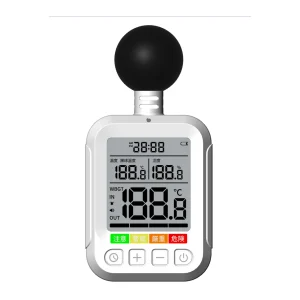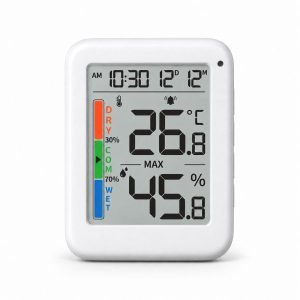
Accelerating Market Entry with Validated Custom Digital Hygrometer ODM Enclosures
The 180-Day Tooling Trap: Why Catalog Environmental Sensors Fall Short

A clean-room approach to enclosure design balances physical air-convection requirements with rapid prototype iterations.
The 15% field failure rate on a custom digital hygrometer order usually shows up about three months after delivery, typically when generic catalog environmental sensors are deployed in high-humidity agricultural greenhouses or cold-chain transit. These cheap off-the-shelf enclosures look fine on a datasheet, but they fall short under continuous exposure. Without dedicated air-chamber ventilation, stagnant, humid air pools around the active element, while low-grade silicone seals outgas compounds that steadily poison the capacitive sensing structure. The result is a slow drift in accuracy that turns into a wave of warranty claims, leaving B2B distributors holding the bill for field replacements.
The standard reaction is to escape catalog-part vulnerabilities by designing a proprietary enclosure from scratch, but this triggers the classic Day Tooling Trap. Designing, testing, and machining steel injection molds for a unique housing takes at least 180 days and demands significant upfront engineering fees—costs that are difficult to amortize on lower-volume industrial runs. This six-month delay frequently causes distributors to miss critical seasonal purchasing windows. Buyers do not have to choose between the reliability risks of cheap catalog sensors and the commercial paralysis of custom steel tooling.
A hybrid ODM approach bypasses these bottlenecks by using pre-validated internal layouts wrapped in an adaptable, pre-certified housing platform. YGhao’s ODM architecture allows buyers to specify modifications only to the cosmetic top-case layer, faceplate, and branding elements without altering the underlying electronics or the pre-tested sensor chamber. This shifts the timeline from a 180-day development gamble to a predictable 30-day custom configuration that is already 90% engineered before the PO is signed. The rule of thumb for seasonal rollouts is simple: never pay to cut custom steel molds if you can secure an exclusive market look by modifying the outer cosmetic layer of an existing, pre-compliant sensor platform.
ODM Platform Architectures: Evaluating Display Tech, Housing Resins, and Thermal Isolation

Thermal isolation routing on the PCB level is critical to prevent internal sensor self-heating drift.
Which housing resins and display layouts actually prevent measurement drift in a custom digital hygrometer?
Selecting an ODM platform is a balance between a strict power budget and real-world physical survival. While a sensor datasheet boasts perfect nominal accuracy, real-world field performance is governed by structural design—specifically how the enclosure handles external chemical exposure and how internal PCB traces isolate processing heat from the sensor element. In this review of Platform Architectures, we compare how housing resins, displays, and thermal barriers interact under stress.
| Target Application | Core Decision Factors | Optimal Physical Fit | Primary Operational Risks | Engineering Verdict |
|---|---|---|---|---|
| Chain Logistics | Sub-zero readability, IP67 housing, 5-year battery life | Segmented LCD, UV-stabilized PC, lithium button cell | Display lag at -20°C (and calibration drift outside 20°C), internal condensation | Use static-drive segmented LCDs and milled PCB air-gaps to isolate processing heat. |
| Agricultural Greenhouses | High UV index, corrosive ammonia, spray washdowns | Low-power E-paper, UV-stabilized PC/ABS, LoRaWAN module | Housing degradation, chemical vapors bypassing the sensor membrane | Deploy downward-angled (45°) intake vents to block misting water while maintaining airflow. |
| Clinical Labs | IPA/bleach washdowns, high-res screen, localized wireless | TFT display, medical-grade ABS, BLE/Wi-Fi transceiver | Surface micro-cracking, Wi-Fi thermal output skewing RH readings | Mount the sensor on a separate PCB tongue, physically isolated from the main board. |
Technical Integration
Thermal Drift In small enclosures is almost always self-inflicted. Evaluating Display Tech and choosing ultra-low-power screens helps protect your power budget, but active wireless transceivers (like Wi-Fi drawing up to 120mA during transmission) inevitably warm the surrounding copper ground planes. When mapping out Thermal Isolation How the internal PCB is routed is what actually dictates drift; at YGhao, we enforce physical route-out slots to isolate processing heat from the sensor. For external durability, selecting the right medical-grade Housing Resins determines if the casing will crack during chemical wipe-downs or degrade under constant UV exposure at 20°C and above. As a rule of thumb for your next technical review, if the ODM supplier cannot show you physical routed slots separating the MCU from the sensor chamber on their layout, expect at least 1.5°C of self-heating drift in production.
Adapting the Core ODM Chassis: Environmental Protection Specs for Three Target Sectors
When a QC manager at a cold-chain hub cracks open a refrigerated trailer at 4:00 AM only to find a blank sensor screen, the culprit is rarely the sensor chip. It is almost always an office-grade enclosure forced into a high-condensation cargo bay. Instead of a ground-up redesign that resets the tooling calendar and costs six figures, buyers can modify a pre-validated ODM core. Tailoring these Environmental Protection Specs across Three Target Sectors When deploying units avoids mold fees while meeting operational demands.
Cold-Chain and Food Storage Logistics
In Food Storage Logistics When temperature-sensitive pharmaceuticals or fresh produce shift environments, rapid temperature drops create intense condensation. Standard casings fail when moisture bypasses foam seals and shorts the PCB. Adapting a pre-validated chassis requires IP65-rated silicone gaskets and a hydrophobic PTFE membrane vent. This vent equalizes pressure during temperature transitions—such as moving from freezer to loading dock—without letting liquid water pass. This keeps the core dry while exposing the Swiss sensor directly to the air, maintaining a sub-10-second response time.
Smart Home and Consumer Brands
In the Smart Home sector, the challenge is blending into residential interiors without looking like industrial scrap. We work with Consumer Brands For whom aesthetics are critical, but who make the mistake of commissioning a ground-up design that adds six months of tooling. Instead, we use interchangeable mold inserts to alter the cosmetic shell—adding a custom Pantone color match, matte coating, or integrated magnetic rear mounts. This retains pre-validated internal PCB standoffs and battery contacts, avoiding board re-routing and wireless certification delays.
Medical Laboratories and Cleanrooms
For Medical Laboratories, the priority is data integrity and sterilization-grade durability. Adapting the ODM chassis for this sector involves modifying the MCU firmware to support multi-point calibration data storage on the internal EEPROM, paired with laser-engraving tamper-evident serial numbers directly onto the ABS casing. Because cleanrooms require harsh wipe-downs with isopropyl alcohol, the housing resin is upgraded to medical-grade ABS that resists micro-cracking. Lab operators can swap old sensors during calibration cycles without mounting modifications.
As a rule of thumb for your next sourcing review, never pay for new plastic injection molds unless you are changing the board dimensions; almost every environmental challenge can be resolved via gaskets, firmware, or resin upgrades on a pre-validated chassis.
Sourcing Failures in First-Run Customizations: Mold Errors, Outgassing, and Drift
Field-level measurement failures on custom digital hygrometers are almost always caused by the microclimatic chemistry of the assembled housing, not faulty raw components. While a sensor chip performs flawlessly on an ESD-safe bench, mass assembly introduces thermal, chemical, and mechanical stresses that degrade accuracy the moment the unit is sealed. Mitigating these first-run Sourcing Failures requires moving past idealized component datasheets to enforce physical design rules during prototyping.
If the hand-assembled sample passes our bench test, the high-volume production batch will perform identically.
A prototype hand-soldered by an experienced technician is a showroom piece, not a production forecast. To avoid Run Customizations that fail in the wild, buyers must mandate golden sample acceptance protocols that subject early off-tooling samples to 48-hour thermal stress tests—such as temperature cycling between 20°C and 70°C at 90% RH. At YGhao, we run these pilot thermal profiles before final wave soldering because catching material shifts during tooling saves weeks of rework compared to trying to fix them after thousands of units have been molded.
Any housing design with standard slotted vents provides enough passive airflow for accurate readings.
Stagnant air inside a poorly engineered plastic box traps localized heat and moisture, creating stagnant microclimates that skew relative humidity by up to 10%. Simple slot cutouts on a drawing do not guarantee air movement unless they facilitate actual cross-convection. If the enclosure slots are not aligned with the physical layout of the capacitive membrane, you end up with static boundary layers that trap air, preventing the device from reflecting external environmental changes.
Standard electronics-grade glues and silicones are perfectly safe for sealing the sensor chamber.
Volatile organic compounds evaporating from cheap cyanoacrylate or standard RTV silicones permanently poison capacitive polymer sensors, causing irreversible sensor Drift Field calibration issues. When these adhesives cure inside a sealed housing, they release microscopic outgassing vapors that coat the sensor’s active layer, which destroys its sensitivity. The bill of materials must explicitly mandate low-outgassing polyurethane resins, UV-cured acrylics, or solvent-free technical tapes, keeping the sensor cavity isolated from PCB bonding agents.
Software-based temperature offsets can easily correct Mold Errors or heat generated by internal components.
Auditing the ODM Factory: Verifying Calibration Traceability and Tooling Precision
While a ruggedized housing keeps moisture out, the unit’s core accuracy relies on Verifying Calibration Traceability and Tooling Precision Once high-volume runs begin. Before authorizing tooling capital, a physical walk-through or a documented audit of these four production vectors will show if a supplier is cutting corners.
| Ask | Expected Evidence | Red Flag | Responsible Party |
|---|---|---|---|
| Are calibration chambers multi-point, using certified reference sensors (e.g., ESPEC)? | Live environmental chamber logs mapped to NIST-traceable reference sensors at 10%, 50%, and 90% RH. | Chamber tests run against single-point ambient room air or uncalibrated handheld meters as the baseline. | Factory QA Director or Metrology Lab Engineer |
| Does the factory use 100% virgin polymer resin (e.g., UL94-V0 rated) for the housing? | Inbound material warehouse receipts, raw material certificates, and UL yellow cards matching the injection batch. | Mixing recycled scrap regrinds into the hopper, causing uneven shrinkage, structural weakness, and field warping. | Lead Injection Tooling Engineer and Materials Inspector |
| Does every custom digital hygrometer board undergo automated relative humidity calibration? | ATE system logs showing individual relative humidity calibration offsets written directly to each PCB’s EEPROM. | Batch-sampling (e.g., testing 1 in 100) and applying a static, hardcoded offset to the remaining untested batch. | Production Line Supervisor and Software Engineer |
| What tooling tolerances are held on housing mating surfaces to ensure an IP-rated seal? | Coordinate Measuring Machine verification reports of the first-shot mold and preventative maintenance logs. | Using soft aluminum prototype tooling for high-volume orders instead of hardened steel, causing flash and seal degradation. | Lead Tooling Designer and Mold Maintenance Manager |
A factory that cuts corners on these steps will deliver units that drift out of tolerance within months. At YGhao, we keep our environmental chambers and calibration records fully transparent because precision is not a marketing claim; it is a measurable production metric. If your prospective ODM hesitates to share actual injection logs or multi-point chamber offsets, they are likely passing their testing risks on to your field warranty budget. Before approving tooling capital, request a sample calibration report from our engineering team to set a baseline you can actually enforce.
From Spec Sheet to First Run: Scheduling Prototype Cycles with YGhao
Transitioning From Spec Sheet to First Run is where many custom digital hygrometer projects lose momentum, especially after selecting complex IP67 casings or UV-stabilized housings. Building on a validated ODM chassis bypasses this hurdle, trimming the development of functional PCB-and-housing prototypes down to 15 to 20 business days. Instead of waiting six months to cut custom steel injection tooling, engineers modify pre-existing, pre-compliant core layouts to fit a specific LCD layout or custom connector pin configuration. This accelerated cycle means the procurement and engineering teams are already testing the physical air-circulation geometry and thermal isolation slots in environmental chambers while competitors are still debating CAD files. More importantly, early chamber testing catches the real field killers—like subtle outgassing from internal adhesives or casing resins that can slowly degrade the sensor element and drift calibration over months of exposure.
Once the physical enclosure is verified, scaling up requires locking down a traceably serialized production cycle to manage risk. YGhao addresses this by applying laser-etched serialization to each custom digital hygrometer casing, linking every physical unit to its multi-point calibration log archived in a secure factory database. If an instrument drifts out of tolerance in a harsh cleanroom or agricultural greenhouse, the operator can retrieve calibration log archives and isolate the defect to a specific manufacturing run without halting the entire deployment. To keep the project timeline tight, a direct technical review is the logical path forward. Sending over board footprints and mounting constraints allows YGhao engineering representatives to check mechanical clearances against the 2026 ODM casing catalog, ensuring alignment before officially Scheduling Prototype Cycles.