How to Structure Your PO When You Customize Thermo-hygrometer Runs for Retail Distribution
Why Batch One Costs More Than the Alibaba Listing
(占位段:本节生成未返回可用 markdown — section_v1 call raised: Gemini :generateContent failed HTTP 429: Resource exhausted. Please try again later. Please refer to https://cloud.google.com/vertex-ai/generative-ai/docs/error-code-429 for more details. 请稍后单段重生成或检查 LLM 配置。)
Tying Custom Specs to Hard PO Line Items

Technical upgrades often require layout redesigns, impacting your overall procurement strategy and NRE costs.
How do specific technical upgrades on a thermo-hygrometer actually change the MOQ and tooling costs on your purchase order?
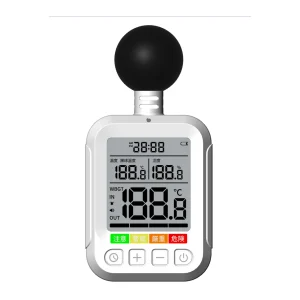
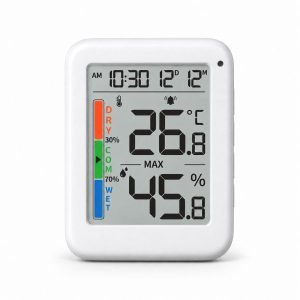
The gap between a standard catalog unit and a custom spec sheet is where most procurement budgets break down. Buyers often assume that swapping a sensor or changing a display type is a simple component upgrade, but these technical shifts usually trigger entirely new line items for non-recurring engineering (NRE). Upgrading from a basic thermistor to a high-precision digital sensor, for example, rarely means just soldering a better chip; it typically forces a complete PCB layout redesign. If the factory has to re-route the board, your lead time resets and your minimum order quantity jumps to cover the new surface-mount technology setup.
| Spec Category | Standard Baseline | Customization Threshold (MOQ) | Cost Impact | PO Sign-off Check |
|---|---|---|---|---|
| Sensor Accuracy | ±0.5°C (Standard NTC) | 3,000+ units for ±0.2°C digital | High (Requires new PCB layout and calibration testing) | Verify NRE fee for PCB redesign is listed separately. |
| Display Type | Segment LCD | 5,000+ units for E-ink | High (Forces new power management and firmware rewrite) | Check lead time penalty for firmware validation. |
| Casing & Color | Factory standard injection | 1,000 for surface paint / 5,000+ for custom mold | Extreme (Mold tooling costs $3k–$10k+) | Confirm tooling ownership clause if paying full mold NRE. |
The display technology is another frequent trap. Moving from a standard segment LCD to an E-ink screen looks like a simple aesthetic choice, but E-ink requires entirely different power management and firmware specs. That change alone can add four weeks to the lead time for validation.
Casing modifications carry the sharpest cost cliffs. A standard color injection uses existing factory molds, but if the design requires custom Pantone surface painting or physical changes to the plastic, the tooling costs spike immediately. When a calibration-trained supplier like YGhao structures this PO, the custom injection mold is isolated as a hard tooling fee rather than amortized into the unit price, ensuring you actually own the mold you paid for.
Do not sign off on a blended unit price that hides these technical thresholds. If the PO does not explicitly separate the firmware setup, PCB redesign, and physical tooling from the raw material cost, the buyer loses the ability to negotiate repeat-order discounts once the initial engineering is paid off.
How the End-User Application Changes the PO
(占位段:本节生成未返回可用 markdown — section_v1 call raised: Gemini :generateContent failed HTTP 429: Resource exhausted. Please try again later. Please refer to https://cloud.google.com/vertex-ai/generative-ai/docs/error-code-429 for more details. 请稍后单段重生成或检查 LLM 配置。)
The “Free Tooling” Trap and Why Repeat Discounts Fail
(占位段:本节生成未返回可用 markdown — 模型返回空的 markdown 或未解析到 JSON;请在本任务 LLM 日志中查看本节 section_v1。 请稍后单段重生成或检查 LLM 配置。)
Auditing the Factory’s Actual Customization Capability
(占位段:本节生成未返回可用 markdown — 模型返回空的 markdown 或未解析到 JSON;请在本任务 LLM 日志中查看本节 section_v1。 请稍后单段重生成或检查 LLM 配置。)
Locking the Golden Sample and Structuring the Deposit
(占位段:本节生成未返回可用 markdown — section_v1 call raised: Gemini :generateContent failed HTTP 429: Resource exhausted. Please try again later. Please refer to https://cloud.google.com/vertex-ai/generative-ai/docs/error-code-429 for more details. 请稍后单段重生成或检查 LLM 配置。)