Skip the Tooling Cost: Leverage an Electronic Promotional Gifts Manufacturer’s Ready-to-Brand ODM Designs
The $15,000 Mold Question: Does Your Campaign Actually Need Custom Tooling?
An RFQ lands on a desktop at 8:00 AM on a Monday, showing a glossy 3D rendering of a custom-molded casing alongside a $15,000 tooling invoice for an electronic promotional gifts campaign that must ship in six weeks. Squeezing a custom shape out of a brand-new steel injection cavity is a massive scheduling risk. Hard tooling requires six to eight weeks of CNC cutting, EDM electrode processing, and heat-treating. Even then, there is no guarantee that the first T1 trial shots will fit the internal PCB without costly secondary modifications. For a standard promotional rollout, that non-recurring engineering charge eats up the margin before a single board is assembled.
This commercial bottleneck is why seasoned buyers look past the shiny CAD files and scrutinize the factory’s existing Original Design Manufacturer library instead. If you partner with an electronic promotional gifts manufacturer that actually owns its physical injection machinery, you do not need to fund a dedicated steel mold to get high-performance housing. Modern factory-owned molds are not the cheap, flimsy shells of the past; they are retail-grade, pre-tested designs that have already cleared drop-testing and FCC/CE certification layouts. This shifts your budget from sunk development costs into actual product value.
You do not need to alter the physical outer plastic shape to make a product feel bespoke. High-impact branding happens on the finishing line through customized firmware, high-speed UV printing, laser etching, and custom-colored Pantone resins. Working directly with an industrial manufacturer like YGHao that runs its own injection machines—rather than a trading broker—cuts out the typical double-markup on plastic parts and keeps color matching tight. If your total campaign is under 10,000 units, skip the custom tooling, use an established ODM shell, and spend those saved dollars on a higher-capacity battery or faster air freight.
The Break-Even Matrix: Custom Molds vs. In-House ODM Catalogs

Striking the balance between tooling investments and ready-to-brand catalog solutions.
How many units must a B2B buyer commit to before a custom plastic injection mold makes financial sense?
When planning a promotional tech campaign, the choice between paying for a dedicated steel cavity or using pre-existing catalog tooling hinges on two constraints: the amortization budget and the delivery calendar. Custom-shaped housings require upfront Non-Recurring Engineering (NRE) fees that can easily break a mid-sized marketing budget unless they are distributed over a massive volume. For tight timelines, skipping the tooling step and selecting standard shells from an electronic promotional gifts manufacturer like YGHao is often the only realistic route to avoid launching late.
| Order Volume | Time-to-Market Window | NRE Tooling Cost (USD) | Customization Limits | Sourcing Recommendation |
|---|---|---|---|---|
| Under 3,000 units | 4 Weeks | $0 | Silkscreen, laser engraving, and custom plastic color matching | Standard catalog ODM shell to bypass tooling delays |
| 3,000 units to 10,000 units | 6 Weeks | $0 to $1,500 | CNC port modifications on existing faceplates | Modified catalog ODM shell to accommodate custom connectors |
| Over 10,000 units | 12 Weeks | $15,000 | Total freedom over custom shapes and integrated brand assets | Custom OEM Mold designed for proprietary retail-grade products |
How to Run the Internal Spec Check
The financial math of the amortization cliff is simple. Spreading a $15,000 tooling fee over a small batch of 2,000 gift items adds an extra $7.50 to the cost of every single unit. Bump that volume up to 20,000 units, and the tooling surcharge drops to a negligible $0.75 per unit, making Custom Molds commercially viable. Beyond unit cost, the calendar is a hard constraint. Designing, tooling, and refining a new injection mold requires at least 45 days of pure engineering before the first production run can even start. If your marketing campaign has a strict 6 week deadline, any promise of custom-molded enclosures is a shipping disaster waiting to happen.
Before ordering from Catalogs, how do you ensure the internal electronics actually fit? Many buyers assume any standard plastic shell will accept their custom printed circuit board (PCB), only to find that mounting bosses collide with capacitors or the USB-C port sits 2mm too low. An experienced electronic promotional gifts manufacturer can run a 3D CAD overlay of your PCB file against the catalog casing’s STEP file to verify fitment before a single piece is run. If the board does not align, it is almost always faster and cheaper to modify the PCB layout to match the stock mounting bosses than to pay for a new mold.
As a rule of thumb for your next campaign: design your board around standard catalog enclosures first, and only commit to custom tooling when production volumes comfortably cross the 10,000 units mark.
Three Sourcing Realities: Matching Your Campaign Timeline to Factory Capacity
A calibration technician at the pad-printing station double-checks the ink viscosity under a 6:00 AM shift change, knowing that a single batch of misaligned logos will trash a 5,000-unit express run before breakfast. For procurement managers, selecting an electronic promotional gifts manufacturer is rarely about chasing the lowest unit cost down to the penny; it is about matching the delivery window to the physical constraints of the factory floor.
The 21-Day Emergency Run: When Seconds Count
When a corporate brand needs thousands of reliable power banks or multi-port charging hubs, there is zero margin for component sourcing delays or circuit modifications. This pressure defines the 21-Day Emergency Run When raw inventory must be pulled directly from pre-molded shells and pre-populated PCBAs already sitting on factory warehouse racks. Squeezing this turnaround into 20 days means skipping the injection molding phase completely, shifting all floor capacity to laser engraving, final assembly, and a strict 12-hour aging test. Attempting to tweak the internal battery layout or modify physical casings in this window creates immediate floor bottlenecks. Sticking to standard stock ABS enclosures is the only way to ensure the entire shipment finishes quality control, clears customs, and hits the loading dock on time.
The Premium Lookalike: For High-End Campaigns
For campaigns targeting high-end retail aesthetics without the massive upfront tooling investment, the sweet spot is The Premium Lookalike For brands that want to bypass a $15,000 mold fee. This path utilizes standard internal circuit architectures—like Qi-compliant 15W wireless charging boards—and pairs them with upgraded metal or eco-friendly wheat straw housings. It delivers a retail-shelf finish on a predictable timeline without tooling lead times. The trade-off is fixed: the designer must accept the factory’s pre-existing port alignments and internal mounting bosses rather than demanding custom component positioning. It looks bespoke, but the physical skeleton is straight out of the catalog.
The True Custom OEM Project
When a project demands a completely bespoke shape—such as a specialized medical-grade device or an iconic brand-shaped silhouette—The True Custom path is the only realistic route. New injection molding is unavoidable because the internal electronics must fit non-standard physical dimensions. Here, the sourcing calendar must expand to 60 days to allow for 3D CAD modeling, steel mold cutting, initial test shots, and ultrasonic welding calibration before mass production even begins. Trying to rush a custom-molded casing into a standard turnaround is a recipe for warped plastic seams and loose ports. These errors typically crop up on the Line When buyers push the factory to bypass critical tool-tuning phases. A reliable rule of thumb for any custom enclosure: if the factory doesn’t run T1 test shots by week four, your mass production timeline is already compromised.
Sourcing Pitfalls: Spotting ‘Ghost Molds’ and Broker Markups
Direct factory ownership of tooling prevents QC drift on repeat orders, period. When an electronic promotional gifts manufacturer doesn’t own the machines running your plastics, your campaign is exposed to scheduling delays and sudden cost increases. Many buyers realize this only after wire transfers clear and parts arrive warped. In our guide to Sourcing Pitfalls, we analyze why trading brokers masquerade as factory owners and how to spot them before signing a contract. When a middleman inserts themselves between you and the injection press, you end up paying what we call Broker Markups Three—the compounding premiums on tooling, resin, and shipping priority.
“This supplier has an exclusive design that no one else can source.”
Trading companies frequently sell access to open-market tooling as proprietary Ghost Molds they claim to control. In reality, the steel mold resides in a third-party facility that rents machine capacity to whoever pays the most that week. If that factory gets a larger order or raises its machine-hour rate, the broker has to accept the price hike—which gets passed directly to you—or your production window gets bumped. To protect yourself, ask for a live video of the mold plate stamped with their factory ID, or ask to run an audit. At YGHao, we run our own injection lines; the steel belongs to us or is held under clear, verifiable contracts, eliminating these phantom middleman risks.
“We can easily shift the buttons or relocate the USB port on this catalog shell.”
You can change the plastic color, swap an LED color, or use a custom texture finish without changing the tool steel, but moving a port or a mounting boss is a different story. Brokers often make these promises to secure a deposit, then try to hot-glue PCBs into misaligned casings or demand unexpected tooling rebuild fees later. If your order is under 10,000 units, stick to cosmetic modifications. Any structural shift means cutting tool steel, which triggers full NRE costs and kills your timeline.
“A clean pre-production sample means the bulk production run will be perfect.”
A single hand-carved sample tells you nothing about the health of the factory tooling. A skilled operator can spend half an hour manually shaving flashing off a sample from a worn-out cavity using an Exacto knife. When you run 10,000 units at speed, however, degraded tooling will spit out misaligned seams, loose charging ports, and ragged plastic edges. Look closely at the parting lines under high magnification; if you see flashing or mismatched edges on the sample, the production tooling is tired and your batch will suffer.
The 10-Minute Audit: Vetting an Electronic Promotional Gifts Manufacturer
Modifying your PCB layout to fit an existing catalog enclosure solves the tooling budget, but it does not solve the risk of a supplier who subcontracts the actual molding. To keep your campaign launch on schedule, you need a quick way to filter out middleman brokers before signing a purchase order or sending a deposit.
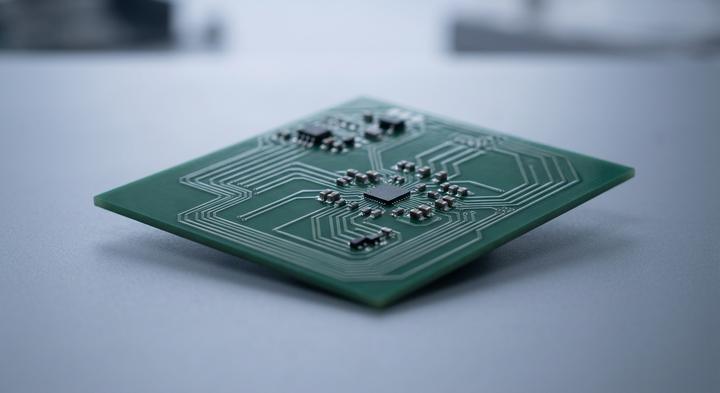
Rigorous circuit inspection and verification prevent downstream campaign failures.
The Rapid Pre-Contract Verification Matrix
| Audit Area | How to Verify | Factory Claims | The Red Flag to Watch For |
|---|---|---|---|
| Tooling & Machinery | Ask for a live, unannounced video tour of their injection lines. Verify the manufacturer plate on the physical molding machines (like Haitian) matches their corporate registration. | “We operate our own injection facility and handle all housing production in-house.” | Stalling the video call, sending pre-recorded workshop B-roll, or machine asset tags that display a completely different company name. |
| Compliance Papers | Take the certificate registration numbers for CE, FCC, RoHS, and REACH and run them directly through SGS or TÜV public databases. Verify the registrant’s name matches the exporter on your invoice. | “Every electronic gift item we supply is fully certified with active test reports.” | A certificate that shows mismatched model designations, or documents issued by unaccredited testing mills that European or US customs officers routinely reject. |
| Battery Safety | Demand the UN38.3 report and MSDS for the exact battery model. Confirm the battery brand (e.g., Lishen or ATL) and mAh capacity align with your product’s Bill of Materials (BOM). | “We install A-grade lithium-ion cells with complete safety documentation.” | A UN38.3 test report issued under a third-party trader’s name, or a battery capacity on the test sheet that differs from your quoted specs. |
| Safety IC Chips | Require a high-resolution photo of the PCB to inspect the protection IC package markings (e.g., Seiko). Check these markings against the official component datasheet. | “Our circuit designs feature dual-IC protection to prevent short circuits.” | The supplier refuses to supply a detailed BOM, or the board uses unbranded, generic chips with no visible trace numbers. |
Running this Minute Audit before paying a deposit separates a real Electronic Promotional Gifts Manufacturer from thin trading desks. If a supplier fails even one of these checks, you are looking at a broker who will likely source your components from the cheapest, most unstable sub-assembly lines they can find. At YGHao, we run an open-door policy for this exact reason. We welcome live video walkthroughs of our SMT lines, assembly halls, and certified testing rooms because we handle every step—from plastic injection to final quality control—on-site. This level of traceability is the only way to protect your brand from customs delays and batch failures when importing bulk promotional electronics.
Ready to Brand: Accessing YGHao’s Production-Ready ODM Catalog
Now that the scheduling and timeline constraints sit clearly in a matrix, the actual work shifts from calendar planning to locking down physical, battle-tested hardware. Sourcing directly from an electronic promotional gifts manufacturer like YGHao avoids the standard broker markup and, frankly, the administrative telephone game that ruins production deadlines when communication gets routed through three different offices. We focus the factory’s output strictly on high-volume, retail-grade consumer electronics rather than chasing specialized industrial or medical equipment. This narrow product boundary keeps our lines running lean, which is why we can commit to a 15-to-20-day standard turnaround without making excuses when peak seasons hit. All of our critical operations—including multi-color pad printers, high-precision silk screening, and UV printing—run entirely on direct, in-house lines rather than outsourced third-party print shops. We back this layout with 100% functional testing, checking everything from battery capacity and chipboard voltages to cross-hatch adhesion on the printed logos before a single carton is taped.
To secure retail-ready quality without the $15,000 tooling penalty or the risk of custom-molded scheduling delays, we recommend working from our established, pre-tested enclosures. We run these through our Catalog Once framework, allowing procurement teams to immediately select locked-in shell shapes and focus solely on the branding and electronics configuration. To see how these housings hold up under scrutiny, you can request a PDF copy of our current ODM technical specification catalog, which breaks down actual shell dimensions, internal component clearance, and volume pricing tiers. Alternatively, if your team needs to verify our capacity before submitting an RFQ, let us know and we can host a direct 20-minute video walkthrough of our Dongguan assembly and printing lines.