Two partnership architectures
Original equipment manufacturing (OEM) generally assumes that the brand owns the product definition—industrial design, mechanical layouts, electrical schematics, and firmware behaviors—and contracts a factory to manufacture to that definition under the brand’s trademarks. Original design manufacturing (ODM) broadens the collaboration: the manufacturing partner proposes or co-develops product concepts, often starting from reference designs or modular platforms that can be customized cosmetically and functionally for a particular channel.
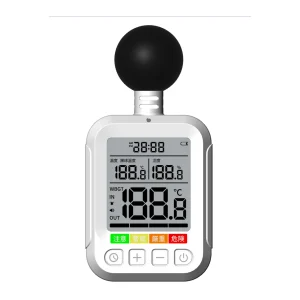
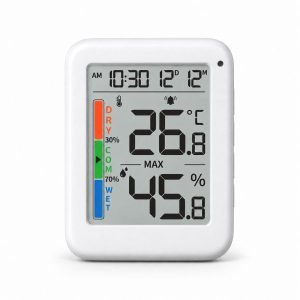
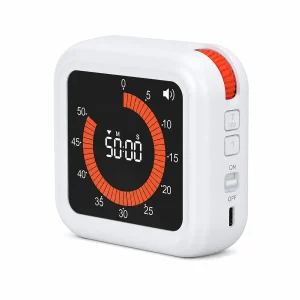
For clocks, countdown timers, kitchen scales with timing functions, and hybrid environmental instruments, both models appear across the market. Gift retailers often begin with light-touch OEM of existing chassis with custom finishes, while digitally native brands may prefer ODM to differentiate features quickly without scaling an internal hardware studio. The right choice depends on intellectual property strategy, speed-to-market, internal engineering bandwidth, and how tightly you must control the interaction between firmware and cloud services.
When OEM is the lower-risk default
If you already employ industrial designers, maintain a defined user experience, and treat firmware as a core competency, OEM usually preserves strategic control. You release controlled bills of materials, approve component substitutions through formal deviations, and keep test plans that map directly to reliability targets—mean time between failures for motors, actuator life for buttons, and aging rules for supercapacitors or backup batteries. Regulatory documentation, while often factory-assembled, traces to drawings you own.
OEM also simplifies retailer conformance when your legal team insists on narrow liability caps and when you run multi-factory redundancy strategies for peak season. Because you own the golden unit definition, you can theoretically qualify a second site—admittedly painful—without rewriting the fundamental identity of the product. For mature brands with entrenched packaging and merchandising, OEM maintains continuity of customer recognition.
When ODM accelerates differentiation
ODM shines when you must expand assortment faster than your hardware team can spin boards, or when you want access to module ecosystems—segment LCD drivers, precision RTC families, humidity sensing fused with timers—that a partner has already integrated across several generations. A capable ODM proposes trade-offs transparently: a slightly thicker housing that unlocks a larger speaker cavity; a modest MCU upgrade that enables smoother dimming curves; a plastics texture that hides fingerprints in retail displays.
The contract layer must protect both sides. Define exclusive cosmetic treatments, co-owned versus licensed firmware modules, and boundaries around derivative SKUs that the factory may sell under other badges. ODM partners accustomed to B2B export will also align on documentation packages that travel with the product—declaration of conformity drafts, risk assessments, and localized IFUs when required by your channel.
Hybrid programs in practice
Many successful programs begin ODM for the first generation—time to shelf is paramount—then migrate toward OEM-like control as volumes climb and reliability feedback refines the specification. The factory benefits from predictable demand; the brand benefits from captured learning about field behavior. Transition planning should include re-homing CAD ownership, freezing firmware branches, and scheduling re-certification if electrical topologies change materially.
Decision checklist
- Do you own core UX and want absolute control of firmware revision? Lean OEM.
- Do you need differentiated hardware within two quarters with constrained headcount? Lean ODM with explicit IP clauses.
- Will you sell the same chassis across multiple regions with radio variants? Plan module strategy and modular certifications early.
- Are packaging and accessory bundles strategic? Involve the partner in carton optimization and palletization math.
Closing perspective
Neither OEM nor ODM is universally superior for timers and seasonal electronics; they are governance models. The winning pattern matches governance to your internal strengths and channel timelines. South China manufacturers with integrated electronics and assembly lines—YGHao among them—typically support both modes, enabling brands to start fast and mature into deeply controlled programs without switching continents.
Intellectual property posture under OEM and ODM contracts
Ownership of CAD, board files, source code, test fixtures, and calibration coefficients should be explicit in the statement of work. OEM programs often assign deliverable ownership to the brand while allowing the factory a license to use artifacts solely for manufacturing under confidentiality. ODM arrangements can be murkier: the partner may reuse subcircuits across multiple customers. Negotiate field-of-use restrictions, carve-outs for genuinely generic drivers, and audit rights when you suspect derivative designs competing in your channel. For firmware, clarify whether object code, link maps, or full source must be escrowed for continuity if the relationship ends.
Trademark and artwork separation deserves attention. Retailers sometimes require proof that packaging renders do not infringe third-party icons or font licenses. If your ODM partner supplies generic carton art, verify that stock photography and iconography are licensed for commercial redistribution. A short legal review early avoids emergency redesigns during pilot builds.
Pricing models: NRE, tooling, and unit economics
Non-recurring engineering should align with deliverables: schematic capture, layout, prototype spins, qualification support, and fixture design each merit discrete milestones. Avoid blank-check NRE that bundles opaque hours; milestone invoices tied to reviewed artifacts keep incentives aligned. Tooling amortization schedules should reflect realistic life-of-program volumes and spell out who pays for cavitation changes when yields force mold modifications.
For derivative SKUs—new fascia colors, regional power adapters, or alternate radio modules—define what constitutes a “minor” change eligible for a streamlined fee versus a “major” change that triggers partial re-certification. The boundary between cosmetic and electrical sometimes surprises teams when a “simple” LED bin change shifts photometric signatures enough to affect EMC or safety testing narratives.
Brand governance and channel readiness
If you sell through Amazon or large brick-and-mortar chains, align packaging validation, barcode symbology, and carton marking rules before freezing ODM cosmetics. Some channels demand pallet photos, orientation labels, and inner-pack quantity math that influences tray design. Hybrid programs benefit from a jointly owned phase plan: ODM speed for generation one, then progressive transfer of golden definitions toward OEM-style governance as volumes stabilize.
Partners rooted in South China’s electronics corridor can often co-locate secondary operations—laser marking, ultrasonic welding, or specialty tests—within tight loops. That integration matters when you iterate alarm UX or display readability because the feedback cycle stays physical rather than shipping samples across oceans between each tweak. YGHao’s model of combining PCBA with assembly and export documentation is representative of the structure that makes hybrid OEM/ODM transitions practical without forcing you to change factories mid-program.
Transition planning when you switch between OEM and ODM modes
Programs rarely stay purely OEM or ODM forever. Plan the legal and technical transition early: escrow releases, firmware signing key custody, and mold ownership transfers should be scripted milestones rather than contentious endings. If you evolve from ODM toward OEM control, schedule re-certification windows when electrical topology or labeling changes. Maintain a joint archive of meeting minutes that capture design intent; ambiguity benefits future disputes. Partners accustomed to integrated South China manufacturing can often modulate governance without forcing you to relocate tooling across borders, provided commercial language reflects the shift in deliverables.
Regional power, accessory, and certification bundles
Timers and clocks often ship with region-specific AC adapters or battery chemistries governed by separate standards. Bundle strategy affects SKU proliferation; negotiate how many regional BOMs the factory will maintain without surcharge creep. Define packaging consistency so brand recognition remains stable even when inner adapters differ. For radios, segregate modular certifications and antenna variants cleanly so marketing does not promise a feature on a SKU lacking the corresponding RF configuration. These topics sound administrative until a retailer rejects a mixed masterpack at receiving.
Long-horizon partnership metrics
Beyond launch, track on-time delivery variance, yield at acceptance, documentation turn time, and engineering response SLAs during sustaining. Publish a quarterly business review template both sides complete before meetings so discussions focus on trends rather than anecdotes. When metrics slip, separate transient shocks from structural issues; allocation and exchange-rate swings warrant different responses than recurring quality drift.
Working sessions that collapse assumptions
Schedule structured workshops—not endless slide reviews—where industrial design, procurement, and factory engineering sketch option trees on whiteboards. Time-box decisions on LEDs, speaker envelopes, and display glass treatments so exploratory work does not silently expand scope. Capture decisions as one-page engineering notes with photos; ambiguity is expensive once steel cuts.
Channel-specific packaging and liability clauses
Mass merchants impose chargeback regimes for labeling misses; bake those risks into statements of work with clear responsibility Matrices. If the ODM proposes standard shipper marks, review them against your DC’s automation rules—barcode quiet zones and human-readable redundancy prevent sortation stalls.
Stakeholder maps for hybrid engagements
Identify who in your organization owns cosmetic approvals, firmware acceptance, and regulatory sign-off on both OEM and ODM tracks. Ambiguous ownership invites late churn when marketing requests a last-minute fascia change that invalidates a golden EMC sample. Publish RACI charts alongside phase plans and update them when headcount changes—turnover without documentation quietly reopens settled debates.
Exit planning without burning bridges
Even successful programs end; define data handoff, mold release payments, and inventory disposition upfront. A professional exit preserves options for future seasons when assortments refresh.
Sustaining engineering and product line evolution
After launch, OEM and ODM partnerships face sustaining work—component obsolescence, cost reductions, and retailer-driven feature tweaks. Establish a lightweight change board that can convene within forty-eight hours when a distributor requests a brighter LED or a quieter button. Decisions should record electrical impact, retest scope, and documentation delta. ODM programs sometimes accumulate “small favors” that compound into undeclared configuration drift; OEM-style revision control, even inside ODM relationships, prevents silent forks.
Seasonal clock lines magnify sustaining load because packaging artwork rotates annually while electronics remain stable. Separate mechanical-only ECO paths from electrical ECO paths so trivial artwork changes do not trigger unnecessary EMC rework. Conversely, never let a mechanical-only label hide a charger substitution that alters safety test context.
Commercial reviews tied to real manufacturing indices
Quarterly business reviews should include unit economics adjusted for scrap, rework, premium freight, and warranty returns—not only piece price deltas. When indices move, dissect whether currency, commodities, or process drove the shift. A factory proposing a price reduction tied to yield improvement deserves scrutiny verifying the change is statistically real, not a short-term cheat on test limits.
For brands balancing Amazon and traditional retail, discuss channel conflict minimally but clarify how factory-direct spare parts or refurb flows avoid undercutting partners. Ambiguity breeds shadow listings that damage pricing power.
Knowledge retention and onboarding
Document tribal knowledge about fixture quirks, acoustic foam placement, and “Tuesday” oddities from specific reel lots. When key engineers rotate—a reality in dynamic Shenzhen labor markets—your written history accelerates recovery. Encourage pairing of new program managers with tenured line leads for shadow weeks during pilot builds.
Ultimately, OEM and ODM are governance lenses on the same physics. The manufacturer that can operate both modes—illustrated by integrated electronics and assembly programs like those YGHao structures for export-oriented B2B brands—gives you strategic optionality as your brand matures without forcing geographic churn.