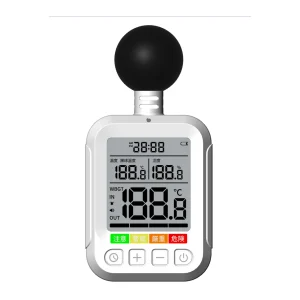
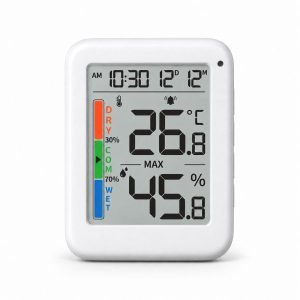
Comparing Digital and Analog Thermometer Hygrometer Systems for Industrial Use
Why the Choice Between Digital and Analog Matters for Your Workflow
When you are standing on the factory floor at 6:00 AM, the last thing you want to do is troubleshoot a dead battery or a frozen screen on a sensor. The Choice Between Digital and Analog is not just about the display; it is about who is responsible for the data. An analog thermometer hygrometer is a set-and-forget tool. It works without a power supply, it doesn’t care about software updates, and it gives your team an immediate, visual read. If your goal is simple environmental monitoring in a warehouse where you just need to know if the humidity is within a safe range, analog is usually the smarter, lower-maintenance play.
Digital units enter the conversation the moment you need a paper trail. If your QC process requires time-stamped logs for an ISO audit or automated alerts when a threshold is breached, you need the digital path. But this is where the hidden costs start. Digital sensors drift. They require periodic calibration, and if you buy a low-end unit, that drift happens faster than your maintenance schedule can catch it. We often see procurement teams buy a digital unit for a simple storage room, only to spend more on annual calibration services than the unit itself cost. Analog Matters because it removes the complexity of the digital stack, but it only works if your compliance requirements don’t force your hand.
Your Workflow On the production line should dictate the hardware, not the other way around. If you are sourcing for a high-stakes environment, don’t just look at the price per unit. Ask the supplier for the sensor’s drift rate over six months and check if the housing is rated for your specific industrial environment. A cheap digital sensor might look perfect on a spec sheet, but if it fails to log data during a power flicker, your audit trail is broken. Don’t pay for high-frequency digital logging if a simple analog gauge provides the same operational safety with zero risk of software failure.
Technical and Commercial Comparison for Industrial Procurement
Why are you paying for digital logging if your QC team is just going to write the numbers on a clipboard anyway? The decision between digital and analog hardware usually comes down to whether you are buying a tool for your operators or a tool for your auditors. Digital sensors are essential when you need to prove compliance to an ISO or FDA inspector, but they bring a hidden tax of battery management, calibration cycles, and circuit sensitivity. Analog gauges are often dismissed as ‘low-tech,’ yet they remain the standard for high-vibration or high-humidity zones where electronics simply don’t survive the year.
| Feature | Digital Capability | Analog Capability | Procurement Impact |
|---|---|---|---|
| Data Logging | Automated, high-frequency | None (Visual only) | Digital is mandatory for audit trails |
| Power Source | Battery or external power | None (Mechanical) | Analog eliminates battery-related downtime |
| Accuracy | High (±0.5% typical) | Moderate (±2-5%) | Digital fits precision-sensitive goods |
| Durability | Sensitive to moisture/shock | High (Robust housing) | Analog excels in harsh environments |
| Calibration | Annual/Periodic | Rare/Manual | Digital adds recurring service costs |
When you look at a quote, don’t just compare the unit price. A digital thermometer hygrometer might look like a bargain, but the TCO spikes once you account for the labor hours spent on battery swaps and the annual calibration reports required to keep the unit compliant. In our experience, procurement teams often over-spec digital units for warehouse corners where a mechanical gauge would be more reliable. If the environment is harsh, the digital circuit is just another point of failure waiting for a humidity spike to kill it.
Integration is the only real tie-breaker. If your quality management system requires a digital log for every shift, you have no choice but to go digital. If you are just tracking ambient conditions for general oversight, don’t pay for connectivity your team won’t use. If you can’t justify the cost of the data, buy the analog gauge; it will still be working long after the digital sensor’s battery has leaked.
Operational Scenarios: When to Choose Digital or Analog
Vibration Production Lines In
If you are running heavy stamping equipment, don’t bother with analog needles. The mechanical resonance on a high-vibration line will make the needle jump by 5% or more, making it impossible for an operator to get a clean reading. In these zones, you need a digital sensor with a software-damped sampling rate to filter out the jitter. It costs more upfront, but it is the only way to get the consistent data required for compliance audits. If the needle is shaking, the data isn’t just noisy—it’s useless.
Cold Storage And Automated Compliance For
For a 5,000-square-foot cold storage facility, the decision usually comes down to labor versus risk. Manual logging is cheap until an auditor finds a two-hour gap in your records. Switching to a digital thermometer hygrometer with automated logging saves your team about 90 minutes of manual entry every day. While analog gauges are cheaper and don’t need batteries, the labor cost of maintaining a manual logbook usually pays for a digital upgrade within 90 days. If you are tired of chasing down missing clipboard entries, the digital route is the only one that makes sense.
Harsh Chemical And Corrosive Environments In
In plants dealing with acidic vapors, digital circuitry is often a liability. We have seen digital sensors fail within 90 days because the airborne contaminants eat through the circuit boards, forcing a full replacement. In these areas, a high-quality analog gauge is the better investment; the sealed mechanical components handle the environment far better than an exposed microchip. When you are shopping for these zones, ignore the connectivity features and look strictly at the IP-rating of the housing. If the air is aggressive enough to corrode a board, the best sensor is the one that doesn’t have one.
Choose Digital when you need to automate your audit trail, and stick to Analog when the environment is going to destroy your electronics.
Common Procurement Pitfalls in Sensor Selection
Most procurement teams treat the first sample as a golden master, but that is how you end up with a 5,000-unit batch that doesn’t match the prototype. A sample is a hand-tuned unit; the production run is a statistical average. If you aren’t asking for the QC variance reports from the last three production runs, you are essentially gambling on the factory’s ability to replicate their own work.
If the sample passes, production will too.
Don’t just look at the unit in your hand. Ask for the factory’s internal QC logs for the last three batches. If they can’t show you the variance data, you have no way of knowing if your order will be consistent or if you are just getting the best of the bin.
Resolution and accuracy are the same thing.
Buyers often get distracted by a display that shows four decimal places, assuming it means the sensor is precise. It doesn’t. A sensor can be incredibly precise at being wrong. When you are reviewing a spec sheet, ignore the resolution and look for the accuracy tolerance and the drift rate. If the sensor drifts by 2% over a month, the extra decimal places are just noise.
Digital sensors are maintenance-free.
Digital units are not analog gauges; they have firmware, internal clocks, and circuitry that can fail or drift. If you are buying these for a facility that requires a strict audit trail, you need a calibration schedule. If you don’t have a plan to verify these against a reference standard, you are just waiting for the data to become unreliable. We see this most often in the first 90 days, where the initial ‘plug and play’ experience hides the fact that the sensor is slowly losing its baseline.
Peak performance specs apply to all environments.
Datasheets are written in labs, not on factory floors. A sensor that hits its target in a climate-controlled room will often fail under the vibration or humidity of a real production line. When you are looking at Sensor Selection, ask for performance data that matches your actual environment. If you are ordering custom OEM units, insist on seeing the environmental stress screening (ESS) results. If the supplier can’t provide them, assume the sensor will fail in the field and budget for the replacement costs accordingly.
How to Vet Your Thermometer Hygrometer Supplier
Most procurement teams treat the first sample like a showcase, but that is a mistake. The real risk isn’t the prototype; it’s the consistency of the 5,000th unit. If you are moving from a single-unit test to a bulk order, you need to know if the factory is actually running a controlled process or just assembling parts until they hit the target date.
| Audit Step | What to Ask For | Why It Matters | Red Flag |
|---|---|---|---|
| Calibration Standard | ISO/IEC 17025 certificate | Ensures data accuracy is traceable | Generic ‘factory calibrated’ claims |
| Batch Testing | QC report per shipment | Detects sensor drift early | No record of pre-shipment testing |
| Component Sourcing | BOM transparency | Prevents hidden sensor swaps | Refusal to disclose component origin |
| Lead Time Logic | Realistic production timeline | Avoids ‘rushed’ assembly defects | Promises that ignore tooling cycles |
Anyone who has managed a supply chain knows that the ‘factory-direct’ price often hides a lack of documentation. When you Vet Your Thermometer Hygrometer Supplier, don’t just ask for a spec sheet; ask for the Supplier Evaluation Checklist they use internally. If they can’t show you how they handle a failed batch, they don’t have a system—they have a hope. YGhao provides standard quality documentation with every industrial shipment, because we know that if the paperwork isn’t there, the audit will fail regardless of how well the sensor performs.
If you are ready to move past the initial inquiry, contact our engineering team to request a sample of our standard quality documentation or to discuss the specific Lead Time Logic for your next production run.
Next Steps for Your Sensor Project
Before you lock in a bulk order, look at your site’s actual environment—not just the spec sheet. If you are running a pilot, don’t waste budget on high-end digital logging if your team isn’t set up to manage the data. Most procurement delays happen because the hardware arrives before the team has a plan for the calibration cycle or the software integration.
If you want to avoid the common pitfalls of a first-run deployment, start by narrowing down your specific environmental tolerances. You can download the YGhao product catalog for specific industrial spec sheets to see which housings hold up in your conditions. If you have a custom OEM/ODM project in mind, request a free quote so we can look at your BOM before you commit to tooling. For those dealing with complex integration constraints, book a 20-minute video consultation to walk through your setup with our engineering team. Defining the scope of your first pilot run now is the best way to minimize risk before you scale.