The Procurement Lead’s Guide to Custom Digital Clock Manufacturing Tiers and Scaled Unit Costs
Modular Chassis vs. Custom Tooling: The Real Upfront Cost of Custom Digital Clocks
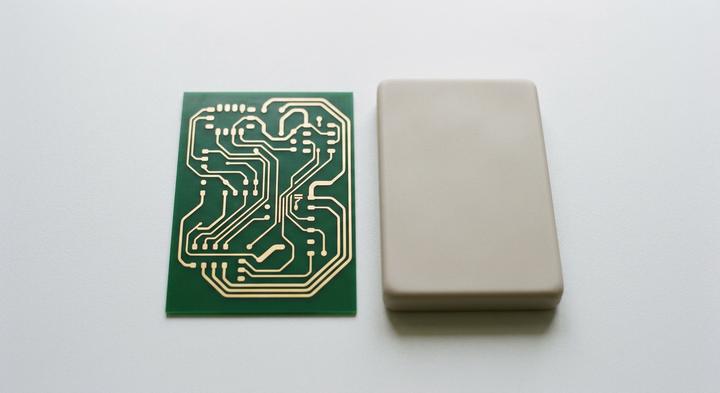
Abstract representation of the design alignment between internal PCB layouts and external modular chassis components.
When developing Custom Digital Clocks Choosing the enclosure after the PCB is laid out is a five-figure mistake that locks in high unit costs from day one. In physical timing hardware design, the housing dictates up to 70% of the project’s lifetime tooling budget. When an engineering team designs a non-standard PCB form factor first, they inadvertently force the project into custom enclosure tooling. This oversight triggers immediate Non-Recurring Engineering (NRE) fees—the upfront Recurring Engineering costs that many forget to budget for—that run into tens of thousands of dollars and drag out delivery times by twelve to sixteen weeks. For most industrial deployments, the smartest alternative is the modified catalog route. At YGhao, we bypass these upfront steel tooling fees entirely by taking a standard Modular Chassis from our existing library and precision-milling custom windows for your specific RJ45, USB, or terminal block connectors. This gives you a bespoke layout on a stock budget.
Paying the heavy NRE fee for a custom double-injection mold only makes financial sense when your production volumes cross a distinct tipping point, typically around 5,000 units. Below this threshold, the amortization of a custom tool adds an unbearable premium to every individual unit shipped. Above it, the investment pays for itself through lower per-part costs and tighter structural tolerances. To navigate this scale safely without sinking capital into unverified molds, we always advise starting with a physical T1 sample run before signing off on full manufacturing runs. These physical prototypes let you verify display diffusion, button tactile feedback, and thermal performance under real operating conditions. If the board doesn’t align with the chassis mounting bosses under zero structural tension during a dry fit, do not sign off on the production tooling.
Custom Digital Clock MOQ Tiers: Tooling Costs and Unit-Cost Amortization
How much does it cost to customize a digital clock at different order volumes?
When sourcing a Custom Digital Clock, the upfront engineering expense is often a surprise. While stock LED panels let you skip heavy tooling fees, custom segment LCDs require dedicated foundry glass runs. This split in display technology is what determines your minimum order quantity (MOQ) and shapes your unit price amortization. The table below breaks down the realistic cost thresholds and bottlenecks for three common tiers of manufacturing customization.
| Buyer Tier | Technical Decision Factors | Factory MOQ & Tooling Estimate | Risk & Sourcing Bottlenecks | Amortized Cost Verdict |
|---|---|---|---|---|
| Cosmetic OEM (Custom colors, stock PCB) | Uses off-the-shelf electronics; limits changes to paint, custom packaging, and simple logo printing. | 500 units Tooling/NRE: $150 – $500 (silkscreen and film setup) | Minimum color-batching limits for ABS plastic at the factory; mismatched packaging print runs. | Low unit cost impact ($0.30–$1.00); ideal for low-risk testing or immediate promotional campaigns. |
| Semi-Custom ODM (Modified shell, custom PCB) | Requires a customized injection-molded ABS shell, custom copper routing, and firmware adjustments. | 1,000 units Tooling/NRE: $3,500 – $6,000 (steel enclosure molds, PCB tooling) | Steel tooling lead times of 45 days; multiple T1-to-T3 mold revision and injection refinement cycles. | Moderate unit cost impact; Tooling Costs amortize over 1,000 units, adding $3.50–$6.00 which vanishes on reorders. |
| Deep Custom LCD (Bespoke glass, custom housing) | Bespoke segment LCD glass panel, proprietary PCB design, and custom-molded plastic enclosure. | 5,000 units Tooling/NRE: $10,000 – $15,000 (foundry glass masks, steel mold) | Liquid crystal chemistry constraints; strict factory-direct glass runs; high redesign costs once tool is cut. | High initial investment but drops unit cost to the absolute minimum at scale; best for mature product lines. |
Tooling Costs and Amortization Realities
For accurate Cost Amortization What you must evaluate is how the initial capital expenditure distributes across your first and subsequent production runs. Hardware teams frequently make the mistake of choosing a cheap unit price on a 5,000 units tier without factoring in the $15,000 tooling cash-flow drag. At YGhao, we recommend that buyers seeking a balance of custom branding and acceptable upfront risk target standard LED matrices wrapped in custom-cut ABS enclosures. This avoids the high minimum runs of custom glass foundries while still providing a proprietary physical product that stands out in the market.
Three Real-World Scenarios: Matching Your Project to the Right Technical Specs
A maintenance lead tracing a 24V power loop at 5:30 AM isn’t looking for a custom digital clock issue, but when a cheap, unsealed console panel display shorts from condensation, a stalled assembly line makes it everyone’s problem. Selecting electrical specs without auditing the physical deployment site is the leading cause of post-purchase field failures. A clock on a clean boardroom wall requires an entirely different engineering profile than one bolted to an industrial stamping press or integrated into a 200-node campus network.
The Industrial OEM Integration When Power Loops Are Dirty
For an industrial machinery builder, integrating a display is not about telling local time; it is about establishing a rugged telemetry endpoint. Standard consumer-grade LEDs degrade quickly under continuous machine vibration and cabinet heat, which is why we specify wide-temperature transflective LCD panels built to survive from -20°C to 70°C. These systems operate on native 24V DC loops rather than wall adapters, requiring custom step-down regulators on the PCB to absorb high-voltage line spikes. By routing telemetry over Modbus/RTU protocols using a shielded RS485 bus, the clock displays live PLC cycle times directly, using the noise immunity of differential signaling to ignore nearby motor interference.
The High-End Promotional Brand Campaign
In premium brand merchandising, the primary failure mode isn’t electrical noise—it is the cheap, lightweight feel that ruins brand equity. A bulk order of plastic clocks that rattle when handled ends up in a desk drawer before the battery dies. For these high-profile campaigns, procurement teams specify CNC-machined, bead-blasted aluminum casings with laser-etched branding and weighted bases. YGhao pairs these high-end cosmetic finishes with custom-molded, high-density EVA foam retail packaging to prevent scuffing during transit. Spending on structural weight and clean anodization boundaries ensures the unit remains on a client’s desk as a permanent fixture.
Scenario C: The Multi-Node Facility Network
A facility integrator keeping 200 nodes synchronized across a school or hospital campus cannot send technicians up ladders every time daylight saving time shifts. Running separate power lines to every clock is cost-prohibitive; instead, PoE (Power over Ethernet) clocks deliver power and sub-second NTP syncing over standard Cat6 cabling. To prevent signal drift across 200 nodes without triggering security blocks or clogging bandwidth, the system should use multi-unicast network protocols to query local master nodes in structured queues. Rule of thumb: If you’re managing more than 50 endpoints, the labor of a single manual calibration round exceeds the upfront premium of network-synced PoE hardware.
Three Engineering Spec Failures That Delay Custom Clock Deliveries
While standard components sit ready in the warehouse are almost always self-inflicted. Minor layout tweaks, vague environmental definitions, and unnecessary silicon specs are the real culprits behind failed inspections and customs holds.
We need an “industrial-grade, waterproof” clock, so any standard outdoor enclosure will work.
Vague marketing adjectives like “industrial-grade” have no legal or manufacturing weight on a factory floor. If a procurement team fails to specify an exact Ingress Protection rating, the factory is forced to guess on gasket materials and sealing tolerances, which leads to failed moisture-chamber tests during pre-shipment inspections. To guarantee moisture resistance, skip the generic descriptions: specify EPDM or high-grade silicone gaskets over cheap vulcanized rubber, verify screw boss compression, and mandate a witnessed IPX5 water-jet test report before releasing the bulk production balance.
To get our exact visual interface and multi-timezone offsets, we need to commission a custom microchip.
Over-specifying silicon is an expensive mistake that yields zero functional benefit. Procurement teams often think a proprietary LED sequence or unique offset math requires a custom ASIC. In reality, a standard, off-the-shelf 8-bit or 32-bit MCU running tailored firmware does the exact same job. Sourcing mass-produced mainboards from an established partner like YGhao and flashing custom-developed firmware bypasses global silicon supply bottlenecks. This shortcut routinely saves up to 70% in chipset costs while keeping the assembly line moving.
The factory’s existing FCC and CE certificates will cover our modified clock design.
Assuming that existing factory-level compliance certificates carry over to a modified design is a direct route to customs impoundment. An FCC Part 15 or CE certificate is only valid for the exact PCB trace layout, display driver, and shielding configuration originally submitted to the test lab. The moment you relocate a ceramic capacitor to fit a larger housing, or swap out a display driver chip to run a custom digital clock panel, the electromagnetic profile shifts, rendering the old certification void. To avoid shipping delays, work with your engineering partner to determine if layout changes require a full testing cycle or if a Class II Permissive Change filing is sufficient.
Have you verified whether your current supplier is running a real pre-scan on your layout before sending it to the compliance lab?
The Factory Floor Audit: Verifying SMT Reliability and Crystal Stability

Precision calibration and testing are central to verifying the long-term reliability of advanced electronic components.
How do you verify digital clock SMT quality during a factory audit?
The Factory Floor Audit is where theoretical specifications meet actual manufacturing discipline. Buyers often lose money because they evaluate cosmetic plastics in a quiet showroom, completely ignoring the chaotic SMT lines where long-term durability is actually determined. To verify that a supplier can meet a rigorous Factory Standard and produce stable, long-lasting hardware, you must inspect the active SMT lines, check their crystal screening protocols, and physically verify their heat-chamber logs. Understanding the Crystal Stability How process—specifically how a supplier screens, mounts, and thermally stresses the timing circuitry—is what separates a reliable industrial clock from an expensive paperweight that drifts two minutes slow every month.
| Audit Verification Point | YGhao Factory Standard | Common Sourcing Red Flags | What to Ask the Floor Manager |
|---|---|---|---|
| SMT Quality & Inline AOI Outsourcing PCBA to unvetted subcontractors introduces structural soldering defects, manual handling ESD hazards, and unapproved component swaps. | 100% in-house SMT lines running automated Yamaha pick-and-place systems. Every PCB passes automated optical inspection (AOI) post-reflow, with BGA packages verified via 3D X-ray. | Subcontracted PCB assembly with no traceability. Manual inspection under a desktop magnifying glass instead of inline AOI, which regularly misses micro-bridging. | “Can you show me the real-time AOI error-log history and yield report on the monitor for the production batch running on line 3 right now?” |
| Timekeeper Accuracy & Crystal Screening Checking how the factory executes Crystal Screening directly determines if your clock slips minutes behind over time. | Standardizing on Compensated Crystal Oscillators with a strict rated tolerance of ±2ppm. For low-cost runs, standard quartz crystals are screened via parametric testing to keep standard deviation under ±10ppm. | Using cheap, unbranded 32.768 kHz tuning-fork crystals with ±20ppm tolerance or worse, leading to dramatic time drift under normal indoor temperature shifts. | “Where is the datasheet and calibration batch certificate for the current reel of crystal oscillators loaded on the SMT feeder?” |
| Chamber Burn & Heat-Cycle Protocols A long-duration thermal stress run is required to force infant mortality semiconductor failures before packaging. | A mandatory Chamber Burn run of 24 hours continuous power-on testing inside an environmental chamber calibrated at 45°C (±2°C) running dynamic cycles. | Skipping the heat-chamber test entirely to speed up shipping times, or stacking unpowered boards on open ambient racks and calling it a “burn-in” test. | “Let’s walk over to the environmental test room. Can you show me the active current draw logs and temperature charts for the racks currently inside?” |
Sourcing Without the Surprises: Engineering Your Next Clock Run with YGhao
Now that the technical scenarios and cost tables have mapped out the trade-offs of custom digital clock runs, translating these specifications into physical hardware requires clear boundaries between our factory floor and your commercial team. At YGhao, we are hardware manufacturers, not retail brand consultants. We focus strictly on Sourcing Without the typical supply chain headaches—handling the heavy lifting of custom PCB design, precision plastic injection tooling, high-yield SMT component mounting, and rigorous environmental stress testing. We do not design consumer-facing retail packaging, write end-user manuals, or coordinate regional distribution networks. Keeping these operational lines distinct ensures your engineering budget goes directly into component-level reliability, crystal oscillator calibration, and robust enclosure tolerances rather than marketing overhead. We deliver the calibrated timing hardware; your team owns the retail shelf presence.
To bypass unnecessary engineering delays during the initial RFQ process, our technical desk needs clean, unhedged inputs: 3D CAD step files, target casing dimensions, and your specific firmware communication protocols. If you want to avoid high upfront tooling commitments on day one, we can ship standard housing samples directly from our inventory, allowing your team to test real ABS wall thickness and LED light diffusion in your own lab environment. For teams preparing for Engineering Your Next Clock run, submitting your completed schematics to us triggers a comprehensive, non-binding engineering and manufacturing review. Our line engineers will verify board-to-boss alignment and thermal dissipation pathways before any tooling steel is cut, ensuring you get an accurate, production-ready cost breakdown with zero upfront financial obligation.