High-Precision Custom Digital Clock Engineering: Meeting Strict Calibration and Timing Standards
The Drift that Rejects Batches: Why Off-the-Shelf Digital Clocks Fail Calibration Audits

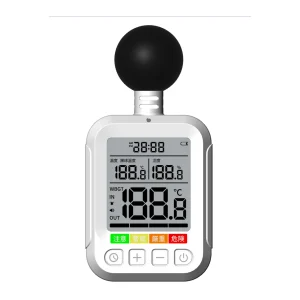
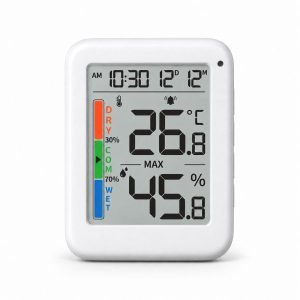
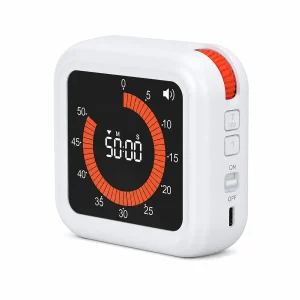
Controlled environments require physical and mechanical design layouts optimized for zero-drift timing stability.
An auditor reviewing the batch records of a sterile pharmaceutical run at 6:00 AM spots a five-second discrepancy: the cleanroom wall clock reads 08:14:22, while the central programmable logic controller (PLC) logged the autoclave cycle completion at 08:14:17. In facilities operating under FDA 21 CFR Part 11 or ISO 9001 guidelines, this minor gap is not an administrative typo. It is an audit failure that quarantines an entire production run, forcing weeks of forensic re-testing. Cheap, consumer-grade quartz crystal oscillators drift up to a second a day under normal conditions. Add the thermal shock of daily chemical washdowns and cleanroom climate cycles, and these uncompensated crystals warp, silently desynchronizing local physical displays from the centralized system log.
This persistent drift forces a choice between local hardware compensation and active network synchronization. An air-gapped temperature-compensated crystal oscillator (TCXO) actively counteracts ambient thermal swings to limit drift to a few seconds per year, but it still requires physical verification. Alternatively, an Ethernet-synchronized system continuously aligns every custom digital clock to a master NTP server over Power over Ethernet (PoE), eliminating manual adjustments. But even a network-synced clock can fail if its internal design is flawed. The heat generated by a clock’s own high-intensity LED display-driver ICs can raise internal cabinet temperatures by 10°C to 15°C, shifting local crystal frequencies. This internal thermal loading explains why so many generic clocks fail Calibration Audits At pharmaceutical facilities, despite being connected to the network.
To bypass this engineering blind spot, YGhao physically isolates the display-driver board from the timing module inside the custom enclosure. Keeping the heat-generating driver components away from the local oscillator prevents localized thermal pockets from altering the clock’s baseline frequency. For procurement teams drafting cleanroom specifications, the takeaway is simple: never buy a clock based solely on its external casing or basic NTP compliance. If the internal board layout does not isolate heat-generating LEDs from the timing crystal, the clock will eventually drift during long, high-brightness shifts.
TCXO Local Oscillators vs. PoE Network Sync: Hard Engineering Trade-offs
Is it cheaper to run PoE network clocks or use local TCXO quartz oscillators?
When planning industrial timing layouts, the decision hinges on balancing initial unit costs against long-term wiring labor. In regulated cleanrooms and retrofitted labs, routing a single Cat6 drop through sealed, plenum-rated ceilings can cost from $300 to $800 in specialist contractor fees alone. Evaluating these systems side-by-side highlights the Hard Engineering Trade between physical Network Sync deployment and high-precision local hardware.
| Timing Architecture | Primary Sync Source | Max Annual Drift | Installation Cost | Fit Industrial Setting |
|---|---|---|---|---|
| Local TCXO (DS3231) | Internal Quartz Crystal | 60 seconds (un-synced) | $0 (Self-contained unit) | Best For: Air-gapped testing cells. Primary Risk: Accumulating drift if manual calibrations are neglected. Verdict: Specify when security mandates offline operation or cabling costs kill the budget. |
| PoE Network Sync | NTP/SNTP Server | 0 seconds (active sync) | High (Requires dedicated Cat6 drop) | Best For: Large-scale, networked cleanrooms. Primary Risk: Timing drops during switch reboots. Verdict: Best for new construction where ceilings are open and cabling is bulk-routed. |
| Hybrid Wireless | Sub-GHz RF NTP | 2 seconds (with daily sync) | Moderate (Requires gateway setup) | Best For: Retrofitted pharmaceutical suites. Primary Risk: Building-materials blocking signal transmission. Verdict: Ideal for multi-room facilities wanting centralized sync without deep drywall surgery. |
Verifying Infrastructure
Engineers must thoroughly assess Shielding Constraints Before finalizing any timing hardware spec sheets. In environments with lead-lined walls or double-reinforced concrete, wireless signals degrade below -85 dBm, rendering RF synchronization useless and leaving physical cabling or Local Oscillators as the only viable options. If pulling a network line through cleanroom barriers exceeds $500 in specialized labor, specifying a YGhao custom digital clock with an isolated, temperature-compensated local oscillator achieves compliance without the construction headache. As a rule of thumb for your next design review: if the cable-pull cost exceeds the unit cost of the clock, select a local TCXO to bypass the physical infrastructure burden entirely.
Environmental Realities: Specifying Displays for Cleanrooms, Operating Rooms, and Heavy Plants
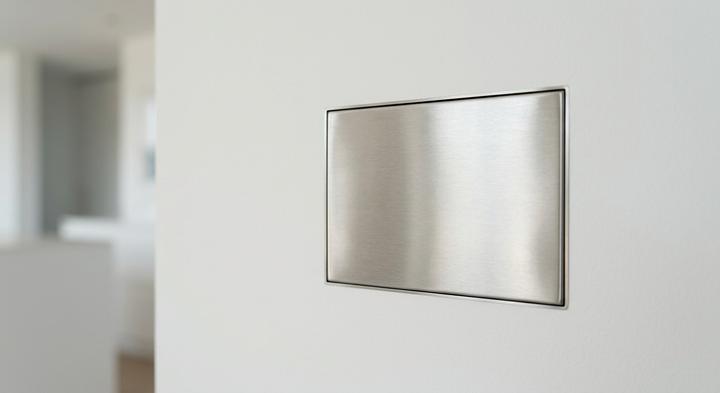
Flush-mounting prevents dirt buildup and allows seamless integration within sterile operating rooms and cleanrooms.
An inspection team carrying a 1.2% chlorinated spray rig toward a wall-mounted clock is the ultimate test of an enclosure’s physical ingress rating. While choosing local TCXO oscillators resolves internal timing drift, the physical Environmental Realities on the facility floor dictate whether a custom digital clock will survive its first month. Specifying Displays for cleanrooms, Operating Rooms, and Heavy Plants requires mapping the external alloy casing, screen glass, and board-level shielding directly to the specific chemical and electrical hazards of each room.
Flush-Mounting for Sterile Cleanrooms
A sterilization crew spraying down a pharmaceutical batching room at 5:30 AM with vaporized hydrogen peroxide will quickly destroy any clock housing with exposed seams or standard aluminum backing. During a Sterile Cleanroom Washdown In these facilities, the chemical mist pools on any horizontal surface, making standard surface-mounted clocks a breeding ground for microbes and a point of structural failure. To prevent this, procurement engineers must specify a flush-mounted, grade 316 stainless steel enclosure that sits completely flat against the wall, sealed with non-porous silicone gaskets. At YGhao, we build these units with chemically tempered glass rather than polycarbonate, which eventually crazes and clouds over under daily exposure to isopropyl alcohol.
Electromagnetic Shielding in Operating Rooms
An anesthesiologist adjusting a telemetry monitor during a high-stakes cardiac procedure cannot afford to see faint, rhythmic static lines caused by a nearby wall clock’s LED driver. This interference can trigger an Emergency During critical patient monitoring if the clock’s internal power supply isn’t isolated. When designing timing displays for Operating Rooms, the core challenge is keeping high-frequency switching noise below the Anesthesia Monitor Noise Floor. For these clean spaces, specifying a custom digital clock with a specialized low-EMI LED driver and an internal Mu-metal shield ensures that the display does not emit radiated or conducted RF noise into adjacent life-support systems.
Vibration Resistance on Heavy Industrial Floors
Under the Hood: How Poor SMT Soldering and Bad Housing Seals Degrade Timing
Industrial clock drift is a physical assembly failure, not a software bug. While many B2B buyers look at network sync intervals to keep facilities aligned, the true driver of long-term accuracy is how the board is protected from heat and moisture.
“We can use standard consumer enclosures to protect our custom digital clock displays on the washdown line.”
Treating an industrial clock as a basic consumer display panel stuffed into a cheap frame leads to early component failure. Factory floors present high-pressure washdowns and airborne oils that easily bypass cheap housings. If a casing lacks continuous silicone gasketing or leaves rear cable entries open, moisture creeps in through capillary action. This causes trace corrosion and micro-shorts that alter board impedance. For washdown areas, verify the manufacturer uses molded silicone seals and IP65-rated PG9 cable glands rather than foam tape.
“If the display turns on and stays bright, the internal layout is thermally stable.”
Room-temperature bench tests never catch localized thermal coupling on the PCB. High-current LED drivers run hot, often raising nearby board temperatures by 15°C to 20°C. If these drivers sit too close to the timing crystal without physical isolation, the localized heat directly warps the oscillator’s baseline frequency. When evaluating Timing Physical layout configurations, ensure the manufacturer has milled physical isolation slots directly into the FR4 fiberglass to block heat transfer from the LED driver zones.
“We can easily program our way out of clock drift with a simple firmware-based offset.”
Trying to write software patches for hardware-level thermal instability is a temporary band-aid that falls apart as the ambient temperature shifts. A crystal’s drift is non-linear, meaning a static software correction that works during morning shifts will overcompensate during afternoon production peaks. Ask the vendor for the raw hardware specifications of their Temperature Compensated Crystal Oscillators (TCXO) rather than accepting promises of firmware-based auto-calibration.
“Any standard contract manufacturer can assemble these boards without affecting the timing circuit.”
SMT reflow profile errors are the silent killer of factory-floor clocks. Lazy reflow curves create high-resistance micro-voids in the solder joints of the timing circuit. Over months of thermal cycling, these voids degrade and shift the circuit’s loading capacitance, causing the crystal to drift even if the chip itself is perfect. Ask the manufacturer to provide automatic optical inspection (AOI) reports of the timing circuit solder joints before signing off on a bulk run.
Factory Audit Checklist: Verifying Crystal Quality and Traceability on the SMT Line
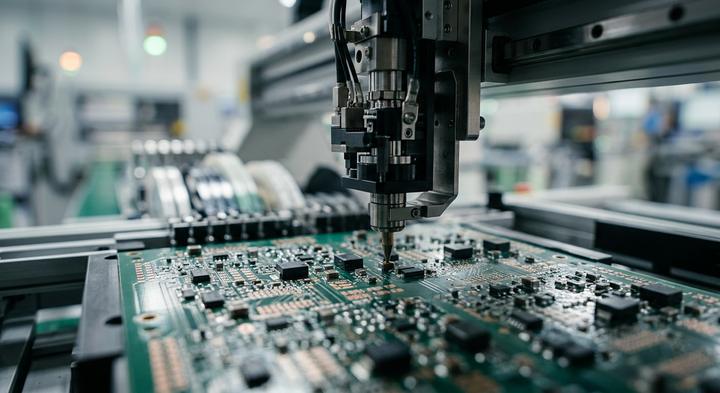
Precise SMT reflow profiling and automated optical inspections prevent component drift in demanding environments.
While specifying optical clarity and washdown-ready enclosures protects the exterior, the actual precision of a custom digital clock is won or lost on the factory floor. To prevent field drift, a procurement team must look past glossy corporate brochures and general ISO certifications. A reliable supplier evaluation requires running a rigorous Factory Audit Checklist focused on Verifying Crystal Quality at the process level.
If we step onto the SMT Line Now, the physical layout and QA checkpoints tell a far more honest story than a PDF certificate. Cheap assemblers frequently rely on hand-soldered quartz crystal cans and visual spot-checks. Industrial-grade manufacturers, by contrast, treat the crystal oscillator as an active semiconductor, managing thermal exposure with high-precision equipment. The table below details exactly what to look for when inspecting the line.
| Audit Ask | Expected Evidence | Red Flags / Watch For | Responsible Party |
|---|---|---|---|
| Direct Crystal Sourcing | Original reels on SMT feeders, showing direct traceability to authorized semiconductor distributors. | Handwritten bin cards, white-label reels, or loose tape slices fed into manual trays. | Procurement Manager (Provide distributor invoices, CoC, and bill of materials). |
| Solder Paste & Solder Paste Inspection | Automated screen printing using high-grade Solder Paste with inline 3D Solder Paste Inspection (SPI). | Manual squeegee application; bypassing SPI for smaller runs; visual-only post-reflow checks. | Line Supervisor (Provide daily SPI machine logs and volume distribution charts). |
| Reflow Thermal Profiling | Multi-zone reflow ovens (minimum 8-zone) running active Reflow Thermal Profiling mapped to the PCB’s mass. | Short 4-zone ovens; using a single “universal” profile without board-mounted thermocouple tests. | Line Supervisor (Provide thermal profile curve matching the specific board part number). |
| Thermal Stress Burn-In | Dedicated walk-in environmental chambers executing temperature cycling from 10°C to 60°C for 48 hours. | Finished clocks packaged straight from SMT reflow; testing restricted to a 10-second power-on test. | Test Lab Manager (Provide environmental chamber temperature logs and functional test reports). |
Relying on paper-thin quality claims is a liability when your facility’s regulatory compliance hangs on a few seconds of drift. A transparent manufacturer like YGhao will welcome this level of granular inspection, opening their SMT logs and validation chambers to your engineering team. When evaluating prospective partners for high-stability timing systems, make these physical line checkpoints a non-negotiable part of your initial RFQ package.
YGhao’s Engineering Scope: Calibrated Timing Hardware for Industrial Integrators
While washdown-rated enclosures and thermal management solve physical cleanroom survivability, they mean nothing if the internal logic board slips out of sync under high electrical noise. Industrial Integrators Now look for partners who treat timing as an electrical engineering problem, not a cosmetic packaging choice. Within YGhao’s Engineering Scope, we focus entirely on custom, low-to-mid volume runs—typically from 100 up to 5,000 units—where standard commercial clocks fail because their off-the-shelf boards lack local oscillator isolation. Rather than forcing a cookie-cutter catalog item on a cleanroom or pharmaceutical line, this volume range lets us run custom-milled enclosures, adjust the underlying codebase, and alter board-level component placement to prevent the localized heating that degrades timing crystals.
Our engineering desk handles this mechanical handoff directly with your team to prevent integration surprises before any physical tooling is cut. We review your 3D CAD STEP files, thermal dissipation layout, and power constraints, making sure the PCB aligns with existing cleanroom wall mounting brackets and conduit entries. By flashing customized firmware directly at the factory—whether that requires modified NTP client polling intervals, custom Modbus registers, or Calibrated Timing Hardware verification—we deliver a drop-in display that stays accurate without requiring local manual intervention. If you are drafting a procurement specification and need documented proof of drift tolerances under high temperature loads, you can request a customized PCB layout drawing or a factory-direct calibration test report tailored to your exact plant layout.