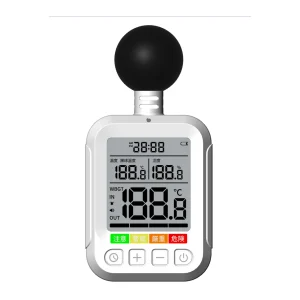
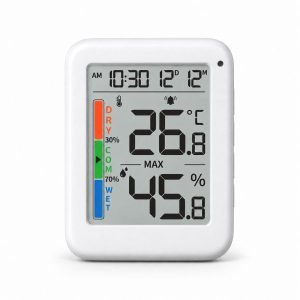
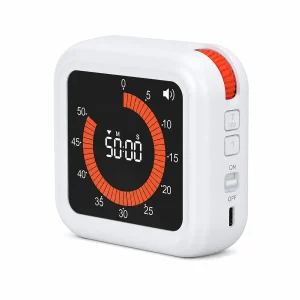
How Manufacturing Methods Affect Quality in Your Custom Digital Clock Project
Why the Manufacturing Path Defines Your Custom Digital Clock Quality
When you look at a quote for a custom digital clock, the unit price is the first thing that catches your eye. But the real cost—and the real risk—is hidden in the manufacturing path. Whether a supplier owns their tooling or subcontracts the housing to a third-party shop determines who catches the misalignment before it becomes a five-thousand-unit defect. At YGhao, we have found that the most common point of failure isn’t the electronics; it’s the gap between the PCB assembly and the plastic housing. This happens when the design file is handed off to a vendor who doesn’t understand the final assembly requirements.
Subcontracting the housing creates a technical debt that usually surfaces during the first mass-production run. When the injection molding shop and the PCB assembly line are separate entities, nobody owns the tolerance stack-up. If the housing doesn’t sit flush, you aren’t just looking at a cosmetic blemish; you are looking at a unit that will fail vibration tests or allow moisture ingress. A supplier that manages tooling in-house can adjust mold parameters in real-time, preventing the ‘drift’ that occurs when design files are treated as static documents rather than living engineering requirements.
Don’t treat the first sample like a showcase. This is the one you catch problems on. If the supplier treats the sample as a one-off, they are hiding the fact that they haven’t stress-tested the mold for a full production cycle. Ask for the mold maintenance schedule before signing the PO; if they can’t tell you how they account for tooling depreciation, they are planning to cut corners on the finish of your 10,000th unit. If the manufacturer doesn’t own the mold, they don’t own the quality of the final product.
Comparing Production Models: A Procurement Decision Matrix
Which production model actually holds up when you are scaling a custom digital clock project?
Most buyers get stuck comparing unit prices, but the real risk is in the manufacturing path. When you work with a factory-direct partner like YGhao, you control the technical stack—from the mold design to the final calibration. Subcontracting often looks efficient on a spreadsheet, but it introduces a 2–3 week ‘transit lag’ that makes fixing minor defects during production nearly impossible. If you have ever sat through a Friday afternoon customs hold because a third-party subcontractor missed a tolerance spec on the housing, you know the freight cost is the least of your worries.
| Decision Factor | In-House Manufacturing | Subcontracted Model | Suitability |
|---|---|---|---|
| Tooling Control | Full IP ownership | Third-party risk | Industrial/Custom |
| QC Frequency | In-line, real-time | Final batch only | Retail/Low-spec |
| Lead Time | Stable, predictable | Variable (transit lag) | High-volume/Stock |
| Component Sourcing | Direct factory access | Third-party procurement | Complex/Custom |
If your project requires industrial-grade reliability, the in-house model is the only path that allows for granular quality checks at every station. Subcontractors often treat the assembly as a black box, meaning you only discover a systemic calibration error after the entire shipment has cleared customs. A stable, long-term supply chain is built on direct access to the engineering team, not on the lowest initial quote. If you are building a custom digital clock for a professional environment, prioritize the manufacturer who owns the mold and the calibration line; that is where the defect rate is actually managed, not just reported. Before you sign the PO, ask for the mold maintenance schedule—if they cannot tell you how they account for tooling depreciation, they are planning to cut corners on the finish of your 10,000th unit.
Common Failure Modes in Custom Digital Clock Deployments
Custom digital clock projects look clean on a spec sheet, but the hard part is keeping that consistency when you move from a one-off sample to a 5,000 units production run. Most buyers focus on the prototype’s aesthetics, but the real failure happens in the assembly tolerances that don’t show up until the mold is under pressure.
Take the case of a retail client who ordered 5,000 units. Their prototype looked perfect, but the final batch showed a 15% variance in LED brightness. The culprit? The PCB mounting depth wasn’t locked in the mold, so the LEDs sat at slightly different distances from the diffuser. They had to choose between a six-week tooling delay or shipping a product that looked inconsistent. The mistake was treating the first sample as a finished product instead of a stress-test for the assembly line.
When Automation Masks Process Failures
Then there is the ‘fully automated’ trap. A client recently found their custom clock housings were failing at the snap-fit points after two weeks in the field. The factory had shortened the resin cooling time to hit a faster cycle rate, which technically kept the line moving but compromised the plastic’s structural integrity. The units passed the initial QC check because the stress didn’t manifest until the plastic settled. The mistake was assuming the ‘automated’ label meant the process was stable, rather than auditing the cooling logs against the material datasheet.
If you want to avoid these traps, stop asking for summary reports. Ask for the raw data from the last three batches. If a supplier can’t show you their thermal test results or explain how they account for mold wear, they are just waiting for the process to drift on your dime. Is your supplier ready to share their mold maintenance schedule and thermal test results for your next batch?
Vetting Your Supplier for Long-Term Reliability
How do you know if a factory can actually hit the same defect rate on unit 10,000 as they did on the first sample? Most suppliers can pull together a perfect prototype for a trade show, but the real test is what happens when your order hits the line during a busy season. Reliability isn’t about a certificate on the wall; it’s about whether the factory has the discipline to keep the process from drifting when you aren’t watching.
When you are vetting a potential partner, don’t ask for their marketing deck. Ask for these specific operational details:
- Vetting Your Supplier: Ask for the QC logs from their last three production runs, not just the test reports. If they can’t show you the raw data on component rejection rates, they aren’t tracking the drift.
- Term Reliability How: Ask how they handle component binning for the LEDs. If they don’t have a strict binning process, your clocks will show subtle color shifts between batches that you won’t catch until they are already installed.
- Assembly Transparency: Ask to see the specific station where the housing is sealed. If they are outsourcing the sub-assembly to a third-party shop, you lose the ability to enforce tolerance specs, and that’s where the fit-and-finish issues start.
- Firmware Control: Ask who owns the firmware source code and how they manage versioning. If they rely on a third-party contractor for updates, you will be stuck in a communication loop every time a bug appears.