Designing an IP67 Custom Digital Hygrometer to Withstand Industrial Washdown Cycles
The Washdown Failure Loop: Why Retrofitted NEMA Boxes Fail Where Custom Hygrometers Succeed
An IP67 seal is practically a vacuum pump waiting to trigger if your process line undergoes rapid thermal cycles. When you transition from a hot 45°C run to a 15°C cold sanitizing washdown, that sudden 30°C drop causes the air inside the enclosure to contract instantly. This localized physical vacuum pulls ambient moisture directly past standard cable glands and static gaskets. It does not matter how thick the NEMA box is; the physical pressure differential forces liquid water through the micro-gaps of the cable jacket and directly into the internal circuitry.
Faced with this issue, many food plants default to fully potted, non-serviceable sensors. It is a brute-force fix: solid epoxy protects the board, but it also turns a single cable nick or sensor drift into a total discard. Over a five-year operating window, replacing these throwaway sensors drives the total cost of ownership to three or four times the cost of a modular, field-serviceable setup equipped with M12 quick-disconnects. Worse, if the potting lacks a physical moisture block at the inner conductor transition, capillary action still pulls water through the copper wire strands of the signal cable, shorting the instrument from the inside anyway.
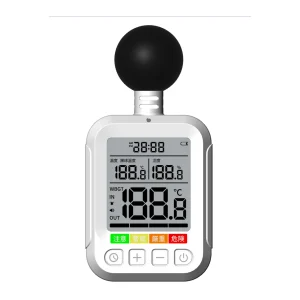
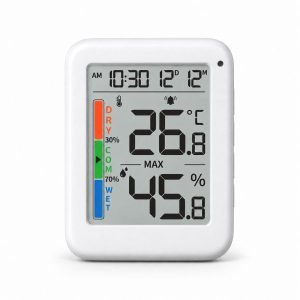
We approach this differently at YGhao by avoiding bulky, retrofitted secondary enclosures and building the protection directly into a custom digital hygrometer. By using dual-O-ring radial seals and integrated PTFE micro-vents, our housings equalize internal pressure dynamically without letting liquid in. This setup keeps the footprint small and prevents the stagnant-air pockets that throw off humidity readings inside a double-boxed installation. Before you sign off on another instrument order, ask your supplier how their housing manages pressure spikes during washdowns—if they do not have a clear engineering answer, you are budgeting for scheduled failures.
Potting vs. Modular Gaskets: Choosing the Right Seal for Long-Term Humidity Integrity
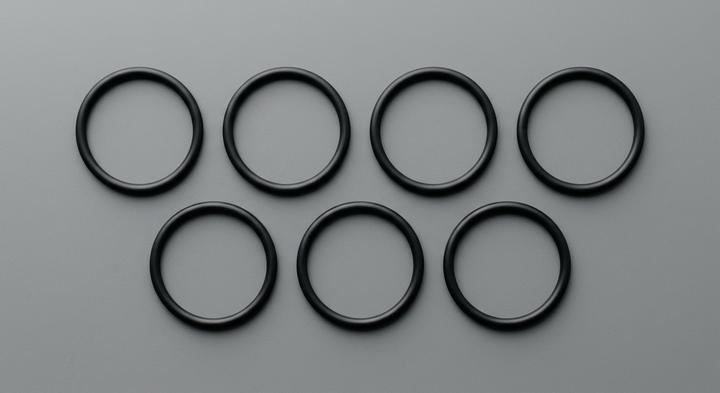
Precision-engineered gaskets play a key role in protecting sensitive internal electronics from external humidity.
To ensure long-term humidity integrity should you choose potting or gaskets for washdown sensors?
The decision to use potting or modular gaskets depends on whether your application values absolute hermetic isolation over long-term field serviceability. Curing shrinkage in standard Epoxy Potting or Polyurethane Potting compounds can stress-fracture delicate surface-mount ceramic capacitors on the sensor PCB during the exothermic phase, whereas mechanical seals require strict gasket compression math—held tightly between 20% and 25% to avoid elastomer pinch-sets and catastrophic bypass. To balance internal enclosure pressures during rapid temperature drops, micro-porous PTFE membrane vents are integrated into the housing; these allow gas-phase water molecules (~0.0003 microns) to diffuse freely for accurate relative humidity sensing while successfully blocking liquid washdown water (>100 microns) from bypassing the right seal.
| Sealing Method | Protection Grade | Relative Unit Cost | Tooling Overhead | Serviceability Factor |
|---|---|---|---|---|
| Epoxy Potting | IP67 / IP68 (Subject to micro-cracks under thermal shock) | Low (Highly automated, excellent for high-volume runs) | Low (Simple open-pour gravity fixtures and fixtures) | Zero (Destructive removal; requires scrapping the entire PCB assembly) |
| Polyurethane Potting | IP67 / IP68 (Better elastomeric strain relief than epoxy) | Moderate (Higher raw material cost than basic epoxies) | Low (Requires standard pouring fixtures and curing ovens) | Zero (Digging out soft gel runs high risk of ruining PCB traces) |
| Viton Gasket | IP67 / IP69K (Maintains reliable seal up to 80°C washdowns) | High (Higher per-unit cost for fluoropolymer elastomers) | High (Requires high-precision custom injection tooling) | Excellent (Field-replaceable; allows simple modular sensor element swaps) |
Engineering Verdict
Regardless of your specific requirements for customization, the engineering verdict is clear. If you are building low-cost, disposable OEM sensor nodes where field calibration is unnecessary, polyurethane potting offers a robust, vibration-resistant path to production with minimal upfront tooling barriers. However, for industrial custom digital hygrometers that must endure daily cyclic steam washdowns and require periodic sensor swaps, a precision Viton gasket is non-negotiable. At YGhao, we help bridge the initial tooling cost hurdle by designing high-tolerance dual-cavity molds that ensure exact compression control, preventing leaks without blowing your development budget.
Field Deployments: Customizing Sensor Architectures for Three Industrial Realities
The third-shift sanitation crew at a meat packing plant has forty minutes to complete a hot caustic wash before the morning QA supervisor audits the line. When 80°C water containing sodium hydroxide (NaOH) hits a sensor enclosure, standard acrylic instantly develops micro-fissures—known as chemical crazing—that pull moisture directly onto the internal circuit board. Matching the physical housing of a custom digital hygrometer to your plant’s chemical exposure is the only way to prevent sensor drift. We divide our engineering approach across three industrial realities. The first is the temperature swings of processing lines.
High-Temperature Food and Beverage CIP Lines
Daily clean-in-place sanitation cycles quickly expose the limits of standard polymers. Acrylic compromises quickly, making thick-walled polycarbonate or 316 stainless steel housings necessary to prevent stress-crazing. In these temperature food washdown lines, continuous thermal shock is the norm, shifting from cold rooms to hot wash cycles in minutes. To guarantee reliability, YGhao verifies housing durability using accelerated environmental stress testing (AST) before manufacturing runs, subjecting prototypes to simulated thermal shock and caustic exposure. This pre-production validation ensures the enclosure maintains its seal integrity under thermal stress, preserving calibration. A good rule of thumb is to specify 316 stainless steel whenever the washdown temperature exceeds 70°C with caustic concentrations above 2%.
Sterile Pharmaceutical Cleanrooms
In cleanroom environments, preserving the differential pressure barrier during sensor calibration is a major headache. Standard fixed-wire hygrometers force technicians to pull wiring through conduits, breaking environmental seals and triggering complex re-validation procedures. Deploying modular custom digital hygrometers in sterile pharmaceutical cleanrooms inside these environments allows rapid on-site calibration swaps without disrupting room seals. A modular architecture featuring a PTFE-shielded probe paired with quick-disconnect M12 connections lets technicians swap the sensing element in under a minute while the main body remains outside the cleanroom wall, preventing depressurization. To avoid room re-qualification audits, design the calibration disconnect point on the cleanroom wall itself.
The IP67 Spec Sheet Trap: Where Datasheets Lie and Sensors Drift
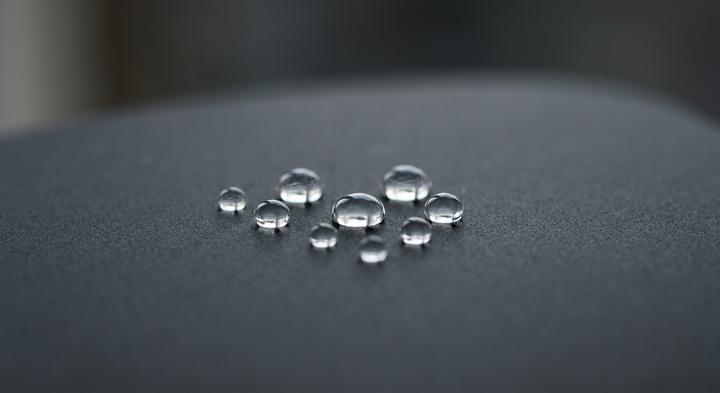
Hydrophobic surfaces must successfully repel dynamic moisture sprays to avoid long-term calibration drift.
Falling into the IP67 Spec Sheet Trap is the fastest way to blow an industrial instrument budget. This is where datasheets lie: static laboratory conditions are a world away from the dynamic, high-pressure environments of a real food or pharmaceutical processing plant.
An IP67 rating guarantees the sensor housing will withstand high-pressure washdowns.
A static water immersion test (IP67) means a device survived under one meter of calm water for thirty minutes. It has nothing to do with dynamic, high-velocity washdown sprays that strike a gasket at 100 bars of pressure. Those pressurized jets easily shear past standard seals that are only rated for static immersion. If your line undergoes daily high-pressure washdowns, look past IP67 and demand IP66 or IP69K housings designed with physical deflection barriers to block direct spray.
Potting the entire internal assembly is a foolproof way to eliminate moisture ingress.
While potting seems like an easy fix, cheap epoxy formulations frequently outgas volatile organic compounds (VOCs) inside the sealed housing. When these VOCs are trapped in a tight cavity under thermal stress, they concentrate and coat the sensor element, causing a shift in calibration. We call this the sensors drift static state—where the sensor reads a constant, incorrect offset and cannot recover. To prevent this chemical poisoning, you must specify medical-grade, low-outgassing potting materials or use isolated, gasketed dry cavities.
A hydrophobic PTFE membrane is an impenetrable barrier to any water on the plant floor.
Hydrophobic membranes stop pure water, but they fail the moment industrial detergents enter the equation. Surfactants in cleaning chemicals lower the surface tension of water from roughly 72 mN/m down to under 30 mN/m, allowing soapy mixtures to wet the PTFE membrane. Once the membrane is wetted, capillary action draws chemical-laden water directly onto the sensor chip. For washdown lines, you need oleophobic-treated PTFE membranes and protective metal shrouds to redirect direct spray.
Visual inspections during assembly are sufficient to guarantee the seal integrity of a finished batch.
A line operator holding a housing up to the light will never spot a micro-gap in a compressed gasket or a tiny void in a potting bead. At YGhao, we bypass visual guesswork by running automated dry-nitrogen chamber tests and bubble leak detection on every single custom digital hygrometer before it goes into a shipping crate. Are you ready to challenge your supplier’s cleanroom test results before putting their sensors on your washdown line?
Auditing the Factory Floor: Quality Checks That Guarantee Long-Term Sealing
When evaluating long-term sealing, how do you audit a custom digital hygrometer factory? True moisture resistance under thermal washdown cycles requires automated machinery and strict floor-level validation, not just generic compliance certificates.
| Audit Stage | Critical Test Parameter | Inspection Equipment | Tolerance Threshold |
|---|---|---|---|
| Resin Potting | Void-free PCB encapsulation to block internal moisture bypass under washdown pressure. | Dual-chamber planetary vacuum-mixing system to eliminate micro-bubbles. | Zero micro-bubbles; 100% encapsulation fill height uniformity. |
| Gasket Inspection | Prevention of split mold parting line defects and flash protrusion on Viton seals. | Digital optical comparator with 20x minimum magnification. | Flash line height < 0.05 mm; zero visible cracks or parting line defects. |
| Enclosure Sealing | Dry-nitrogen pressure retention under cyclic thermal-vacuum stress tests. | Differential pressure-decay system with serialized tracking. | Leak rate ≤ 0.1 sccm at 15 kPa. |
| Sensor Calibration | Drift stabilization of the relative humidity chip under thermal-washdown stress. | Dynamic environmental chamber for high-humidity burn-in. | RH drift < 0.5% after a 48-hour continuous cycle. |
Identifying Floor-Level Sealing Red Flags
When auditing the factory floor, looking at cleanroom viewing galleries can distract from the manual errors that actually compromise a custom digital hygrometer. The most severe sealing failures stem from subtle deviations in production discipline that an auditor must actively seek out. During the resin potting phase, watch for manual epoxy stirring with hand paddles or open-air pouring cups; these crude techniques inevitably trap micro-bubbles that expand during thermal washdown cycles, forcing moisture into the PCB. A qualified vendor must run automated, dual-chamber planetary vacuum-mixing systems to degas the potting compound before dispensing. For gasket inspection, verify that operators do not just check seals by eye; they must use digital optical comparators to screen for split mold parting lines and flash line defects that prevent uniform compression. Finally, flag any supplier that lacks serialized pressure-decay testing on the assembly line or bypasses the high-humidity burn-in step for sensor calibration. Without individual serialization, there is no way to trace which specific units failed to maintain pressure, and skipped burn-in tests guarantee that early-life sensor drift will occur after deployment in the field.
From CAD to Mass Production: Tooling Timelines, MOQs, and Risk Mitigation
While selecting a high-tolerance Viton gasket protects the seal in theory, the commercial friction always starts when you transition from a clean CAD screen to physical tooling. Managing these tooling timelines is a balance of speed and cost; before committing to steel, a pilot run of 10 to 50 units can be CNC-machined or run from rapid aluminum tooling in just 10 days. Treat this pilot window as your last practical chance to measure actual gasket compression and mechanical tolerances on the physical line before investing in hardened steel tooling, which requires 30 to 45 days of precision machining. Skipping this check is how minor CAD errors turn into expensive, warped plastic. On the shop floor, maintaining a minimum draft angle of 1.5 degrees and keeping wall thicknesses uniform are not suggestions—they are physical rules. If you ignore them, sink marks will warp the gasket track, creating microscopic bypass gaps that allow water to bypass the seal entirely under washdown pressure.
Once physical tolerances are verified, scaling to commercial mass production forces a shift from engineering physics to B2B sourcing realities. Custom injection-molded enclosures usually carry an MOQ of 500 to 1,000 units to amortize machine setup, custom color matching, and raw material runs. For a design team trying to navigate these financial and physical constraints, implementing risk mitigation now means getting eyes on your file before the steel is cut. To avoid tooling rework and unexpected leaks, you can upload your .STEP CAD drawings for a direct, line-by-line manufacturability review by our technical team, or download the YGhao IP67 enclosure engineering reference specifications to check your wall dimensions, draft angles, and sealing groove geometry before locking the design.