Sourcing Durable Plastic: Structural Mold Audits for a Custom Digital Hygrometer
Why Custom Digital Hygrometer Enclosures Crack: The Hidden Cost of Mold-Flow Mistakes

An abstract representation of mold-flow dynamics, where optimized gate placement prevents structural weld-line stress.
Physical housing failure, not sensor drift, is the primary reason custom digital hygrometers are returned from industrial deployments in pieces. Sourcing teams and hardware engineers routinely spend three months tuning relative humidity tolerances and firmware duty cycles, yet spend less than three minutes reviewing the injection molding tool design. When these units are mounted in high-stress environments—like agricultural greenhouses, HVAC ducts, or refrigerated containers—the plastic splits at the screw bosses or around the sensor vents. The failure is usually written off as end-user drop abuse, but the root cause is actually frozen-in structural stress created before the resin even fully cooled.
To understand why this happens, you have to look at how molten polymer behaves inside the mold cavity. To shape the battery compartment, the LCD window, or the ventilation slots of a custom digital hygrometer, the liquid resin must divide and flow around metal core pins. Where those split fronts meet on the other side of a pin, they form a weld line. If the tool temperature is too low, the injection pressure is unoptimized, or the gate is poorly placed, these cooling fronts fail to fuse on a molecular level. They simply touch. This leaves a latent structural fault line. When the device experiences thermal cycling or simple assembly torque, that built-in tension releases, causing the plastic to snap.
Transitioning from a cheap off-the-shelf plastic box to audited custom tooling is the only way to mitigate this risk for industrial-scale rollouts. Resolving these flow mistakes field deployments expose is virtually impossible once the tooling steel is cut without incurring thousands of dollars in re-tooling costs and months of shipping delays. This is why we integrate mold-flow audits directly into the pre-production CAD review phase at YGhao, mapping out weld lines and air traps before starting any fabrication. To protect your hardware yield, never sign off on a tooling deposit until the manufacturer provides a simulation proving that all structural weld lines are positioned at least 5mm away from any screw boss, snap joint, or mounting bracket.
Plastic Selection and Tooling Specs: The Core Criteria for a Drop-Resistant Shell
Which plastic material is best for an industrial digital hygrometer enclosure?
To build a Resistant Shell Which survives harsh floor drops and caustic sanitizers, you have to look past basic datasheets. Sourcing teams often choose cheap commodity ABS to keep initial injection costs down, but they pay for it later when units crack during winter transit or degrade under industrial UV lamps. Moving to a rugged polycarbonate blend or Acrylonitrile Styrene Acrylate is usually the turning point where field return rates drop to near zero.
| Buyer Type | Key Decision Factors | Material Fit | Primary Material Risks | Tooling Verdict |
|---|---|---|---|---|
| Volume Consumer | Low unit cost, basic indoor drop protection, gloss finish | Pure ABS | Environmental stress cracking, yellowing under UV | Standard tooling; allows lower injection pressures and simple ejection. |
| Cold Chain / Industrial | Sub-zero impact strength, sanitizer wipe resistance, long-term sealing | PC/ABS Blend | High injection pressure, weld-line brittleness | Relocate gates away from load-bearing snap joints to avoid weak points. |
| Outdoor / Agricultural | High solar UV exposure, fluctuating humidity, chemical washdowns | Acrylonitrile Styrene Acrylate | Higher material cost, longer cooling cycles | Specify a minimum 1.5° to 2.0° draft angle to prevent textured drag marks. |
| Lab & Medical | High optical clarity for integrated LCD windows, scratch resistance | PMMA / Polycarbonate | Brittle fracture on drop impact, stress cracking | Requires highly polished mold cavities and slow, controlled injection. |
Tooling Tweaks for High-Yield Production
If you change the plastic material, you change the tool parameters. At YGhao, we see buyers try to run a high-performance Acrylonitrile Styrene Acrylate through an existing mold cut for pure ABS, only to find the parts do not fit. Because every polymer exhibits a unique shrink rate, holding a Strict Tolerance of ±0.1 mm at the mating seams requires dedicated tooling specs calculated from day one. Failing to adjust for these properties leads directly to gaps that let moisture seep into your delicate internal circuitry.
Draft angles and gate placement are where most custom digital hygrometer designs fail physical testing. A minimum 1.5-degree to 2-degree draft angle is mandatory on textured outer walls to prevent ejector pin stress and drag marks during ejection. Furthermore, placing the injection gate directly adjacent to the clear display window creates high localized molded-in stress that warps the faceplate. Moving the gate to a thick structural rib ensures Zero Stress For the display aperture, keeping the mating surfaces dead flat for a secure snap-fit.
From Greenhouses to Cold Chains: Specifying the Shell for Three Environmental Scenarios
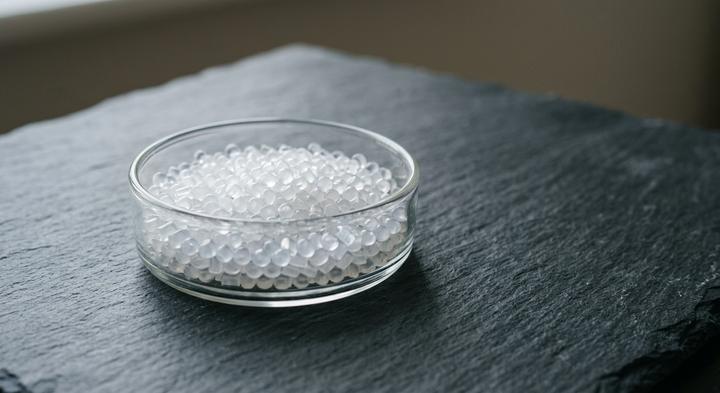
Premium polymer selection, such as ASA or PC/ABS blends, forms the foundation of drop-resistant custom housings.
A quality assurance lead examining hairline cracks on a batch of returned sensor housings at 6:00 AM knows environmental ratings are never just lines on a datasheet. When sourcing a custom digital hygrometer, matching the physical shell to the operating terrain is what prevents early field failures and costly warranty claims. Standard ABS might pass an initial office drop test, but real-world agricultural, cold chain, or industrial HVAC environments alter material chemistry over time. During the Design for Manufacturing (DFM) phase, our engineering team at YGhao reviews these environmental stressors to adjust wall thickness, elastomer seal tolerances, and internal rib reinforcements before cutting the production mold.
Agricultural Greenhouses
Agricultural Greenhouses require enclosures that can endure Weathering Constant Saturation under a near-constant 90% relative humidity. Cheap commodity plastics degrade rapidly under these conditions, leading to discoloration, embrittlement, and moisture ingress that short-circuits the internal PCB. For these high-humidity agricultural deployments, specifying a custom digital hygrometer requires moving away from standard ABS to thick-walled Acrylonitrile Styrene Acrylate. Acrylonitrile Styrene Acrylate provides built-in UV resistance and high chemical tolerance against agricultural sprays, preventing plastic breakdown from Chemical Exposure In modern fertilization and pest control systems. To completely seal the housing without relying on adhesives that dissolve under high humidity, the shell must be designed with ultrasonic weld joints, creating a permanent bond along the mating seams.
Medical Cold Chain Logistics
For Medical Cold Chain Logistics, the primary engineering challenge is Surviving Sudden Thermal Shock when moving cargo trackers from a -40°C ultra-deep freezer directly onto a warm loading dock. This rapid temperature transition causes sudden material contraction and expansion, making standard plastics brittle and causing elastomer gaskets to shrink. When procuring for medical cold chain tracking, the enclosure must utilize a specialized Polycarbonate/ABS blend that retains impact strength at sub-zero temperatures. Rather than relying on adhesive-backed foam tape, the shell must be engineered with a custom co-molded silicone gasket groove to maintain a continuous, flexible seal that prevents moisture condensation from bypassing the barrier.
Industrial HVAC Duct Monitors
Tooling Shortcuts That Crack: Four Shell Design Pitfalls to Avoid Before Mass Production
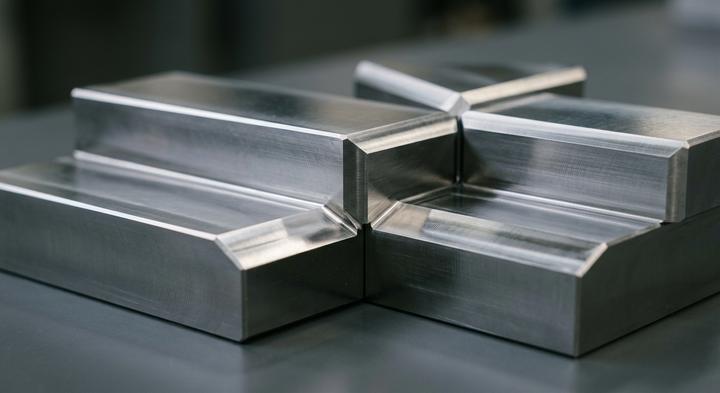
Pre-production tooling adjustments ensure consistent wall thickness and balanced cooling rates.
An enclosure that passes a 3D-printed prototype check will still fail if you optimize your tooling solely for the lowest initial quote. In high-humidity custom digital hygrometer deployments, housing failures like warped seals and cracked bosses—not sensor drift—drive up RMA rates. If the tooling layout ignores basic polymer dynamics, the mold will inevitably lock structural stresses into the plastic.
Standard wall thickness is a safe default across the entire enclosure.
Abrupt transitions between thin display windows and thick mounting ears cause uneven shrinkage, leaving visible sink marks. When liquid plastic cools, the thick sections pull material inward, creating internal stress concentrations. Instead of sharp steps, specify a gradual 3:1 transition taper and verify that your toolmaker runs a volumetric shrinkage analysis to prevent cracks along the bezel.
Any experienced consumer-electronics molder can handle a sensor housing.
Standard molders frequently overlook the venting required for high-humidity environments. Without strategically placed gas vents (often 0.015 mm deep) in the core, trapped air compresses under high pressure, causing localized burn marks or microscopic voids that let moisture bypass seals. At YGhao, we physically map out these core vents to prevent air traps before cutting mold steel.
Weld lines are purely cosmetic flaws that do not affect structural integrity.
When molten plastic splits around a core pin to form a screw boss, the meeting flow fronts create a structural weld line. If this joint is poorly fused, the boss will split the moment assembly line workers apply torque with electric screwdrivers. Demand a mold-flow simulation to position gate entry points so weld lines occur in low-stress zones far from load-bearing bosses.
Mold cooling circuit layouts have little impact on the final IP-rating of the shell.
Warped mating surfaces are usually caused by uneven cooling rates in the tool halves, not material specs. If a factory runs basic straight cooling lines that miss deep mold pockets, one side of the part cools faster, warping the flatness required for an IP-rated seal. Verify that the supplier provides a water-line schematic showing balanced cooling loops that match the enclosure’s geometry.
Is your current supplier providing these mold-flow simulations and cooling circuit layouts before they collect your tooling deposit?
The Mold-Flow Audit: How to Vet a Custom Digital Hygrometer Manufacturer
How do you audit a custom digital hygrometer manufacturer’s tooling capabilities before signing off on a major capital deposit?
Many hardware procurement leads focus entirely on unit pricing and sensor spec sheets, only to watch their timelines slip when the first physical housing samples warp, crack, or pinch internal printed circuit boards. Tooling is the ultimate point of failure in custom hardware manufacturing; once the steel is cut, modifying a complex multi-cavity mold is both slow and incredibly expensive. Vetting a manufacturer requires looking past glossy marketing decks and looking directly at their simulated engineering reports, metallurgical certifications, and line-level quality control procedures.
| Ask | Expected evidence | Red flag | Responsible party |
|---|---|---|---|
| Mold-Flow Simulation | A native, multi-angle CAD simulation report detailing absolute filling time, volumetric shrinkage percentages, and estimated air trap locations. The report must mathematically prove that structural weld lines are routed at least 5mm away from screw bosses, snap joints, or sensor apertures. | Vague verbal assurances that “the mold will fill fine” or static 2D screenshots showing only the gate location without flow velocity or shear stress data. | Lead Tooling Engineer |
| Steel Certification | Signed metallurgical mill certificates and hardness test records (verifying 48–52 HRC) proving the use of genuine hardened tool steel, such as S136 (for high-gloss/optical transparency) or H13, rather than unhardened pre-hard alloys. | A lack of heat treatment records or the use of soft P20 steel for multi-cavity runs exceeding 50,000 units. Soft steel deforms quickly under the extreme pressures of glass-filled polymers, causing rapid dimensional drift. | Procurement Manager |
| First Article FAI | A comprehensive First Article Inspection (FAI) metrology report detailing physical dimensions of the first T1 injection shot. This must include coordinate measuring machine (CMM) data cross-referencing critical dimensions like PCB alignment pins, O-ring channel depths, and sensor window clearances against 3D CAD step files. | Moving directly from tooling completion to bulk production assembly trials without a documented FAI report, or attempting to resolve clearance issues by manually filing down PCB edges rather than correcting the steel tooling. | Quality Assurance Lead |
| Assembly Torque Control | Line-level Standard Operating Procedures (SOPs) specifying exact Newton-meter (N·m) torque parameters for ESD-safe electric screwdrivers, alongside daily torque-calibration logs for the assembly station meters. | Use of uncalibrated manual pneumatic drivers or standard handheld screwdrivers on the final enclosure closure. This lack of control causes micro-fracturing of internal plastic bosses, which fail weeks later under mechanical stress. | Production Supervisor |
Locking Your Enclosure Specs: Engineering-First Production with YGhao
While adjusting assembly torque tolerances and verifying physical T1 samples will protect your immediate assembly line, a custom digital hygrometer only survives the field if the mechanical design itself was built for stress. We regularly see engineering teams spend months fine-tuning relative humidity calibration and sensor firmware, only to watch their field-service budgets bleed dry when the housing splits during a cold-chain washdown or turns brittle under greenhouse UV exposure. You cannot fix bad wall-thickness transitions or poor gate placement by adjusting a torque driver at the assembly bench. Real physical durability has to be locked into the injection mold before the first tool is cut. By resolving weld lines, draft angles, and polymer flow behavior during the initial engineering review, YGhao converts a high-risk enclosure sourcing step into a highly predictable manufacturing run.
That critical transition from raw CAD data to physical parts is where most custom enclosures fail. Our facility manages this entire path under one roof, integrating high-precision mold making, custom resin blending—including specialized PC/PBT alloys for chemical resistance—and integrated environmental chamber testing. Rather than relying solely on software models, we subject physical samples to extreme thermal shock and high-humidity dwell cycles to prove the enclosure keeps out moisture under pressure. If you are preparing a custom digital hygrometer for commercial deployment, submit your 3D STEP files to our engineering desk. We will provide a complimentary DFM mold-flow assessment and tooling feasibility report, identifying hidden risk areas before you authorize your First Production run.