Specifying a Custom Digital Hygrometer to Survive High-Humidity Agricultural Environments
Why Standard Humidity Sensors Fail in Agricultural High-Humidity Zones

Conceptual diagram of a hydrophobic barrier protecting sensitive electronics from liquid water ingress while remaining vapor-permeable.
Hardware ruggedization, not software calibration, determines whether a sensor survives its first month in a commercial cultivation facility. Standard capacitive sensors are built for benign HVAC environments, not an Agricultural High relative humidity setup. Why Standard Humidity Sensors drift so rapidly in these facilities comes down to physical saturation. When relative humidity consistently hovers at 95% or higher, moisture does not just rest on the sensor face; water molecules permanently bind inside the dielectric polymer layer of the chip. This chemical saturation causes an irreversible positive calibration drift, rendering your automated ventilation cycles useless.
Compounding the saturation problem is the daily dew point cycle. When evening temperatures drop, airborne vapor condenses into physical water droplets directly on the sensing element. This water gets trapped under standard protective caps, keeping the chip locked at a false 100% RH reading long after the ambient room air has dried out. When you add the routine use of sulfur vaporizers for pest management and ammonia off-gassing from fertilizers, unprotected copper traces and digital communication lines corrode within weeks. This is why off-the-shelf plastic probes fail; they lack the physical isolation needed to shield active silicon from aggressive agricultural chemistry.
To bypass this cycle of constant replacement, commercial operations require a dedicated Humidity Zones Sensor engineered with true environmental barriers. As an OEM/ODM manufacturer, YGhao solves this by replacing fragile consumer housings with heavy-duty enclosures capped by microporous ePTFE (expanded polytetrafluoroethylene) membranes. These hydrophobic barriers allow water vapor to diffuse naturally for accurate real-time readings while blocking liquid water droplets, fertilizer dust, and corrosive vapors entirely. Before approving a custom digital hygrometer supplier, ask for the exact pore size of their hydrophobic filters and the chemical resistance limits of their sensor casings. If they cannot provide these specifications on the first RFQ, the sensor will likely fail before your next crop cycle.
The Spec Sheet Blueprint: Decoupling Sensor Core from Protective Housing
How do you specify a custom digital hygrometer that won’t fail in high-humidity greenhouses?
When drafting specs for the Protective Housing How you vent the enclosure is as critical as the chip itself. Decoupling Sensor Core components from the outer casing ensures the delicate semiconductor isn’t blinded by trapped moisture. The choice of materials and communication buses depends heavily on your specific deployment zone.
| Target System | Buyer Type | Key Decision Factors | Enclosure Fit | Primary Failure Risks | Procurement Verdict |
|---|---|---|---|---|---|
| Density Agricultural Canopy | Tech Integrators | High vapor permeability, rapid wetting recovery, fertilizer vapor immunity | Thin-film capacitive core, integrated micro-heater, hydrophobic ePTFE vent | Brief data blanking during active heating pulses; higher initial unit cost | Mandate active heating elements with custom firmware to clear condensation dynamically. |
| Open Aisles | Facility Systems Buyers | Steady-state accuracy, moderate dust resistance, low-maintenance housing | Standard capacitive core, sintered stainless steel filter cap | Pore-clogging by particulates; sulfur deposition causing permanent drift | Specify sintered metal caps only in non-condensing zones with low chemical use. |
| Decentralized Low | Cost Nodes | Bulk Storage Procurement priority, absolute lowest unit cost, simple board integration | Resistive polymer element, slotted plastic cover without membrane | Severe hysteresis above 85% RH; zero protection against direct spray | Restrict to dry storage areas or administrative spaces; reject for cultivation zones. |
Real-World Wetting Recovery and Enclosure Physics
Standard IP67 enclosures are highly misunderstood. While they block dust and liquid water, they trap internal humidity once the dew point drops, keeping the housing at a false 100% relative humidity. Without a breathable ePTFE membrane to let vapor escape, the sensor core stays blinded long after the room has dried. To prevent this, bypass cheap resistive elements and specify thin-film capacitive sensors with built-in micro-heaters. This integrated heater boils off condensation, ensuring fast recovery after wetting and keeping calibration stable.
For internal board-to-board routing, standard short-distance I2C protocols work perfectly. But for long cable runs exposed to electrical noise from fans and LED ballasts, specify RS485 Modbus RTU. Finally, make the manufacturer prove their calibration checking process. Ask if they test sensor recovery rates inside specialized environmental chambers simulating greenhouse environments. If they only test in clean, dry air, the sensor will drift quickly under real agricultural conditions.
Application Scenarios: Where Standard Enclosures Fail and Custom Probes Survive
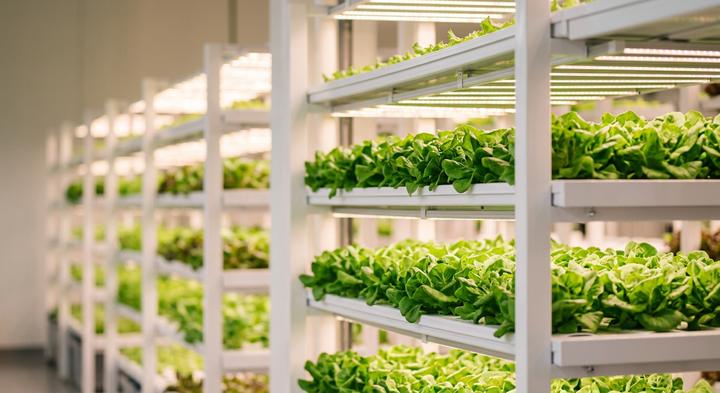
Modern vertical farming canopy setup requiring precise microclimatic monitoring.
At 6:00 AM on a commercial greenhouse floor, a maintenance technician is usually not checking calibration logs; they are wiping down waterlogged sensor casings that spent the night dripping condensation onto valuable seedlings. When planning a sensor layout, facility managers often overlook how severe microclimates form within inches of structural frames, LED drivers, and misting lines. Standard plastic wall-mount hygrometers are built for dry office corridors, not the physical abuse and saturated humidity of commercial agriculture. To keep ventilation loops running without false alarms or sensor drift, the sensor’s physical geometry must match its exact location in the facility. This is where Custom Probes Survive At their highest efficiency, while standard off-the-shelf enclosures quickly fail.
Tier Vertical Racks and LED Arrays In Close Proximity
In Multi-Tier Vertical Racks, tight physical clearance means standard wall-mount sensors get shoved right against metal frames or baked by high-output LED Arrays In close proximity. This localized radiant heat artificial dry-out fools the local PLC into dehumidifying a rack that is already starved of moisture. Utilizing a low-profile custom digital hygrometer with flat ribbon cabling allows the probe to sit flush inside the canopy, completely clear of automated harvesting machinery. By separating the capacitive sensing chip from the transmitter housing and running a flat cable back to the controller, the system avoids both mechanical impacts from moving shears and false readings caused by localized ballast heat.
Overhead Canopy Zones Under Automated High Pressure Misting
Deploying sensors in Overhead Canopy Zones Under the path of Automated High Pressure Misting lines often results in liquid water blinding standard sensor filters within a week. While some operators try to shield plastic sensor casings with makeshift plastic caps, this setup traps stagnant air and creates localized pockets of 100% relative humidity. Specifying a weighted, pendant-style stainless steel probe with integrated drip rings forces gravity to shed water droplets before they reach the ePTFE hydrophobic membrane. This design lets the sensor hang freely in active air currents without water ingress causing permanent sensor drift or delayed recovery times after misting cycles.
Seed Propagation Chambers and Nursery Domes
Inside sealed Seed Propagation Chambers and low-lying Nursery Domes, stagnant air and near-saturation humidity create a breeding ground for mold if climate control lags. These environments demand fast-response sensors that maintain a strict ±1.5% RH tolerance to catch rapid shifts during venting cycles. A custom digital hygrometer fitted with scheduled heating pulses periodically burns off microscopic moisture layers from the sensor die, preventing the sensing element from remaining saturated and giving false dry readings. To avoid stagnant damp spots, position the probe at canopy level rather than mounting it flat against a dome wall where stagnant boundary layers distort real crop conditions.
Sourcing Pitfalls: Where Agritech Buyers Overpay and Under-Specify
Unplanned maintenance labor, not initial capex, dictates the true cost of greenhouse climate automation. A cheap sensor that drifts under agricultural stress ruins crop yield long before it completely dies. When procuring equipment, buyers must look beyond the raw chip datasheet to the physical realities of the cultivation floor.
We can save up-front capex by sourcing cheap, unsealed IP65-rated sensors and swapping them out as they fail.
This strategy assumes failure is clean and instantly noticed, which is rarely true in a commercial greenhouse. Acidic foliar sprays and daily high-humidity cycles slowly corrode unsealed PCB traces, causing gradual measurement drift. Corroded tracks don’t just die; they drift quietly—which is actually worse, because a dead sensor gets replaced, while a drifting one runs up energy bills and ruins crop yield. If a technician spends 45 minutes dragging a ladder between rows, swapping a single drifted sensor, and manually verifying the new reading, you’ve spent more on labor than you saved on the cheap bulk unit. To avoid this, Specify Unplanned maintenance budgets in your calculations and look for custom digital hygrometer designs with IP67 potting and breathable, hydrophobic vents.
The sensor chip is factory-calibrated for life, so it will remain accurate without ongoing maintenance.
No polymer dielectric layer can survive months of sulfur vaporization, chlorine washdowns, or organic fertilizer mist without shifting its baseline. The “calibrated for life” promise is a nice marketing bullet, but it was designed for clean-room HVAC systems, not active agriculture. When drift inevitably happens, design your system for easy field swap-outs, not heavy electrical work. Hardwired transmitters are a headache—they force a tech to shut down the bus, unclamp conduit, and rewire terminals on a ladder. Instead, specify modular, plug-and-play sensor heads like those we build at YGhao. An operator can unscrew a degraded sensor tip and twist on a fresh, calibrated replacement in seconds without touching the field wiring.
We must pay a premium for ±1% RH laboratory-grade accuracy to ensure optimal crop health.
Supplier Audit Checklist: Spotting Trading Companies vs. True Custom OEMs
How do you spot a trading company posing as a custom digital hygrometer factory?
Trading companies excel at forwarding borrowed ISO certificates; real OEMs prove their capability through raw, unedited calibration logs.
| Evaluation Point | Typical Trading Company Claim | Ask For | Factory Standard |
|---|---|---|---|
| Direct Calibration Proof | ‘We provide 100% factory-calibrated sensors with a standard printed QC certificate.’ | Raw multi-point environmental chamber calibration logs (CSV or JSON) showing cycles from 10% to 95% RH at 15°C, 25°C, and 45°C mapped to each sensor’s digital ID. | Automated database logging of each sensor’s calibration curve directly from the chamber, matching the board’s internal MAC address. |
| Material Safety | ‘Our sensor enclosure is high-grade, food-safe plastic that never degrades.’ | Third-party SGS testing reports showing the molded plastic housing does not outgas phthalates or toxic VOCs under continuous 50°C heat. | Certified medical-grade or custom-molded non-outgassing polymers with full lot traceability back to the raw resin supplier. |
| Unit-Level Traceability | ‘We use batch stickers on the master carton for quality control tracking.’ | Laser-etched QR codes on the sensor housing or internal digital serial numbers programmed into the EEPROM to trace field failures. | Every probe is laser-etched with a unique QR code linked directly to our internal ERP tracking operators, potting batches, and component lots. |
If a supplier hesitates to supply the raw CSV data from their chamber or cannot trace a housing back to its raw material lot, they are likely sourcing from a third-party market in Shenzhen. That disconnect leaves your team stranded when a sensor drifts in a sealed agricultural loop and there is no engineer on the other end to tweak the firmware. Real OEM partnerships survive because you can talk directly to the engineers who calibrated the boards, not a sales agent managing ten different storefronts.
Transitioning to a Pilot Run: Specifying the First Custom Batch
Now that the communication protocols are settled and calibration chamber tests are verified, the actual survival of your custom digital hygrometer comes down to physical deployment. A paper design always looks clean, but greenhouse canopies are hostile, unpredictable environments. Seasoned agritech buyers never jump from a PDF schematic straight to a multi-thousand-unit purchase order; they insist on a rigorous Pilot Run first. The best approach is a 10 to 50-unit test batch placed directly in your facility’s most stressful zones—typically right next to the cooling pads or directly under high-pressure fogging lines. This is where micro-condensation, pesticide sprays, and stagnant air will relentlessly hunt for leaks in cable glands, enclosure seals, and potting compounds. Specifying this First Custom Batch While the final rollout schedule is still being negotiated ensures you catch these physical vulnerabilities early, saving thousands of dollars in replacement labor and hardware swap-outs on the back end.
Be realistic about the development timelines when scheduling your pilot and commercial rollouts. Modifying a standard PCB layout to accommodate custom agricultural sensors and ruggedized connectors usually takes about 4 weeks, and fabricating custom plastic injection molds for unique protective housings can easily run up to 6 weeks. There are no magical shortcuts through tooling lead times or environmental stabilization tests. To avoid scheduling bottlenecks and ensure your housing design is actually optimized for the microclimates of your facility, share your draft parameters, target cable lengths, and interface requirements directly with the engineering desk at YGhao. We will conduct a direct ODM schematic review and design assessment to make sure your hardware survives the canopy before you commit to production tooling.