Choosing Between Mechanical and Digital Kitchen Timer Technology for Your Brand
The Real Trade-offs in Timer Procurement

Choosing between mechanical simplicity and digital precision requires balancing reliability with feature requirements.
When you are sitting down to finalize a timer order, the unit price is usually the first thing that gets highlighted. But if you look at the actual return data, the real cost isn’t in the BOM—it’s in the failure mode. You are essentially choosing between the mechanical simplicity of a spring-driven dial and the feature-rich complexity of an LCD board. Each path carries a different set of risks that will eventually show up in your customer support queue.
Mechanical timers are still the workhorse for high-volume retail because they don’t have batteries to leak or circuit boards to short out. They are simple, but they aren’t bulletproof; if the gear tolerances are loose or the spring steel is low-grade, you will see them fail in the field. On the other hand, digital timers offer the precision and multi-functionality that modern users want, but they introduce a new set of variables. A bad battery contact or a poorly sealed PCB can turn a profitable batch into a logistics nightmare. When we consult on these builds at YGhao, we look at the target retail price point to see which failure mode is easier to manage.
| Feature | Mechanical Timer | Digital Timer |
|---|---|---|
| Primary Failure Point | Spring fatigue / Gear wear | Battery contact / PCB moisture |
| Best Use Case | High-volume, low-cost retail | Premium, feature-heavy segments |
| QC Focus | Material hardness / Gear tolerance | Circuit continuity / Battery seal |
| Return Risk | Low (mechanical simplicity) | Moderate (electronic complexity) |
Don’t settle for a supplier’s general promise of ‘high quality.’ Ask them for the specific defect rate on their PCB assembly or their spring-tensioning process. If they can’t give you a number, you need to tighten your QC requirements before the PO is signed. A timer is only as reliable as the weakest component in its build, and the best choice is the one that aligns with how your customer actually uses it.
Technical and Commercial Comparison Matrix
How do you decide between a mechanical dial and a digital display when you’re looking at a 5,000-unit order? Most buyers get stuck on the unit price, but the real cost is hidden in the failure rate and the regulatory overhead of the technology you choose. Use this matrix to weigh the trade-offs before you commit to a production run.
| Technology Type | Typical Tooling Lead Time | Target Market | Primary Failure Mode | Compliance Focus |
|---|---|---|---|---|
| Mechanical | 30–45 Days | Budget/Retail | Spring Fatigue | Material Safety |
| Digital | 45–60 Days | Pro/Specialty | Battery Failure | RoHS/REACH |
Mechanical timers are built on a simple gear-and-spring architecture. They are cheap to produce and don’t require the battery-disposal paperwork that trips up shipments at customs. The catch is that springs lose tension over time. If you are sourcing for a high-volume retail shelf, the mechanical route is usually the most efficient, provided you aren’t promising high-precision timing to the end user.
Digital units are the standard for professional kitchens, but they bring a different set of risks. A circuit board is only as reliable as its solder joints and moisture protection. If you go this route, expect to add at least 15 days to your schedule for the WEEE, RoHS, and REACH compliance paperwork. Anyone who has shipped electronics into the EU knows that the surprise isn’t the freight cost—it’s the four hours of documentation required on a Friday afternoon.
When you are vetting a supplier, don’t just ask for a price. Ask for the defect rate on their last 12 batches. A mechanical timer is only as good as the spring-tensioning process, and a digital timer is only as good as the PCB assembly line. If they can’t show you the QC logs for those specific failure modes, you are buying a risk, not a product. The best choice is the one where the supplier can prove they have already solved the failure mode that matters for your specific market.
Matching Technology to Your Buyer Persona
When you are reviewing an RFQ, the technology choice is rarely about the features on the spec sheet—it is about the friction you are willing to accept in your supply chain. A mechanical timer is a lesson in simplicity, while a digital unit is a lesson in component management. The following scenarios illustrate how your target market dictates which path minimizes your long-term risk.
The Budget-Retail Buyer
For a regional discount chain, the primary pressure is the shelf-life of the unit and the cost of returns. A mechanical timer is the default choice here because it removes the battery from the equation entirely. When you eliminate the battery, you eliminate the risk of dead-on-arrival units caused by long transit times or warehouse storage, and you bypass the complex battery disposal compliance paperwork required for EU or North American markets. If your goal is to hit a specific retail price point while keeping the return rate under 0.5%, the mechanical spring-driven dial is the most efficient way to protect your margin.
The Pro-Chef and High-End Market
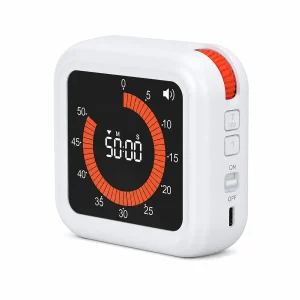
If your buyer is a professional chef or a home enthusiast, the mechanical variance of a spring-driven dial is a liability, not a feature. These users demand second-by-second precision and multi-event tracking, which forces you into the digital space. The trade-off is higher BOM costs and the necessity of managing RoHS and REACH compliance for the PCB assembly. When you move to digital, the failure point shifts from the spring tension to the display and the battery contact points. To succeed here, you must specify a high-contrast LCD that resists kitchen humidity and ensure your supplier has a rigorous burn-in test for the electronics before they leave the factory floor.
The Eco-Conscious Positioning
Brands targeting the sustainability market often find that the ‘no-battery’ narrative of a mechanical timer is a stronger selling point than any digital feature. This segment views digital timers as future e-waste, whereas a well-built mechanical timer is perceived as a durable, long-term tool. When you adjust your spec sheet for this buyer, focus your engineering budget on the spring mechanism’s cycle life rather than the display resolution. A mechanical timer that can handle 10,000 cycles without losing tension is a more valuable asset for an eco-conscious brand than a digital device that requires a battery change every six months.
Choose the technology that matches your customer’s tolerance for maintenance; if they want a tool that just works, go mechanical, but if they need precision, prepare for the compliance and QC overhead of a digital build.
Common Procurement Pitfalls in Timer Manufacturing
Most Digital Kitchen Timer projects fail not because of a bad design, but because the factory drifts from the pilot run to the bulk shipment. If you aren’t auditing the transition between those two stages, you are essentially gambling on the factory’s internal QC discipline.
If the sample passes, production will too.
A sample is a showcase, not a production-run guarantee. Buyers often approve a unit that functions perfectly in a lab, only to find the factory switched to cheaper spring materials or lower-grade plastic to hit a price point once the volume ramps up. Don’t rely on the pre-production sample. Require a staged inspection plan that tests the first 100 units off the line, and make sure those units are pulled from the same batch that will fill your order.
MOQ and lead time are fixed numbers.
In reality, these move based on your scope. A 45-day lead time usually assumes standardized parts; if your design requires custom tooling or specific firmware, that clock resets. Ask for the lead time on the first run versus repeat orders, and clarify whether the timeline starts at PO issuance or after the final artwork sign-off. Most suppliers will quote the best-case scenario, but the clock only starts when their engineer signs off the proof, not when your PO clears.
Compliance documentation can be handled at the port.
Waiting until a shipment reaches customs to verify REACH or RoHS compliance is a recipe for a total loss. Documentation must be verified against the specific batch materials before the goods leave the factory. If a supplier cannot provide valid, current test reports for the components used in your timer, the shipment is a liability waiting to be seized. Anyone who has shipped DDP into the EU knows the surprise isn’t the freight; it’s the four hours of REACH paperwork on a Friday afternoon.
Tooling depreciation is the most common oversight in bulk procurement. If you treat tooling as a one-time fee for the first run, you may find your unit price never drops on subsequent orders. Negotiate a clear amortization schedule based on your total projected volume, not just the initial pilot. Treat tooling as a capital investment that pays for itself over the life of the product, rather than a sunk cost that inflates your per-unit price indefinitely. A clear contract on tooling depreciation is the only way to ensure your unit cost actually trends downward as your volume grows.
How to Audit Your Timer Manufacturer
Now that you have a technical comparison in hand, the next step is verifying if the factory can actually hit those specs on a production run. A Digital Kitchen Timer is only as reliable as the weakest link in the assembly line, and a showroom tour rarely reveals the true defect rate of a high-volume run. You need to look past the sales pitch and verify the actual production data.
| Audit Checkpoint | Evidence to Request | Red Flag Indicator | Recommended Action |
|---|---|---|---|
| In-house QC | Last 12 batches’ defect logs | Vague ‘high quality’ claims | Request raw data on failure rates |
| Compliance | Current CE, FCC, RoHS reports | Expired or missing certificates | Verify certificate authenticity online |
| Capacity | Peak-season output records | Inability to define lead time | Request a capacity-per-line breakdown |
| Tooling | Maintenance logs for molds | Visible wear on sample units | Ask for a mold-life guarantee |
Don’t just ask if they have a QC process; ask to see the calibration logs for the testing equipment itself. If a factory claims they test for humidity resistance, they need to show you the climate chamber and the logs from the last production cycle. For mechanical units, look for a cycle-test rig that runs timers until the spring fatigues. If they cannot show you the data from the last 12 batches, they are likely managing quality reactively, which means you are the one doing the testing when the shipment arrives.
Documentation is the best indicator of a mature production process. If a supplier cannot provide a clear breakdown of their capacity per line, they are likely outsourcing overflow work to smaller, unvetted shops. We maintain full traceability for every production run, and we encourage partners to review our technical specifications and QC standards before committing to a pilot order. Contact our engineering team to request a full spec sheet or to book a video factory audit of our production lines.
Next Steps for Your Custom Timer Project
Choosing between a mechanical spring-driven dial and a digital LCD board usually comes down to your target volume and the specific compliance requirements of your destination market. If you are still weighing the trade-offs, the best way to avoid a mid-production stall is to get your design specs in front of an engineer before the tooling is cut. We have seen too many projects hit a wall because the PCB layout wasn’t optimized for the housing, or the spring tension was specified for a different duty cycle than the end-user expects.
If you are ready to move from a concept to a production-ready timer, we can help you verify your design against our current manufacturing constraints. Request a technical consultation with the YGhao engineering team to review your design. You can also download our 2026 product catalog to compare current mechanical and digital models, get a free quote for your custom OEM/ODM project based on your target volume, or book a 20-minute video factory audit to see our production lines in action.