How to Budget for Custom Moulds and Tooling When Sourcing from an Electronic Promotional Gifts Manufacturer
Why Your Electronic Promotional Gifts Manufacturer’s Unit Price Is Only Half the Story
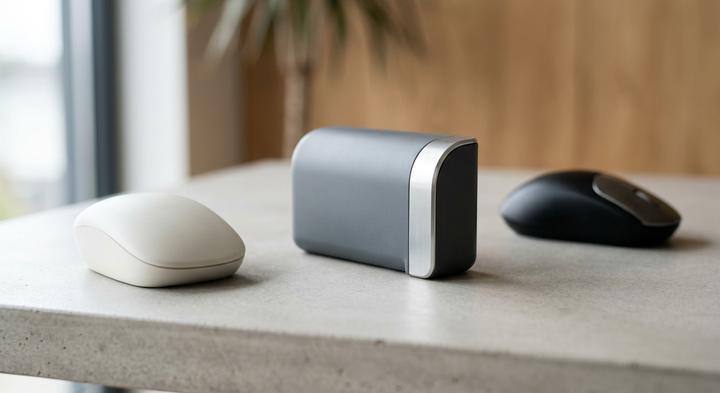
Physical 3D prints allow buyers to verify design tolerances before cutting hard tooling steel.
Your unit price on a custom corporate tech giveaway is almost always a distraction. Buyers often select an electronic promotional gifts manufacturer based on a per-unit price that looks great on a spreadsheet, only to see the project stall when surprise tooling bills arrive or the factory misses the launch deadline. With hardware like custom power banks, USB hubs, or weather stations, the piece rate is structurally tied to physical steel. If the internal PCB does not fit the custom plastic enclosure because the housing was molded to loose tolerances, a cheap unit rate just bought you thousands of units of electronic waste.
The trap is how tooling amortization is structured. A factory might drop the unit price to cost to win the bid, then quietly bury the mold cost in a separate engineering setup invoice. Or they amortize that tooling over a 50,000-unit volume you will never realistically order. If you try to pull your tooling to another partner later, you may discover you do not actually own the mold steel. True cost transparency means establishing who owns the tooling from day one, how many shots that mold is rated for, and exactly how the cost depreciates across your initial purchase orders.
Where custom electronics fail on the assembly line, it is rarely a high-level conceptual error. It is a matter of decimals. A 0.2mm error in a USB port cutout or a weak internal PCB screw standoff turns a 10,000-unit bulk shipment into useless plastic. At YGHao, we run physical SLA or SLS 3D prints to test the fitment, port alignment, and tactile button click before we commit to hard steel tooling. Skipping this check to save three days on the calendar almost always ends in spending three weeks rework-soldering ports that do not line up with the outer casing.
Then there is the calendar timeline. Many buyers assume production begins when the deposit clears. In reality, the clock only starts when the final engineering drawings are officially locked and signed off. To protect your margin and launch date, never tie payment milestones to arbitrary calendar dates; tie them to physical, verified tooling checkpoints. The unit price is only half the story. The single best rule to run by is simple: if you have not held a physical 3D-printed sample with a working PCB inside, your production timeline has not actually begun.
Mould Modifications vs. Private Tooling: Comparing Upfront Costs, Lead Times, and Unit Trade-offs
How much does a custom injection mould cost for high-volume promotional tech giveaways?
The entry-point for tooling starts near zero if you modify a stock casing, whereas custom private steel tooling typically demands an upfront investment between $3,000 and $15,000 depending on geometric complexity. Making this decision requires balancing your hard launch timeline against the physical demands of housing internal PCBs and lithium batteries without risking product failure. As an established electronic promotional gifts manufacturer, YGHao coordinates this tooling engineering to match both the campaign’s budget and target volume thresholds.
| Target Buyer Segment | Tooling Strategy | Upfront Cost & Lead Time | Primary Technical Risks | Strategic Verdict |
|---|---|---|---|---|
| Corporate Gift Distributor (Low Volume / Fast Turnaround) | Modified Stock Mould (Altering logo plate or port inserts) | $300 – $800 USD 10–15 days | Cosmetic mismatch at insert seams, flash along the parting line, restricted placement for USB ports or LED light pipes. | Best for fast, event-driven runs under 5,000 units where the housing design is already proven. |
| Mid-Tier Tech Brand (Moderate Volume / Semi-Custom) | Interchangeable Cavity Inserts (Changing internal modular blocks) | $1,500 – $3,500 USD 20–25 days | Uneven wall thickness leading to internal stress, uneven thermal shrinkage variations across ABS/PC blends, core shift. | Ideal for product families sharing a single outer chassis but requiring distinct port layouts or internal battery compartments. |
| Premium OEM/ODM Buyer (High Volume / Proprietary Design) | Fully Custom Private Tooling (Dedicated new steel mould) | $5,000 – $15,000+ USD 35–45 days | High upfront cash outlay, gate wear affecting tolerances over time, risk of cycle-time drag if cooling channels are poorly designed. | Mandatory for unique IP, complex internal standoffs, custom battery brackets, and high-security runs exceeding 20,000 units. |
The Cost-to-Volume Tipping Point
When evaluating the first physical T1 samples off a new tool, focus on the physical checkpoints that catch common manufacturing flaws before mass assembly begins. Look closely for sink marks on the outer surface where internal standoffs join the wall, and inspect the knit lines—where the molten plastic flows meet around port cutouts—to ensure they won’t crack under typical consumer use. A modified stock housing saves 10 to 15 days of engineering time because you are only cutting a small logo plate insert rather than EDM-machining a whole new cavity and core. Ultimately, the decision hinges on amortization: unless your volume justifies depreciating a $10,000 tool over tens of thousands of devices, a modified stock enclosure is the most reliable way to protect both your margin and your ship date.
Three Sourcing Scenarios: Which Custom Mould Strategy Fits Your Campaign?
The toolmaker’s bench at 7 AM is usually quiet, but if you are looking at a 3D-printed enclosure with a warped wall that won’t clip together, that quiet is expensive. When deciding whether to build a custom casing, the choice isn’t just about writing a check for a $5,000 injection mold; it is about how much cosmetic compromises will hurt your brand. At YGHao, we run high-fidelity SLS and SLA prototypes to catch these physical clearance issues before any steel is cut. It is a simple step of putting your actual PCB inside a raw nylon mockup, but it prevents the kind of structural errors that delay a launch by weeks.
Scenario A: The 45-Day Corporate Event
This represents the 45-Day Corporate Event When you have zero runway to wait for custom steel tooling. With a typical mold-making cycle running 30 days before the first T1 sample, trying to cut a new cavity for a short-run tech giveaway is a recipe for a late delivery. The smart play is to modify an existing stock enclosure by cutting a small, replaceable logo plate insert in the tool cavity. This allows you to emboss or deboss the client’s logo directly onto the shell during injection, shaving three weeks off the timeline and skipping the heavy upfront engineering costs entirely.
Scenario B: The Premium Retail-Grade Launch
This reflects the standards of The Premium Retail sector, where a visible 0.8 mm gap along the parting line makes a device look like a cheap knock-off. This level of finish requires a dedicated private steel tool to control the core pins and snap fits with tight precision. This is the typical Grade Launch For a brand that cannot afford rattling components or weak joints that break during transport. While a stock housing saves upfront capital, it forces your electronic promotional gifts manufacturer to design the PCB around a fixed plastic box, which almost always leads to messy internal wiring and poor thermal performance.
Scenario C: The Multi-Market Distributor
This strategy is built for The Multi-region distribution network planning a multi-year run. When you are projecting orders over 50,000 units, the initial $5,000 tooling cost ceases to be a capital expense and becomes a minor line item of ten cents per unit. This is the optimal path for a Market Distributor For whom proprietary design ownership is a defensive moat against copycats. With this volume, you can design multi-cavity tools to run high-volume cycles, lowering the raw plastic cost and allowing you to offer a completely unique industrial design that competitors cannot buy off a stock shelf.
The most reliable rule of thumb is to calculate your total volume first: if you cannot amortize a custom tool to under twenty cents per unit, your margin belongs in a modified stock mold.
Tooling Pitfalls: Why ‘Unlimited Free Mould Revisions’ Is a Sourcing Trap

Abstract visualization of mold cavities and CAD design validation.
Your tooling contract’s modification clauses will dictate whether your custom plastic enclosure ever fits its internal electronics. In high-volume manufacturing, there is no such thing as a free structural change; every adjustment alters the mold’s alignment, heat-treat hardness, and production lifespan.
Unlimited modifications are a standard industry perk.
Any electronic promotional gifts manufacturer offering “infinite free revisions” is either hiding those costs in a bloated unit price or using soft aluminum molds that degrade after a few thousand runs. Real tool steel, like H13 or NAK80, resists wear but degrades structurally if subjected to repeated welding and spark erosion. To escape this Sourcing Trap Your tooling agreement must limit pre-production tuning to two or three targeted adjustment cycles, which is how we protect the tool’s structural integrity at YGHao.
We can easily adjust the casing thickness at any point during test runs.
Physical tooling is strictly directional: removing steel from the core to make a plastic wall thicker is relatively simple, but making a wall thinner requires adding steel back, which often means scrapping the entire cavity block. Experienced toolmakers design “steel-safe,” keeping initial dimensions conservative so any adjustments only require metal removal. Skipping a thorough CAD review before cutting steel means a minor 0.2mm adjustment can trigger an expensive, multi-week rebuild.
We should purchase the electronic components now to align with the 30-day tooling cycle.
Buying custom PCBs, batteries, or connectors before the first physical plastic sample is approved is a classic procurement mistake. Slight cooling shrinkage variations in the first plastic shot often require adjusting internal mounting standoffs, meaning your pre-ordered electronics may no longer fit the finalized housing. Isolate the 30-day tooling cycle from long-lead component procurement until the physical enclosure passes its fit check.
The first-off sample from a new mold should look retail-ready.
A T1 sample is an engineering benchmark to test dimensions and flow, not cosmetic perfection. Expect cosmetic flaws like sink marks over thick screw bosses, weld lines where plastic flows merge, or uneven gate marks. Spotting these issues early lets the engineers dial in injection pressure and cooling times before hardening the steel for the final run.
Are you ready to ask your supplier for a steel-safe CAD analysis before you authorize the tooling deposit?
How to Verify Your Electronic Promotional Gifts Manufacturer’s Tooling Competency
How do I verify a promotional gift factory’s custom tooling capability?
You do it by ignoring glossy slide decks and looking directly at real floor assets and traceability paperwork.
Tooling Verification Checklist
| Ask | Expected evidence | Red flag | Responsible party |
|---|---|---|---|
| In-house CNC & EDM Ownership | Live video feed of active EDM and high-precision CNC machines cutting tool steel cores, backed by equipment registration IDs and active work orders. | Stock photos of generic machining centers, or claims that the mold shop is “confidential” to hide third-party outsourcing. | Lead Sourcing Manager |
| Design for Manufacturing (DFM) | A detailed 3D DFM (Design for Manufacturing) report specifying proposed gate locations, ejector pin placements, draft angles, and wall thickness analysis within 72 hours of receiving your 3D CAD files. | Vague “no problem, we can do it” email responses or basic 2D file conversions without engineering critique. | Design Engineer |
| Material Grade Verification | Raw plastic resin certificates (including UL 94 flame retardancy and RoHS compliance ratings) with traceable batch numbers matching the factory’s material purchase invoices. | Generic Material Safety Data Sheets with blacked-out chemical supplier details, or unbranded bags of raw ABS resin sitting on the molding shop floor without matching batch tracking codes. | Quality Assurance |
| Mold Modification Transparency | Historical steel tooling modification logs and actual T1 physical samples showing exactly where interchangeable logo plate inserts are machined and swapped. | Unscheduled mold modifications blamed on vague “material curing times” or severe dimensional deviations and uneven wall-thickness profiles in initial physical sample runs. | Tooling Engineer |
When you Verify Your Electronic Promotional campaigns, selecting the right Gifts Manufacturer comes down to physical transparency. To grade their Tooling Competency How do you bypass the sales talk? You ask for these specific files. A professional factory like YGHao will supply these within 72 hours because they run their own CNC shop, bypassing external mold sub-contractors entirely. Skipping this physical vetting risks receiving thousands of plastic housings that fail to snap clean around their PCBs on the final assembly line.
Securing a Risk-Mitigated Custom Run: Technical Commitments and Next Steps
While choosing between modifying an existing stock casing and cutting private steel settles your upfront budget, the actual delivery date depends entirely on what happens during the first physical test injection on the factory floor. At YGHao, we back our manufacturing with firm Technical Commitments: we guarantee up to 300,000 cycles on hardened H13 steel molds while holding internal dimensional tolerances to 0.05 mm. This level of precision is not about spreadsheet aesthetics; it is about making sure your internal PCBs and USB ports actually align with the molded plastic shell without requiring manual shaving or forcing by hand during final assembly. To guarantee a Mitigated Custom Run, we never touch a block of steel until you sign off on a detailed mold layout showing the exact gate, ejector pin, and parting line placements. If an electronic promotional gifts manufacturer skips this visual alignment step, they are essentially asking you to fund their trial-and-error on the production floor, which inevitably results in cosmetic flash, delayed shipments, and unexpected rework costs.
Next Steps Once your engineering team has a preliminary 3D drawing ready are simple and do not require any financial commitment. You can send your preliminary 3D files in STEP or IGES format directly to our engineering desk. Within 48 hours, we will return an honest, line-item tooling cost estimate alongside a realistic DFM review that highlights critical draft angle corrections, wall thickness issues, and potential sink marks. This ensures you have a verified, factory-backed manufacturing baseline before you write a deposit check, allocate your quarterly promotional budget, or commit to a hard retail launch date.