FCC, CE, and RoHS Compliance Checklist for Wholesale Custom Thermo-hygrometer Shipments
Why a Minor Document Error Can Freeze 10,000 Custom Thermo-hygrometer Units at the Port
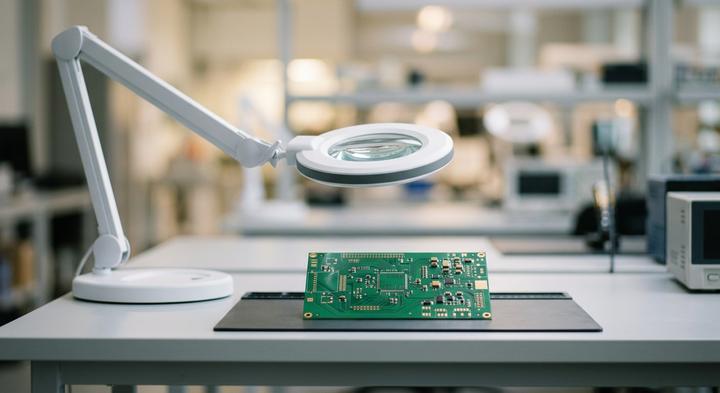
Pre-compliance verification and design reviews on the PCB level prevent costly mold changes later in production.
A customs officer at a European port doesn’t need to find a faulty sensor to halt your shipment. A single mismatched digit between your Declaration of Conformity and the original electromagnetic compatibility (EMC) test report is enough to red-flag a container. Within forty-eight hours, ten thousand custom thermo-hygrometer units can end up sidelined, racking up daily demurrage fees that quickly eat through an importer’s Q4 margin while engineers on two continents argue over paperwork. This is a common bottleneck for high-volume commercial buyers who cannot afford a supply chain freeze. The stakes differ depending on where these units end up: consumer-facing retail brands risk immediate, automated listings removal on platforms like Amazon over unverified FCC or CE filings, while industrial users face the slow burn of sensor drift and premature failure if those standards were bypassed to hit a launch date.
The mistake here is treating regulatory compliance as a superficial branding exercise—something you resolve with a silk-screened logo or a sticker right before packing. On a high-precision thermo-hygrometer, compliance is an upfront engineering constraint. If your PCB layout places high-frequency LCD driver lines or unshielded sensor traces too close to the internal battery leads, the device will fail emissions testing. Trying to retrofit copper shielding or reroute traces after the steel injection molds are cut is an expensive patch. You are looking at a minimum $15,000 tooling modification charge, not to mention a twelve-week delay that misses the seasonal buying window entirely.
At YGhao, we address this before cutting any metal. Rather than hoping a physical prototype passes on the first try, we run pre-compliance design checks on the CAD model first. We simulate electromagnetic shielding zones, verify casing vent placement, and isolate the sensitive temperature-humidity sensor elements from the heat-generating microprocessors on the PCB. By the time the design reaches the SMT line for the first physical run, the major emission and thermal layout risks have been engineered out. If your manufacturing partner isn’t showing you these layout simulations before asking for mold approval, you are essentially gambling your port clearance on a guess.
FCC, CE, and RoHS Standards: The Technical Compliance Matrix
What certificates are actually required to clear wholesale custom thermo-hygrometer shipments through US and EU ports without a customs hold?
Getting a wholesale thermo-hygrometer shipment through customs is a physical hardware challenge, not a paperwork exercise. If your device uses active RF modules, you cannot simply reuse their certificates; regulators treat the entire assembly as an intentional radiator. High-frequency microprocessors and LCD driver chips generate electrical noise that easily bypasses cheap shielding, causing radiated emission levels to spike during accredited testing.
| Target Market | Key Testing Factors | Enclosure Fit | Primary Failure Mode | Compliance Verification | Procurement Strategy |
|---|---|---|---|---|---|
| United States FCC Part 15 Class B | Unintentional emissions from high-speed clock lines (>9 kHz) and active RF oscillators. | Solid ground plane under the MCU; local decoupling capacitors; shielding cans for wireless modules. | Radiated emissions exceeding Class B residential limits near the 30 MHz–1 GHz band. | Request the complete test report from an FCC-recognized, accredited laboratory—never accept a self-declaration. | Ensure the manufacturer designs to residential Class B limits rather than commercial Class A. |
| European Union CE EMC Directive | ESD immunity (up to 4 kV contact / 8 kV air) and RF electromagnetic field immunity. | At least 2.0 mm physical separation between active high-frequency traces and the external humidity sensor. | ESD discharges to the sensor grille resetting the micro-controller or corrupting LCD driver states. | Verify that the testing laboratory’s scope of accreditation explicitly covers EN 61326-1. | Require full CE test reports for the exact LCD driver and backlight circuitry configuration. |
| EU & US Markets RoHS & REACH | Lead, cadmium, mercury, and phthalate limits (under 0.1% by weight in homogeneous materials). | Lead-free SAC305 reflow soldering; non-toxic plasticizers (no DEHP/DBP) for custom ABS/PC injection-molded enclosures. | Phthalate leaching from cheap, uncertified PVC wire harnesses or sensor grilles under high operating humidity. | Audit raw material declarations of conformity down to the individual sensor element and wire harness. | Specify lead-free materials in the initial RFQ and reject suppliers who cannot provide chemical test reports. |
Designing for Port Clearance
Three Sourcing Environments: Aligning Your Build to the Regulatory Landscape
The physical lab report on a desk in Shenzhen at 9:00 PM shows a 3dB spike at 2.4 GHz, which means the whole custom enclosure design is suddenly dead in the water. Across this Regulatory Landscape The core challenge is always matching your budget to the legal minimum of your target territory. Overpaying for lab fees is just as damaging to your margins as getting a shipment of custom thermo-hygrometer units seized at the border because of a missing or invalid FCC or CE certificate.
The High Volume Consumer Brand For Smart-Home Retail
A customs broker in Long Beach flags a 10,000-unit container because the system-level FCC ID is missing, even though the internal Wi-Fi module was already certified. Many consumer product teams falsely assume module-level FCC certification covers their finished thermo-hygrometer, but a custom high-gain antenna or an ABS/PC plastic housing can modify RF emissions and require a new Class II permissive change. We run extensive in-house pre-compliance RF testing and board layout simulations at YGhao to catch these emission spikes before cutting the production steel molds, ensuring the final system-level certification cycle is predictable and rapid. Never rely solely on a module-level FCC test report when selling into consumer retail; if the finished device does not have its own system-level registration, a competitor can have your e-commerce listing pulled overnight.
The Industrial Integrator For Rugged Warehouse Deployments
An onsite technician in a steel-casting plant notices the LCD on a wall-mounted thermo-hygrometer flickering whenever the overhead heavy-duty fans power up, pointing to poor electro-static discharge shielding rather than wireless transmission failure. Industrial installations rarely need complex wireless testing because most devices communicate over wired RS485 or Modbus protocols, meaning engineering money is better spent on physical durability and hardening. Instead of paying for expensive active RF certification, prioritize verified IP65 ingress protection to withstand moisture and dust, supported by standard industrial CE and EMC test reports. For rugged industrial hardware, specify hardwired interfaces over wireless protocols to eliminate RF testing overhead while securing a much higher physical MTBF.
The Clinical Laboratory Supplier Sourcing Channel
A quality assurance manager preparing for an FDA cleanroom audit rejects a batch of temperature sensors because the factory’s calibration certificate lacks a traceable national laboratory registration number. Sourcing instruments for medical warehouses or clinical laboratories requires navigating strict chemical bans like RoHS, ultra-low sensor drift, and full ISO certification. A simple factory test sheet will not satisfy a third-party clinical inspector; you must require accredited IEC 17025 laboratory calibration reports to prove your thermo-hygrometer matches reference standards. Always remember this rule of thumb for clinical environments: if your calibration report lacks an accredited IEC 17025 laboratory logo, your hardware is effectively uncertified for cleanroom use.
Three Compliance Pitfalls That Derail Custom Prototyping Timelines
Lab testing delays are rarely caused by fundamental engineering failures; they happen because buyers treat individual component certificates as a system-level guarantee. Relying on paper-only compliance or overlooking transit laws introduces physical bottlenecks that cannot be resolved quickly once production steel is cut. When a prototype schedule slips, it is almost always due to three specific assumptions made during the layout phase.
“Our thermo-hygrometer uses a pre-certified Wi-Fi and sensor module, so the final assembled device automatically inherits FCC and CE compliance.”
Placing a pre-certified RF transmitter inside a custom enclosure next to an active LCD, a routing harness, and a multi-layer PCB changes the entire electromagnetic profile of the device. The emissions from high-speed digital lines or unshielded sensor traces can easily blow past FCC Part 15 limits, rendering the module-level certificate useless at the system level. A real EMC test laboratory measures the complete assembled thermo-hygrometer, not the isolated module. Manufacturing partners like YGhao run board-level near-field scans during SMT planning to isolate these noise sources before finishing the layout, rather than relying on a vendor’s paper promises.
“We can ship our prototype batch via standard air freight immediately because the lithium-battery cell manufacturer already holds a UN38.3 certificate.”
A cell-level UN38.3 certificate only proves that the bare lithium cell didn’t rupture during the battery manufacturer’s isolated tests. Once that cell is integrated into a custom thermo-hygrometer, international air transport regulations demand separate system-level packaging safety and drop-test certificates. Neglecting this detail leaves your pilot run stuck at the forwarder’s warehouse for weeks while you scramble to get a certified UN pack-test report on a Friday afternoon.
“If the housing fails the emissions test, we can easily spray conductive paint on the interior or add shielding gaskets without changing our plastic tooling.”
Conductive paint is a costly, manual fix that ruins your unit economics and frequently flakes off under high-humidity operating environments. If a thermo-hygrometer fails emissions late in the process, adding shielding gaskets or painting the interior adds high labor costs and assembly steps to every single unit. Realistically, you are forced to choose between paying a massive per-unit premium for paint or halting the project for four weeks to modify the steel injection mold for physical shielding ribs.
Design for the laboratory test on day one, because a failed EMC run always costs more than a week of layout review.
The Supplier Audit: How to Verify Lab Certificates Before Issuing a Deposit
Some suppliers treat compliance certificates like a quick Photoshop edit. In the custom environmental sensor trade, the most common trap is the “sister factory name swap.” A trading company shows you a genuine report for a thermo-hygrometer that actually belongs to an older model or a partner factory’s line. If the name or address on those papers doesn’t match the entity on your proforma invoice down to the character, customs will flag your container. Never wire the Deposit Once you spot a single mismatch.
The Pre-Deposit Verification Protocol

Proactive document and product compliance ensure smooth transit and zero delays at major global ports.
The Pre-deposit review is the first line of defense. This check prevents you from paying for tooling on a product that cannot legally cross a border. Running the Deposit Verification Protocol In our sourcing process avoids trading-company shell games before any cash leaves your bank.
To verify that a laboratory is qualified to test a thermo-hygrometer, look up its credentials. Legitimate testing relies on labs accredited by the China National Accreditation Service (CNAS) or the International Laboratory Accreditation Cooperation (ILAC). These directories let you verify the laboratory registration number. Without this, they don’t have the calibrated environmental chambers to test RF emissions and temperature-humidity accuracy. At YGhao, we cut through this by providing direct contact details for our testing labs and sharing raw, unedited Test Reports for custom prototype runs to prove technical integrity.
| Ask | Expected Evidence | Red Flag | Responsible Party |
|---|---|---|---|
| Full EMC & RF Test Reports (FCC/CE/UKCA) | Active stamps from China National Accreditation Service or International Laboratory Accreditation Cooperation, internal PCB photos, and matching model numbers. | Blurred laboratory stamps, mismatched casing drawings, or reports issued to a “sister company” at a different address. | Lead Compliance Engineer & Buyer’s Quality Assurance Team |
| RoHS & REACH Substance Reports | Comprehensive BOM chemical breakdown identifying testing down to the individual sensor element, cable sheathing, and ABS housing. | Generic “Self-Declarations” lacking an official third-party laboratory report number, or reports dated more than two years old. | Raw Material Supplier QC Department |
| Factory ISO 9001 & Accreditation Status | Active certification registration scope that explicitly covers the design and manufacturing of electronic environmental sensors. | Scope limited to “trading” or a registration address that does not match the physical SMT line location. | Third-Party Registrar (verified via IAF CertSearch database) |
We don’t expect buyers to take our paperwork on faith. Our quality team bridges the gap by keeping all original laboratory contacts open to your engineering team. When we build custom thermo-hygrometer models, we deliver the raw data files alongside the standard PDF certificates so your compliance desk can verify the findings directly with the testing technicians. This transparency is how you eliminate the risk of port delays before your assembly line ever spins up.
Reducing Risk in Your Custom Thermo-hygrometer Pipeline
Once you select between an off-the-shelf tier or a ground-up custom build, the practical challenge shifts to protecting that tooling investment before the steel is cut. Designing a thermo-hygrometer looks straightforward on paper, but the reality is a series of quiet thermal and electromagnetic trade-offs. If your PCB ground planes are too close to the sensor element, or if the housing wall thickness restricts natural air circulation, the device will heat itself and register false relative humidity spikes. Catching these layout errors during the initial CAD phase is the only way to avoid a fifteen-thousand-dollar mold modification and a four-week delay. At YGhao, we do not build cheap retail novelties that drift after a month of field use; our focus is commercial-grade, stable environmental instruments. We back this up with direct access to our in-house testing equipment, precise calibration rooms, and compliance engineers who have steered hundreds of builds through CE, FCC, and RoHS hurdles. Securing your production Pipeline With a partner that runs pre-compliance checks during development is what stands between a successful Q4 rollout and a container held indefinitely under customs quarantine.
Before you sign off on tooling or commit to a massive production run, let our engineering team run a non-binding Design for Manufacturability (DFM) review on your initial design. Submit your 3D step files, PCB layouts, or target compliance specifications to our Shenzhen-based team. We will analyze your sensor isolation grilles, power trace thermal paths, and bill-of-materials declarations to flag potential regulatory and physical bottlenecks. You will receive a practical, engineering-first assessment of your design’s readiness, ensuring Your Custom Thermo-hygrometer reaches the market without costly field failures or regulatory pushback.