Custom Thermo-hygrometer Tooling vs. Standard Off-the-Shelf Housing: Cost and MOQ Comparison
Why Off-the-Shelf Cases Can Become a High-Volume Bottleneck
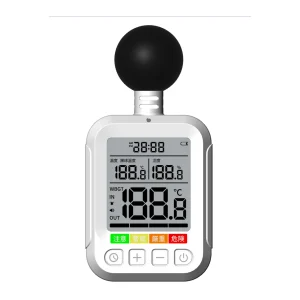
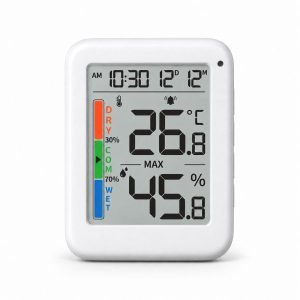
Tooling up a custom mold is almost always cheaper than buying off-the-shelf plastic boxes once your production run crosses a few thousand units. Many procurement teams look at a tooling quote, panic, and buy stock boxes to save cash. They forget that standard enclosures are blank slates; you still have to mill LCD windows, drill vents for your thermo-hygrometer sensor, and rout out power ports. Doing this manually on a CNC jig adds a massive modification surcharge to every unit. Worse, clamping pre-molded ABS or polycarbonate shells into secondary fixtures introduces stress, leading to hairline cracks and an unavoidable 3% to 5% scrap rate on the line. Once a project hits a real Volume Bottleneck Choosing to transition from stock shells to custom injection molds is the only way to protect your unit margin past 2,000 units.
The hidden killer isn’t just the rework cost—it is how stock enclosures destroy the accuracy of a high-performance thermo-hygrometer. If you force a sensitive MEMS sensor into a generic catalog shell, you trap stagnant air inside and create a localized micro-climate. Heat from a display backlight or an LDO voltage regulator cannot escape, causing artificial temperature spikes and slow response times. Getting an accurate reading in under ten seconds requires an isolated sensor chamber with targeted ventilation paths molded directly into the outer wall. You cannot CNC-mill that kind of sealing rib or internal boundary into a catalog box. Unless you are building basic, non-regulated wall-mount units that only need to be accurate within a few degrees, forcing off-the-shelf cases to work is a technical dead-end.
Real design for manufacturability (DFM) happens before any tool steel is cut. At YGhao, we walk engineering teams through this transition, optimizing gate locations, draft angles, and wall thickness during the CAD review so T1 samples come off the press ready for assembly with zero post-processing. A good rule of thumb is that if your board layout requires more than two secondary CNC cuts, or if your sensor must register ambient humidity changes in under ten seconds, a standard catalog casing will cost you more than a custom mold.
Upfront NRE Tooling vs. Unit Costs: The Critical Break-Even Math

Optimizing enclosure designs during the early DFM stage ensures accurate fit and structural integrity.
How many units justify custom thermo-hygrometer tooling over a stock enclosure?
It is easy to get lured in by a low unit price on a catalog website, but that sticker price ignores what happens when the boxes land on your assembly line. If you have to drill vent paths, mill LCD windows, and manually mount a protective screen, your actual cost-per-unit climbs fast. The math changes completely when you look at the labor costs of manual post-processing versus amortizing a custom injection mold over a high-volume run.
| Sourcing Path | Typical Upfront Tooling (NRE) | Minimum Order Quantity (MOQ) | Target Unit Cost (10k units) | Tooling Lead Time | Application Fit & Primary Risk | Verdict & Decision Rule |
|---|---|---|---|---|---|---|
| Stock Catalog Case | $0 | 100 units | $3.50 – $4.50 | 2 weeks | Indoor desktop air monitors; high risk of dust buildup and slow sensor readings. | Avoid above 2,000 units. Secondary manual prep stalls production. |
| CNC-Modified Stock Case | $500 – $1,500 | 500 units | $2.80 – $3.80 | 4 weeks | Low-volume commercial trials; risk of tool-wear burrs and poor sealing. | Good only for regional pilots or proof-of-concept testing. |
| Custom Injection Mold | $8,000 – $15,000 | 3,000 units | $0.90 – $1.50 | 6 weeks | Heavy industrial or outdoor transmitters; risk of cash flow lockup during tooling. | Best long-term ROI above 5,000 units. Eliminates post-processing entirely. |
The Amortization and Ventilation Trade-Off
Amortizing a typical $10,000 custom tooling fee across a 5,000-unit thermo-hygrometer run adds $2.00 per unit. At 10,000 units, that premium drops to $1.00, and it shrinks to just $0.20 per unit by the time you hit a 50,000-unit run. If you try to run those larger volumes with a stock catalog casing, you will spend far more on secondary manual labor than you originally saved on upfront mold costs.
Beyond the financial spreadsheet, the physics of sensor ventilation dictate custom-designed housings for high-performance instruments. To measure ambient humidity reliably, a device needs rapid, uninterrupted airflow across its internal humidity sensor. Standard enclosures lack the specialized, angled ventilation slots required to drive air over the sensor without exposing the delicate MEMS components inside to raw dust and particulate buildup.
Custom tooling solves the engineering paradox of keeping liquid water droplets out of an outdoor instrument while allowing air to pass freely. YGhao designs custom double-baffle structures and dedicated hydrophobic membrane carriers directly into the injection mold core. This integration prevents driving rain from reaching the PCB while maintaining the high airflow required for rapid response times—a level of ingress protection and environmental sealing that cannot be replicated by secondary milling or manual modification of stock catalog plastics.
Where Standard Catalog Shells Fail: Three Harsh Realities on the Ground

Custom-engineered ventilation channels prevent localized micro-climates and ensure high sensor accuracy.
A quality assurance technician at a North Sea cold-storage terminal opens a failed shipping tracker at 5:00 AM, finding a pool of condensed water directly across the microcontroller pins. When a device transitions rapidly from sub-zero containers to humid loading docks, standard catalog housings inevitably fail because they are designed for stable desk environments, not thermal shock. If the enclosure cannot manage physical pressure differentials while isolating delicate components, environmental moisture will find a path inside.
Condensation Traps in Chain Logistics Tracking
A distributor moving biologics across fluctuating climates quickly discovers that cheap snap-fit catalog boxes are a severe liability during rapid temperature transitions. When a cargo container moves from sub-zero holds to warm loading bays, the rapid cooling of internal air creates a localized vacuum, pulling warm, moisture-laden ambient air past basic snap-fit seams. Once inside, this trapped moisture condenses directly onto the thermo-hygrometer’s MEMS sensor and PCB, causing instant short circuits. Securing a reliable hermetic barrier at scale requires an injection mold designed specifically for integrated, over-molded silicone gaskets or ultrasonic weld tracks, removing the human-error risk and high labor costs of secondary manual sealing.
Cleanroom Storage and Bio-Contamination Risks
In sterile pharmaceutical facilities and Cleanroom Storage zones, standard catalog enclosures made of generic ABS quickly degrade under daily isopropyl alcohol or vaporized hydrogen peroxide washdowns. This chemical exposure creates microscopic surface crazing—fine cracks where bacteria and fungal spores hide and multiply. While topical antimicrobial sprays offer a temporary shield, they inevitably wear off during routine handling and wipe-downs. To survive these cleanroom protocols, the housing needs custom injection runs using medical-grade polycarbonate compounded with active silver-ion biocidal additives throughout the material. This ensures self-sanitizing properties that cannot wear off, while allowing the tooling to incorporate proprietary, mechanical battery-compartment locks that prevent personnel from exposing sensitive internals inside the sterile zone.
Sensor Drowning in Rugged Agricultural Networks
Contract Pitfalls: What Most Buyers Get Wrong About Custom Tooling Rights
Your tooling contract is either a hard barrier protecting your IP, or a lease agreement that keeps you hostage to a supplier’s schedule.
Paying the tooling invoice automatically grants you ownership of the physical mold.
If you do not explicitly claim Rights Ownership of the physical steel, modifications, and CAD drawings in your contract, you only buy the right to order finished parts. Many suppliers treat the tool as a proprietary asset, refusing to transfer the physical mold. When negotiating a custom OEM/ODM agreement for a thermo-hygrometer, ensure every component—from core pins to the mold base—is listed as an unencumbered buyer asset once paid. If the contract doesn’t guarantee your right to physically relocate the steel, you don’t actually own it.
Modifying an off-the-shelf plastic mold for a new probe housing is faster and cheaper than cutting clean steel.
Taking a CNC mill to hardened steel to accommodate a redesigned sensor probe usually destroys the tool’s cooling layout. Because precision MEMS sensors require localized airflow and moisture seals, any weld line defect from a patched mold leads to capillary water bypass. Retooling old steel by welding and re-cutting cavity details creates uneven cooling and warped parts. You will spend more time and scrap plastic trying to patch an old catalog mold than cutting a clean, dedicated tool from scratch.
High-resolution SLA prototypes prove your enclosure parts will fit together perfectly in mass production.
SLA resin behaves nothing like production ABS or polycarbonate. A 3D-printed thermo-hygrometer case might snap together perfectly on a desk, but production plastics shrink non-uniformly as they cool, distorting LCD window frames and gasket tracks. Prototypes hide draft angle limits and cosmetic weld lines that only show up under injection pressure. Without testing tolerances using real tool trials, a perfect prototype can easily become a high-defect production run.
Tooling contracts can guarantee a fixed shot-life regardless of the selected steel grade or resin.
A blanket shot-life guarantee is a dangerous trap if your enclosure uses glass-fiber reinforced polymers or high injection pressures. Abrasive resins erode gates and vent paths within 20,000 cycles on softer P20 steel, resulting in flash that destroys moisture seals. Safe procurement means tying cycle guarantees to hardened steel like H13 and demanding a simulated gate analysis to verify physical stress before cutting steel.
Are you actually auditing the physical asset clauses in your agreements, or are you hoping a low upfront quote doesn’t hide a lock-in trap?
Vetting the Tooling Shop: What to Demand in a Factory Audit
What is the exact Tooling Shop Factory Audit How-To checklist that catches structural tool flaws before you release the tooling deposit?
While a clean facility floor looks professional, you must bypass the showroom and audit raw engineering records to verify if the shop can hold a tight 0.05 mm tolerance on a production run.
| Sourcing Metric | Expected Factory Evidence | Critical Red Flag | Verification Method |
|---|---|---|---|
| Mold-flow simulation checks | Native engineering files showing gate placement, runner balance, and simulated weld lines near the sensor cap cavity. | Gate locations placed directly on thin-walled sealing tracks or right next to critical ventilation ports. | Demand raw Autodesk Moldflow simulation files rather than static PDF summaries, and verify the meshing density yourself. |
| Dimensional inspection logs | Full Coordinate Measuring Machine data tracking cavity-by-cavity steel dimensions and shrinkage from T1 to T2. | A supplier claiming perfect tolerances on the first shot without presenting a documented tool correction history. | Cross-examine the physical T1 sample against the Coordinate Measuring Machine calibration records and raw timestamp logs. |
| Stress testing the casing | Standardized testing SOPs for physical 1.2-meter drop tests and thermal chamber cycle limits ranging from -20°C to 70°C. | Environmental testing labs missing calibration certificates, or reference thermo-hygrometer calibration stickers expired by a year. | Inspect the physical testing lab on-site, match serial numbers, and verify the live telemetry logs of current test cycles. |
Most procurement disasters do not happen because the tooling machinery was bad. They happen because the buyer assumed the toolmaker would self-correct the physical tolerances during the initial trial runs. An experienced engineer knows that mold-maker promises are cheap, but physical steel modifications are incredibly expensive. When you audit a partner for a complex product like a high-precision digital Thermo-hygrometer, you are paying for their systematic engineering discipline, not their factory-floor square footage. If the shop cannot show you documented, version-controlled tool-making iterations for their current client list, they will not magically develop that discipline when your custom mold goes onto their CNC machines.
DFM Review and First Samples: Taking the Risk Out of Your Thermo-hygrometer Build
Now that the physical tolerances and unit-cost break-even points are clear, the real question is how to prove your design without sinking twenty grand into a high-cavity mold that might pinch your gaskets. You do not have to make a blind choice between a loose catalog shell and a massive capital outlay. Instead, we run low-cost insert modifications on existing master mold frames. This allows us to shoot real, injection-molded First Samples using your target resins—like ABS or PMMA—to verify the snap-fit tolerances, display window clearance, and internal seal compression on the bench. It takes the Risk Out of the equation long before hardened steel is cut. When you send over your STEP or IGS files, our engineering team runs a hands-on Design for Manufacturing (DFM) review. We look at mold-flow dynamics, draft angles, and wall thicknesses to ensure you do not get sink marks near the LCD or warping that ruins the IP rating. Since YGhao handles the tooling, double-shot elastomeric gasket runs, and chamber-level sensor calibration in the same facility, we catch the tolerance stack-ups that third-party assemblers usually point fingers over.
Before you lock in your PCB dimensions or sign off on production tooling, let us run a DFM analysis on your CAD files. We will check your draft angles, gate locations, and show you exactly where a shared mold frame can save you thousands in upfront NRE. Select Your Thermo layout files and use our Build Now portal to upload your current STEP or IGS files; you will get a direct engineering report with clear, actionable layout feedback, not an automated system checklist.