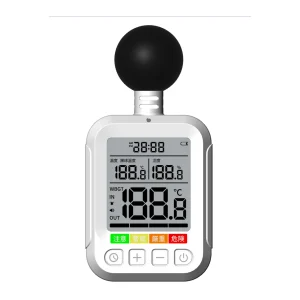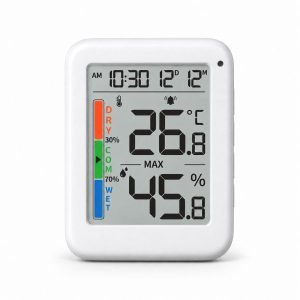
Why Multi-Point Chamber Testing Prevents the 5% Drift Found in Ambient-Calibrated Thermo-hygrometers
The $50,000 Audit Failure: When Bulk Thermo-Hygrometers Drift
Multi-point chambers ensure accuracy across temperature and humidity variations, preventing field drift.
An ISO 9001 compliance inspector pointing to a wall-mounted sensor during an unscheduled cleanroom walk-through is how a $50,000 regulatory hold begins. In this scenario, the newly unboxed instrument read 54% relative humidity (RH), while the facility’s calibrated reference standard showed exactly 49%. That 5% RH gap might seem minor on a basic warehouse log, but in a regulated cleanroom, it triggers an immediate Audit Failure. Quality assurance managers typically only spot this sensor drift when an external compliance inspector flags the offset in the storage logs, realizing too late how easily these uncalibrated bulk thermo-hygrometers drift. The resulting hold halts high-value shipments and forces an expensive inventory quarantine.
The root of this drift is almost always a shortcut taken during the factory testing phase. Many low-cost suppliers rely on quick, open-air ambient desk tests—which amount to little more than checking if the LCD screen powers on and matches the factory’s office humidity. But capacitive polymer and MEMS sensors are non-linear; they do not drift in straight lines, and they cannot be calibrated on an open office desk. True reliability requires automated, multi-point environmental chamber calibration, where the instruments are mapped against traceable standards inside sealed, thermally stable chambers. At YGhao, we’ve found that stabilizing these curves in controlled chambers is necessary for long-term consistency in B2B supply chains, ensuring the sensors do not skew the moment they encounter real-world operating conditions.
Saving small margins on the unit price of uncalibrated factory runs is a classic procurement mistake that leads to expensive inventory quarantines and re-testing costs down the road. For industrial or clinical deployments, the initial purchase price is a rounding error compared to the cost of a failed compliance audit. Before signing off on your next bulk procurement order, demand to see the multi-point test logs for that specific batch: if a supplier cannot produce the chamber calibration certificates, you are not buying industrial-grade measuring instruments—you are buying high-risk consumer novelties.
The Engineering Reality: Why Open-Air ‘Ambient’ Checks Allow Seasonal Drift
Why does a bulk shipment of thermo-hygrometers pass a factory-floor inspection in July but fail a site audit in January? The difference comes down to sensor hysteresis curves that shift outside standard room temperatures. When a factory relies on open-air ‘ambient’ spot checks rather than mapping 10% to 90% RH in an environmental chamber, seasonal field drift becomes inevitable.
| Buyer Type & Industry Application | Decision Factors & Calibration Setup | Fit & Performance Envelope | Primary Risks & Drift Profile | Sourcing Verdict & Batch Surcharge |
|---|---|---|---|---|
| Regulated Life Sciences Pharmaceutical cleanrooms and medical cold storage. | Multi-point chamber profiling with 5+ relative humidity points (10% to 90% RH). | High precision (±2.0% RH accuracy) with mapped hysteresis coefficients. | Under 1.0% RH annual drift; minimal regulatory audit risk. | Mandatory +$0.80 to +$1.50 per unit on a 5,000-unit batch. |
| Commercial HVAC Office buildings and climate-controlled inventory storage. | 3-point controlled chamber verification (30%, 50%, and 70% RH). | Standard precision (±3.0% RH accuracy inside mid-range boundaries). | Moderate drift (1.5% to 2.5% RH annually) as HVAC cycles shift. | Highly Recommended Baseline manufacturing cost standard. |
| Consumer Grade Home use and non-regulated commercial retail. | Single-point ambient spot check at room temperature (~50% RH). | Low precision (±5.0% RH) with unmapped extremes (<30% or >70% RH). | High drift (>5.0% RH within six months) from uncompensated hysteresis. | Not Recommended Saves $0.50 to $1.00 per unit but risks field failures. |
Balancing Calibration Stability Against Sourcing Budgets
Bypassing environmental chamber cycles reduces the initial unit cost, but the saving is quickly lost to manual field re-calibrations and administrative labor documenting audit exceptions. To protect your operation, demand that your supplier provides raw, traceable multi-point calibration logs for your production batch. If a factory manager cannot produce a raw multi-point chamber log, they are selling you an uncalibrated indicator dressed up as an industrial sensor.
Application Matching: Where to Deploy Ambient vs. Chamber-Calibrated Units

Controlled storage environments demand rigorous, chamber-calibrated sensors to meet strict regulatory audits.
The 6:00 AM red flag on a calibration audit log in Antwerp means three pallets of temperature-sensitive vaccines must be destroyed due to a 4% relative humidity discrepancy on a primary staging bay sensor. This is where the theoretical difference between calibration methods becomes a bottom-line reality. Depending on the environment, choosing the correct thermo-hygrometer calibration method dictates whether an operation runs smoothly or faces catastrophic regulatory write-offs.
Pharmaceutical Cold Chains
In Pharmaceutical Cold Chains An audit failure can halt shipping lines for weeks. Sourcing bulk thermo-hygrometers that are only ambient-tested is a massive liability during an ISO inspection. If a sensor drifts past the narrow ±3% RH window under cold-storage conditions, the resulting quarantine stops shipments. These environments require multi-point chamber-calibrated sensors to map accuracy across the exact thermal profiles the inventory will encounter. For these Calibrated Units The primary value is regulatory compliance; each sensor must prove it was tested inside an environmental chamber against traceable reference standards before deployment.
Consumer Retail Brands
For Consumer Retail Brands High-volume consumer markets operate on tight retail margins where over-specifying accuracy is waste. For home or office thermo-hygrometers, ambient-calibrated units using Swiss MEMS chips offer the correct price-to-performance ratio. Because these units spend their entire lifecycle in stable indoor conditions—typically 15°C to 25°C and 40% to 60% RH—they do not require expensive multi-point chamber profiling. High-volume runs pass through automated ambient calibration lines to verify accuracy at standard room levels, yielding a reliable consumer product at a competitive wholesale price point.
Industrial HVAC Systems
Rooftop air handling units exposed to continuous morning condensation require factory-calibrated sensors to resist aging. Standard ambient units drift rapidly in high-humidity environments because their polymer layers lack pre-stressing against continuous moisture. Chamber calibration maps these curves, preventing premature sensor drift and false HVAC cycles. The rule of thumb is simple: if the installation site ever drops below the dew point, buy chamber-calibrated units; reserve ambient-only units for dry, climate-controlled office spaces.
Three Sourcing Mistakes That Lead to Out-of-Spec Sensor Deliveries
Component-level specifications are meaningless if the final, fully assembled thermo-hygrometer traps heat or is calibrated only under ideal laboratory conditions. Sourcing errors occur when procurement teams treat raw datasheet parameters as a absolute guarantee of finished-instrument accuracy.
A premium Swiss sensor chip guarantees a highly accurate thermo-hygrometer.
It does not. A high-end Swiss IC component will drift just as fast as a cheap alternative if the surrounding housing restricts ventilation or places the chip near heat-generating components. Active PCBs, backlit LCD screens, and internal batteries can easily raise local internal temperatures by up to 2°C, artificially drying out the micro-climate inside the casing. At YGhao, we design our custom enclosures with physical isolation barriers and dedicated thermal chimneys to bypass this micro-climate effect. When evaluating suppliers, ask for thermal imaging of the fully assembled instrument under active electrical load—if they cannot show you where the board heat goes, you are measuring internal circuit heat, not cleanroom humidity.
If the thermo-hygrometer reads accurately at standard room temperature, it will perform across the whole operating range.
This is the single-point calibration trap. Factories love checking things at a comfortable 25°C baseline because it keeps the production line moving quickly. However, sensor response curves are non-linear. A unit that sits perfectly on-spec at room temperature can experience severe thermal hysteresis and drift when deployed in a 2°C cold-chain warehouse or a high-humidity curing room. Sourcing managers should ignore the single-point room check and demand raw, multi-point chamber test logs that span the actual operating temperature extremes of the application.
A calibration certificate stamped by the factory is proof of individual instrument accuracy.
Often, those certificates are printed by the thousands before the components even arrive from the molding line. These template certificates are easy to spot: they lack unique device serial numbers, individual chamber run timestamps, or the specific traceable reference probe IDs. If a supplier cannot share a digital, CSV-exported calibration log directly tied to each physical unit’s serial number, they didn’t calibrate it. You are paying for a calibrated industrial instrument but receiving an unverified plastic indicator.
Factory Verification: How to Audit a Supplier’s Calibration Setup
Selecting the correct sensor class is only half the battle; the real risk is whether the factory actually runs the calibration cycles they charge you for. A physical Factory Verification of the testing floor is the only way to separate serious manufacturers from brokers who slap premium labels on uncalibrated hardware.
Calibration Audit Framework
| Ask | Expected Evidence | Red Flag | Responsible Party |
|---|---|---|---|
| Physical Equipment Audit: Can we run an unannounced live video walk-through of your active, certified environmental testing chambers and reference master probes? | High-definition live feed showing sealed environmental chambers running active cycles, with real-time temperature/humidity step changes matching master reference probes (e.g., Fluke or Rotronic) holding unexpired certification labels. | Refusal to show active chamber interiors on a live call, or showing thermo-hygrometers being “calibrated” on open wooden desks under ambient room conditions. | Quality Assurance Lead / Procurement Manager |
| Raw Testing Log Auditing: Can you provide raw XML or CSV calibration export files linked directly to the specific serial numbers of our upcoming production batch? | Direct database exports showing step-by-step raw environmental inputs and matching sensor outputs across multiple calibration set points, uniquely tied to each serial number. | Generic PDF certificates with identical calibration values across multiple units, or a complete lack of raw database export capabilities. | Quality Assurance Lead |
| Spotting Line Shortcuts: How do you prevent assembly-line shortcuts like testing sensors in open ambient air rather than inside closed temperature-controlled environments? | Real-time proof that every Thermo-hygrometer completes its Calibration Setup Once inside a sealed environmental box with controlled airflow. | Units stacked on open wooden desks or near open windows and cooling fans during calibration runs, exposing them to seasonal ambient shifts. | Sourcing Specialist |
At YGhao, we skip the paper-only promises by logging every thermo-hygrometer calibration cycle directly to our centralized QA database. When a batch finishes its sweep inside our automated chambers, the system automatically binds the raw calibration data to that device’s unique MAC address or serial number. If a customer audits our line via a live video stream, we show the chambers in real-time, the raw database writes, and the master reference instruments side-by-side. This degree of traceability ensures your procurement team isn’t holding the bag on a calibration failure during a surprise cleanroom audit.
Specifying Your Run: Custom Calibration and OEM Sourcing with YGhao
Now that the gap between cheap paper-certified sensors and actual chamber-mapped performance is clear, the focus turns to Specifying Your Run on the purchase order. Off-the-shelf calibration rarely matches what your hardware actually encounters on a humid July loading dock or inside a pharmaceutical freezer. YGhao operates as a direct OEM partner, replacing generic presets with Custom Calibration curves matched to your operational limits—whether your team needs to verify a tight 2°C to 8°C cold-chain bracket or wants custom multi-point testing down to a dry 20% RH electronic storage floor. We build and test these units at scale, maintaining a high-mix production line that outputs up to 50,000 units per month. This capacity lets us adapt sensor housing molds, adjust digital or analog communication protocols, and run batch-level environmental stress testing in our own chambers without the heavy price markup of scientific laboratory brands. To be direct about our limits: we do not build ultra-specialized, ultra-high vacuum laboratory devices. Our factory focus is entirely on dependable, commercial-grade thermo-hygrometer batches built to pass regulatory audits.
Before committing to a high-volume run, you need to see how the sensor behaves under load. You can request a sample multi-point calibration report and a custom OEM volume quote based on your specific temperature and relative humidity targets. Once you share your operational parameters with our engineering desk, we will send over a complete specification sheet, a sample test certificate from a real chamber run, and a direct unit-cost breakdown for your batch.