How to Design a Consumer Thermo-hygrometer with zero Sensor Drift Before It Reaches Retail Shelves
Why Container Transit Destroys Thermo-hygrometer Calibration Before the Product Hits the Shelf

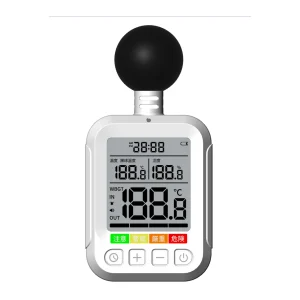
Hydrophobic protective barriers prevent liquid water from reaching the sensor during transit humidity spikes.
A 20-day transit from Shenzhen to the Port of Long Beach can turn a batch of high-precision environmental sensors into expensive e-waste before they ever reach a retail shelf. Inside a sealed steel container on the Pacific, diurnal temperature swings regularly drive internal temperatures to 60°C, causing the air to oscillate between bone-dry heat and 95% relative humidity as the air cools at night. This phenomenon, known in logistics as “container rain,” subjects unshielded consumer thermo-hygrometers to a relentless cycle of condensation and salt-fog penetration.
This harsh microclimate targets the vulnerability of standard capacitive humidity sensors. Without an environmental barrier, the hygroscopic polymer dielectrics inside cheap sensors absorb moisture far past their saturation limits, inducing a permanent calibration shift—often up to 10% RH—before the retail packaging is even opened. Procurement teams face a costly trade-off: accept high return rates from cheap, drift-prone capacitive sensors, or pay a 300% premium for industrial-grade, Swiss-calibrated digital probes. YGhao bridges this commercial gap by engineering consumer-grade thermo-hygrometers with hydrophobic PTFE membrane shields over high-stability ICs, protecting factory calibration without forcing buyers to absorb industrial component costs.
A spec-sheet guarantee of ±2% RH is meaningless if the sensor’s physical baseline is altered in transit; always demand that your supplier provides environmental chamber test reports showing post-condensation drift recovery before signing off on a bulk purchase order.
Five Engineering Dimensions That Prevent Sensor Drift in Bulk Transit

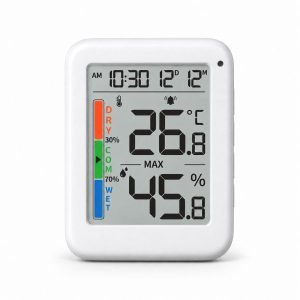
Layered protection strategies balance moisture venting with physical particle filtration.
How do you stop a thermo-hygrometer from losing its calibration accuracy during ocean shipping?
The short answer is that you cannot rely on default factory settings to survive a 25-day container transit through equatorial waters. When the container interior hits 60°C and humidity spikes toward saturation, standard wire-mesh sensor grates offer zero protection against microscopic condensation droplets. These droplets bridge the capacitive sensor plates inside, causing the polymer dielectric to swell permanently and shifting your factory calibration baseline before the product even lands at the distributor’s dock.
| Retail Target Market | Housing Material | Sensor Element Type | Transit Protection Barrier | Allowable Drift |
|---|---|---|---|---|
| Volume Supermarket | Ultrasonic Weld | Standard Capacitive | Venting Film | ±5% / ±1.0°C |
| Smart-Home Brands | PC-ABS with TPU Gasket | Precision CMOS / MEMS | Hydrophobic Caps | ±3% / ±0.5°C |
| Industrial Cold-Chain | Polycarbonate with O-Ring | High-Stability IC-Based | Sealed ePTFE Gasket | ±2% / ±0.3°C |
Engineering the Right Transit Defense
Solving this requires balancing three physical defense layers, starting with the hydrophobic barrier. If you swap a cheap mesh vent for a micro-porous PTFE hydrophobic membrane, you allow water vapor molecules to pass freely while blocking liquid water droplets and corrosive salt dust. The critical trade-off here is response time. A tightly sealed IP65 enclosure protects the board but creates a micro-climate inside the housing, meaning the thermo-hygrometer might take fifteen minutes to register a rapid room-temperature drop. For retail use, an IP54 design using a thin Venting Film keeps response times under three minutes while stopping shipping condensation from ruining the Standard Capacitive sensor element.
The second layer is memory. In cheap designs, heat-induced voltage fluctuations during transit corrupt register values on the MCU. Specifying an IC-level non-volatile memory block for calibration coefficients ensures that even if the battery experiences brownouts during the ocean voyage, the microchip reloads its factory-programmed offsets at boot. Some suppliers try to shave pennies by using volatile RAM with a low-voltage retention trick; that fails the moment a container sits under the sun at a terminal.
Finally, look at the housing seams. ABS with an Ultrasonic Weld works well for a Volume Supermarket run where a 5% allowable drift is acceptable, but it lacks the thermal expansion tolerance of PC-ABS. For high-precision industrial monitors, a polycarbonate shell compressed against a silicone O-ring is the only way to hold a tight 0.3°C limit. The best way to protect your margin is to specify a PTFE barrier that matches your target response rate rather than buying a premium sensor element packaged in a cheap, unsealed housing.
Matching the Thermo-hygrometer Build to the Shipping and Retail Channel
The shipping container doors latch at 06:00 in Shenzhen, sealing 50,000 retail-ready thermo-hygrometer units into an unventilated steel box that will absorb solar radiation on an equatorial sea route for twenty-eight days. Surviving this journey without calibration drift requires aligning the physical build of the device with the exact stress profile of its distribution channel.
The High-Volume Supermarket Promo
For high-volume retail runs, unit cost limits rule out expensive hydrophobic membranes or high-end sensor chips. A standard thermo-hygrometer for this channel utilizes a minimalist ABS housing paired with a basic capacitive sensor. Because the bill of materials cannot absorb component-level hardening, protection against calibration drift shifts to the transport logistics. YGhao optimizes this build’s transit survival by locking the sensor baseline post-calibration and mandating strict dry-pack container desiccant protocols with sealed master cartons. This external barrier prevents humidity saturation during transit, ensuring the raw sensor arrives uncompromised without inflating the manufacturing cost.
The Smart-Home OEM Brand
Premium smart-home brands require a high-precision MEMS sensor, an aesthetically refined housing, and a digital calibration lock-in to prevent out-of-the-box errors. Under these requirements, YGhao modifies the sensor-on-board architecture by mounting the MEMS sensor behind an integrated ePTFE hydrophobic membrane. This membrane allows rapid humidity equalization while blocking liquid water, dust, and corrosive salt aerosols. By applying a pre-transit calibration lock-in during factory testing, our engineers ensure the device ignores transit-induced environmental spikes, allowing it to boot up with consumer-grade precision of ±2% RH immediately upon unboxing.
The Industrial Supply Chain Distributor
For cold-chain and pharmaceutical logistics suppliers, the operating environment demands a ruggedized IP65-rated casing and a replaceable external probe. YGhao modifies this architecture by decoupling the active thermo-hygrometer sensor element from the main PCB housing via a reinforced high-tolerance cable. This physical isolation prevents condensation from bridging electrical contacts on the board during rapid thermal cycling. Designed for multi-year shelf storage and brutal transit legs, these systems use thick silicone gaskets and reinforced polycarbonate casings that withstand persistent relative humidity spikes without sacrificing long-term calibration stability.
To guarantee these tailored builds survive their respective channels, YGhao’s engineering team subjects production-line samples to simulated ocean transit within our on-site environmental test chambers before final bulk sign-off. We program these chambers to replicate the exact temperature ramps and humidity saturation curves of a 30-day equatorial voyage, catching potential drift issues before the cargo is loaded.
Three Procurement Myths That Lead to High Retail Return Rates
A cheap thermo-hygrometer becomes the most expensive component on your bill of materials the moment retail return shipping and processing fees start eating your margin.
“Our supplier’s datasheet says ±3% RH, so it will be ±3% RH on the shelf.”
That ±3% RH spec is a laboratory snapshot taken under sterile, pre-transit conditions. When raw capacitive sensors sit saturated inside an unventilated shipping container for 30 days at sea, the polymer dielectric layers undergo a physical shift that permanently offsets their baseline. The unit does not arrive inaccurate because of a calibration defect on the line; it arrives drifted because it was never engineered to recover from long-term saturation. Procurement teams need to look past the nominal tolerances on the datasheet and demand environmental chamber recovery logs showing post-condensation drift curves.
“We can save on sensor protection by using heavy-duty outer packaging.”
Heavy-duty cardboard is a moisture magnet on ocean transit routes. Corrugated paperboard absorbs ambient dampness during the voyage and slowly vents it back into the product boxes long after unloading, trapping the electronics in a highly humid microclimate. Wrapping the outer pallet does nothing to stop this internal moisture cycle. Instead of paying for thicker paperboard, shift that budget to internal barrier protections—such as sealed polybags with desiccant or a hydrophobic PTFE membrane welded directly over the sensor port.
“We can just recalibrate the units in our domestic warehouse.”
Re-flashing calibration offsets on fully assembled consumer electronics is a secondary manufacturing process, not a simple quality inspection. It requires custom programming jigs, proprietary software interfaces, and controlled humidity chambers for every single device—turning warehouse rework into a cost-prohibitive nightmare. If the sensor drifts during transit, the batch is effectively scrap. The only commercially viable fix is securing the baseline calibration at the factory through high-stability IC selection before the container leaves the loading dock.
When negotiating with an OEM/ODM partner like YGhao, bypass the generic spec sheet and ask exactly how much permanent drift the sensor tolerates after 96 hours of continuous 95% RH exposure.
How to Vet a Thermo-hygrometer Manufacturer for Marine Logistics Survival
While optimizing casing and membrane designs protects the physical sensor during transit, you cannot out-engineer a drifted baseline calibration. If a manufacturer’s facility lacks the hardware to verify these components under load, your accuracy specifications exist only on paper.
| Audit Dimension | The Critical Question to Ask | Required Verification Document | Risk Level of Failure | YGhao Standard |
|---|---|---|---|---|
| The Aging Chamber Audit | “Do you operate programmable temperature-humidity chambers to run transit profile simulations on production samples?” | ISO 17025 chamber calibration certificate and 72-hour profiling logs. | Risk Level: Critical (Sensor saturation and permanent drift occur before customs clearance). | Fully automated, programmable environmental chambers simulating marine logistics survival transit profiles. |
| The Calibration Chain | “Are your reference master meters traceable directly to NIST or equivalent national standards?” | Metrology certificate under 12 months old showing unbroken traceability. | Risk Level: High (Unsystematic drift across different production batches). | Direct NIST-traceable reference standards with monthly lab validation audits. |
| Quality Gates | “Who has the final sign-off authority to approve or halt a batch validation report?” | Signed QA workflow showing the QA Director holds independent veto power over sales. | Risk Level: High (Defective batches are shipped to meet export deadlines). | Independent QA Director veto authority; export sales cannot override failed test logs. |
Real-world audits are not won in a polished showroom; they are won on the production floor by looking for dust on calibration chamber glass or checking for expired inspection stickers on reference meters. When a supplier gets defensive about sharing raw, unedited validation datasets, it is a clear sign they are masking high infant-mortality rates in early production. If you want to secure these quality guarantees at the source, your procurement team must codify these validation gates into the supply agreement before any cash changes hands. The final operational step is establishing the concrete contract protections that lock in these testing standards before your first shipment departs.
Lock in Accuracy Before the Container Ships
Now that you can map specific casing materials to your distribution channels, the immediate job is translating these environmental protections into your purchase contract before balance payments are released. At YGhao, we handle this risk by running production samples through a dedicated environmental simulation rather than relying on standard factory-gate checks that only test performance at room temperature. Our production envelope is built to accommodate these custom requirements, covering everything from high-precision mold tooling for sealed PC-ABS and polycarbonate enclosures to a reliable bulk lead time of 45 days. To ensure the IC sensors and PTFE membranes perform under ocean-transit stress, we place production-line thermo-hygrometer samples in a damp-heat chamber at 60°C and 93% relative humidity for a continuous 48-hour cycle. This stress test verifies that the units recover their baseline calibration after high-humidity exposure, locking in performance and accuracy before the container ships depart for Western ports. By formalizing this testing protocol as an explicit contract condition, you protect your supply chain from receiving thousands of drifted, out-of-spec devices.
Instead of hoping your bulk cargo survives the extreme thermal cycling of equatorial ocean lanes, you can define and verify these physical tolerances before the first production run is scheduled. Doing so eliminates the post-delivery finger-pointing that happens when retail buyers return shipments due to sensor drift. Request a custom transit-reliability consultation or get a copy of our 2026 technical catalog from the YGhao engineering desk to review our custom tooling tolerances, inspect our compliance certifications, and establish a pre-shipment testing protocol that holds up under real maritime stress.