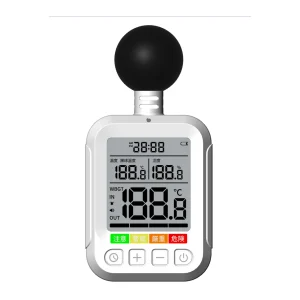
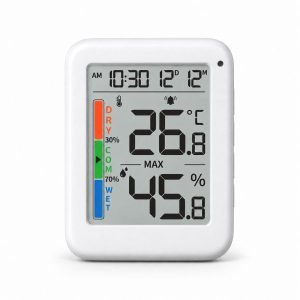
Leveraging IP Licensing for Your Custom Thermometer Hygrometer Project
Moving Beyond Off-the-Shelf: Why Custom Design Matters
Most procurement managers start by comparing spec sheets from ten different suppliers, only to find that every thermometer hygrometer looks like a clone of the last. The housings are identical, the sensors are pulled from the same bulk bins, and the firmware is often a locked-down version of a reference design. When you buy off-the-shelf, you aren’t just buying a sensor; you are inheriting the original designer’s compromises. If their power-management logic doesn’t fit your industrial enclosure, or if their refresh rate is too slow for your specific monitoring needs, you are stuck with the hardware you have.
At YGhao, we see the difference between a catalog unit and a custom build every time a client hits a wall with a standard device. True design ownership means you aren’t just slapping a logo on a plastic shell; it means you control the firmware and the calibration logic. When you own the code, you can tune the sensor for high-humidity environments or adjust the power draw for long-term remote deployments. Anyone who has had to pull a thousand units out of the field because of a firmware bug knows that the ability to patch your own logic is worth far more than the few cents saved on a stock unit.
Deciding between private label and full-custom architecture usually comes down to your tolerance for risk versus your need for precision. A private-label approach—taking a proven mold and branding it—is the fastest way to market, and it works perfectly for standard office or warehouse monitoring. But if your application involves specialized industrial environments, that ‘good enough’ stock unit often becomes a liability. If you are building for a production line, don’t look at the unit price alone; look at the cost of the tooling versus the cost of a failed batch. If the design doesn’t fit your environment, the cheapest unit is the one that ends up in the scrap bin.
Technical and Commercial Benchmarks for Sensor Development
How do you tell if a sensor supplier is built for a three-year industrial lifecycle or just a one-off batch? Most buyers get stuck on unit price, but the real cost of a thermometer hygrometer project isn’t the BOM—it’s the calibration drift, the firmware bugs, and the customs hold you get when the REACH paperwork is missing a stamp. You need to look past the spec sheet and check the actual production floor.
| Feature | Industry Standard | YGhao Capability | Why It Matters |
|---|---|---|---|
| Calibration Precision | ±5% RH | ±2% RH (multi-point) | Critical for industrial climate monitoring. |
| Firmware Flexibility | Locked reference | Custom API / Logic | Enables integration with proprietary IoT. |
| Tooling Ownership | Opaque / Shared | Contractual IP Transfer | Prevents vendor lock-in on design. |
| Compliance | Basic CE/RoHS | CE, FCC, REACH, SGS | Avoids customs seizure at destination. |
| MOQ Scaling | 5,000+ units | Tiered (from 500) | Reduces risk for pilot-to-scale phases. |
Calibration precision is the first thing to check. A supplier might promise high accuracy, but if they aren’t running automated, multi-point calibration stations, that accuracy is just a number on a page. Ask for a sample test report that shows sensor drift across a temperature range. If they can’t show you how they calibrate at the end of the line, they’re just using factory-default settings—and those will drift the moment the unit hits a real-world environment.
Commercial transparency is where most projects actually break. You’ll see low quotes that hide tooling amortization or certification costs, only for the price to jump once you move to production. We prefer to break these out into clear, one-time tooling fees or tiered unit pricing so you aren’t surprised mid-project. Before you sign a PO, confirm who owns the firmware source code and the injection molds. If you don’t own the design files, you aren’t buying a product; you’re renting it.
Finally, don’t just take their word on compliance. Ask for the latest SGS or third-party audit report. If they can’t produce the paperwork for CE, FCC, RoHS, or REACH, assume the shipment will get stuck at customs. A good rule of thumb: if a supplier can’t show you the report for the specific market you’re shipping to, they haven’t actually cleared that market before.
Choosing Your Development Path: From Private Label to Full Custom
Most buyers walk into a factory inquiry thinking they need a ground-up design, only to realize that the tooling costs for a custom thermometer hygrometer can kill a project before it hits the shelf. The decision between Private Label, firmware tweaks, or Full Custom hardware isn’t about what you want—it’s about what your timeline and budget can actually support.
Private Labeling: The Speed-to-Market Play
If you have a launch date in six weeks, you aren’t designing hardware; you’re picking a catalog item. Private labeling is the fastest route to market because the molds are already cut and the certification paperwork is already filed. You get a proven sensor, and your capital stays in your pocket for marketing and inventory. The catch is that you are buying someone else’s design choices. If that unit has a specific LCD layout or a sensor placement that doesn’t fit your use case, you are stuck with it. This is the right move when you need to test market demand without the six-figure risk of a custom mold.
Firmware and UI Customization: The Middle Ground
Often, the hardware is solid, but the software is a headache. We see this constantly: a distributor buys a decent thermometer hygrometer, but the UI is cluttered with features the end-user never touches, leading to unnecessary support calls. You can often pay for a firmware reskin to simplify the interface or change the data reporting interval. Before you sign off, ask the supplier if they have an existing SDK or API for their firmware. If they don’t, you aren’t getting a ‘tweak’—you are paying for a custom software development cycle, which is where most ‘simple’ projects start to bleed money.
Full-Custom Hardware: Building Proprietary Assets
Full-custom development is for when the environment is too hostile for a standard unit. If you are mounting a sensor inside a high-vibration CNC machine or a medical enclosure with specific thermal constraints, an off-the-shelf unit will fail. At YGhao, we treat this as a mechanical engineering problem first. We look at the vibration profile and the thermal mass of your enclosure before we even talk about the sensor chip. This path requires significant upfront tooling investment and a longer lead time, but it creates a proprietary asset that your competitors can’t just buy off a shelf. If you are building for a ten-year field life, don’t look for a catalog item; look for a partner who can show you the failure reports from their previous custom runs.
Match your development path to your actual project lifecycle: use private label to prove the market, firmware tweaks to refine the experience, and full-custom hardware only when the environment demands a design that doesn’t exist yet.
Common Procurement Pitfalls in Sensor Manufacturing
Most sensor projects fail not because of the technology, but because of how the procurement contract handles the transition from prototype to mass production. Whether you are sourcing a standard thermometer hygrometer or a custom OEM solution, the difference between a successful rollout and a stalled project usually comes down to three specific contractual oversights.
If the sample passes, production will too.
A sample is a prototype, not a production-ready unit. It often lacks the component-level tolerances or the assembly-line calibration steps that define a full batch. If you don’t define the inspection criteria for the mass-produced units—specifically how the sensor is calibrated against a reference standard—you are essentially buying a prototype that may drift within weeks. At YGhao, we recommend establishing a staged inspection plan that includes pre-calibration verification before the final assembly is sealed.
Owning the hardware means you own the project.
Hardware is only half the equation; the firmware is the other. If you don’t secure the source code or at least a clear IP-transfer agreement for the firmware, you are locked into that supplier for every future update or bug fix. This ‘Black Box’ trap is the most common reason projects fail during the maintenance phase. Always verify that your contract includes the delivery of the source code or a third-party escrow arrangement.
Tooling depreciation is a one-time cost.
Buyers often treat tooling as a sunk cost that disappears after the first run. In reality, tooling requires maintenance and eventual replacement. If your contract doesn’t explicitly state who owns the molds and who is responsible for their upkeep, you may find your production stalled when the supplier decides the tooling is ‘end-of-life’ and demands a new investment. Define ownership and maintenance responsibilities in the initial PO to avoid surprise capital expenditures mid-cycle.
| Pitfall | The Hidden Cost | Procurement Fix |
|---|---|---|
| Sample Drift | Inaccurate field data | Require batch-level calibration logs |
| Firmware Lock-in | High maintenance fees | Secure source code escrow |
| Tooling Neglect | Production downtime | Define mold ownership in the PO |
| Over-specifying | Inflated BOM costs | Align sensor grade with environment |
Focus on the environmental stability of the housing and the calibration cycle rather than chasing the highest spec-sheet number. A well-calibrated, mid-range sensor often outperforms a high-precision unit that hasn’t been properly integrated into its housing. If you are unsure about your specific requirements, contact our engineering team to review your project scope before finalizing your RFQ.
How to Audit Your Thermometer Hygrometer Supplier
Now that the decision criteria for custom versus off-the-shelf builds are clear, the focus shifts to verifying whether a factory actually owns the processes they claim to manage. A factory audit isn’t just about checking for clean floors; it is about confirming the technical and legal infrastructure required to keep your project from stalling during the first production run.
| Audit Item | What to Ask For | Red Flag | Green Flag |
|---|---|---|---|
| R&D & Calibration | ISO 17025 certification & climate chamber logs | Outsourced testing to third parties | In-house calibration with NIST-traceable equipment |
| Industrial Track Record | Past case studies with similar sensor specs | Generic catalog photos | Technical schematics or anonymized test reports |
| IP & Legal | Signed IP transfer & non-compete templates | ‘We don’t do that’ or verbal assurances | Explicit contract clauses for design ownership |
| Logistics & Compliance | Sample DDP/FOB customs clearance files | ‘We handle it’ without documentation | Detailed REACH/RoHS/CE compliance dossiers |
Many buyers assume that a factory capable of high-volume production is automatically capable of high-precision calibration. That is rarely the case. A facility optimized for consumer-grade plastic assembly often lacks the climate-controlled environment necessary to calibrate a thermometer hygrometer to industrial tolerances. If the supplier cannot show you the calibration logs for a similar sensor build, they are likely guessing at the accuracy rather than measuring it. Ask to see the raw data from their last three batches; if they hesitate, they are likely outsourcing the QC to a third party, which adds weeks to your lead time and introduces a massive point of failure.
Beyond the hardware, the most common point of friction is the legal ownership of your custom design. If you are paying for custom tooling or firmware, you must secure the IP transfer agreement before the first cent is wired. A supplier who refuses to sign a formal non-compete or IP transfer agreement is essentially treating your custom project as a free R&D exercise for their own catalog. If you need to see how we handle these agreements or want to review your project specs against our standard IP protection framework, reach out to our engineering team.
Next Steps: Partnering with YGhao for Your Custom Project
With the technical benchmarks for your thermometer hygrometer defined, the focus now shifts to the transition from a lab-bench prototype to a production-grade assembly. Most projects hit a wall not because the sensor fails, but because the hand-off between design and the factory floor lacks a shared understanding of tolerances and tooling realities. At YGhao, we prefer to review these constraints before a PO is signed; that is where the most expensive mistakes are caught.
If you are ready to move past the research phase, start by requesting a preliminary feasibility assessment for your sensor design. Our engineers will review your housing requirements and sensor placement to flag potential bottlenecks before you commit to tooling. You can also download our 2026 product catalog and technical spec sheets to see how our existing platforms handle similar environmental challenges. When you are ready to discuss the typical 4–6 month timeline for full-custom development, book a 20-minute video consultation with our engineering team to walk through your specific OEM requirements.