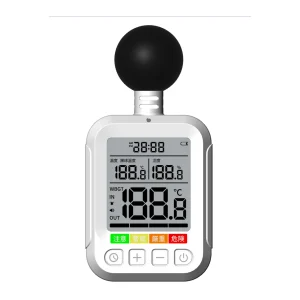
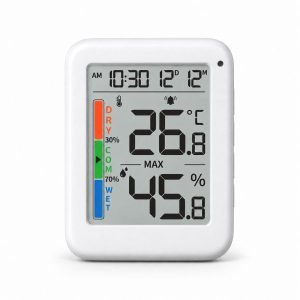
The Joint Development Process for a Custom Thermometer Hygrometer
Why Most Thermometer Hygrometer Prototypes Fail in the Field
Most thermometer hygrometer prototypes fail in the field because the design team treats the lab environment as the final destination. A sensor that hits its calibration marks in a climate-controlled room will often drift within weeks once it faces the real-world humidity swings and thermal mass of an industrial site. If you are building for industrial use, the prototype is not a showcase; it is a diagnostic tool to find out where your enclosure design breaks.
Enclosure material is the most common culprit. It is easy to pick a plastic for its finish or unit cost, but if that housing acts as a thermal insulator, your sensor will always be chasing the ambient temperature. We see this constantly: a design that looks sleek on a desk but lags by five minutes in a real-world environment because the air intake is too restrictive. If you ignore thermal mass during the design review, you are essentially guaranteeing a re-tooling cost after the first pilot run.
At YGhao, we have found that the transition from proof-of-concept to stable, high-volume output is where most projects lose their margin. You need to run stress tests that actually mimic the temperature gradients of your target application before you cut the mold. If you wait until the first batch hits the floor to test for environmental sensitivity, you have already spent the money you were trying to save. The rule is simple: if the prototype hasn’t been tested in the actual environment it will live in, it isn’t a prototype—it’s just a guess.
Development Path: Off-the-Shelf vs. Custom OEM Integration
At what point does a custom thermometer hygrometer project stop being a smart investment and start becoming a logistical liability?
Most buyers assume custom OEM development is the only way to differentiate, but the real cost isn’t the unit price—it’s the tooling depreciation and the long-term maintenance of proprietary firmware. If your application can function with a standard module, you skip the heavy tooling investment and avoid the supply chain bottlenecks that happen when a custom-molded part hits a production snag. Unless your volume exceeds 5,000 units per year, the overhead of managing a custom mold and unique firmware versioning usually outweighs the aesthetic gains.
| Development Path | Typical Lead Time | Tooling Investment | Best For | Scalability |
|---|---|---|---|---|
| Off-the-Shelf | 2–4 weeks | None | Rapid deployment | High |
| Minor Customization | 6–8 weeks | Low (Logo/Color) | Brand alignment | High |
| Full OEM/ODM | 12–16 weeks | High (New Mold) | Unique form factors | Medium/High |
Moving to a full OEM/ODM path shifts your risk from unit quality to project management. A New Mold locks you into one factory’s line, and proprietary firmware makes you dependent on their engineering team for every future update. Before you sign off, confirm who owns the mold and whether you will have access to the firmware source code or at least a compiled binary for future maintenance. If the supplier cannot provide a clear roadmap for version control, you are building a product that becomes unsupportable the moment their lead engineer moves on to another project.
Matching Your Project to the Right Engineering Support
Engineering support isn’t a one-size-fits-all service; it is a variable cost that shifts based on your project’s technical risk. Whether you are simply branding an existing module or solving for a specific environmental sensing challenge, the level of support you need depends on how much of the hardware you are willing to own.
The Fast-Track Buyer: Prioritizing Speed
If you need to move 5,000 units within 6 weeks, you don’t have time for a new mold. The Fast-Track Buyer focuses on existing sensor modules that have already cleared long-term drift testing. In this scenario, engineering support is limited to custom silk-screening, packaging, and UI branding. You bypass the 8-to-12-week tooling cycle entirely, but you accept the existing form factor. The risk here is low, provided you verify the assembly quality through a standard pre-shipment inspection. If the sensor core is already proven, you are essentially buying reliability at the cost of design flexibility.
The Industrial Integration Buyer: Environment Integration
This buyer hits a wall when an off-the-shelf enclosure chokes the airflow or fails to protect the sensor from dust and vibration. If your application requires a custom filter mesh or a specific mounting bracket, you need a supplier who can handle iterative CAD design. This adds 4–6 weeks to the timeline, but it is the only way to avoid the ‘field-failure’ trap where a perfectly good sensor returns high defect rates because the housing wasn’t validated for the thermal mass of the site. Before you cut the steel mold, insist on a 3D-printed prototype for a fit-check. If the supplier can’t show you how the housing handles airflow in your specific environment, they aren’t doing the integration work you’re paying for.
The Proprietary Logic Buyer: Managing Firmware and Calibration
When you need custom firmware, unique calibration protocols, or specific data-reporting intervals, the engineering burden shifts from hardware to software. This is the most complex path because it introduces the risk of ‘firmware drift,’ where custom code inadvertently alters the sensor’s baseline accuracy. When evaluating a supplier, look for a team that assigns a dedicated firmware engineer to your project. The most successful buyers in this category demand access to the compiled binary or source code early in the process. If the supplier cannot provide a clear version-control roadmap or explain how their firmware handles sensor recalibration after a power cycle, you are building a product that becomes unsupportable the moment their lead developer moves on to another project.
Matching your project to the right engineering support comes down to knowing whether you are buying a finished component or paying for the R&D to build something that doesn’t exist yet.
Technical Pitfalls That Break Production Runs
Most production runs for a thermometer hygrometer don’t fail because the sensor is bad; they fail because the transition from a lab-perfect prototype to a factory-floor reality ignores the cumulative effect of small, unmanaged tolerances. If you aren’t defining the ‘boundary conditions’ of your production process before the first mold is cut, you are essentially gambling on the consistency of the assembly line.
If the sample passes, production will too.
A sample is a hand-tuned artifact, not a statistical representation of a batch. When you approve a sample, you are approving a unit that likely benefited from manual calibration and cherry-picked components. Production drift is inevitable unless your contract explicitly defines the acceptable variance in sensor response time. Ask your supplier for their staged inspection plan—specifically, how they verify sensor accuracy at the 25%, 50%, and 75% points of the humidity range during the assembly process, rather than just at the end of the line.
Feature creep is free if it’s just a firmware tweak.
Adding a new data-logging interval or a custom alert threshold after the mold is cut is rarely just a software change. It often requires re-validating the power draw and thermal response, which can invalidate your existing CE or FCC certifications. We see projects stall at the final gate because a ‘minor’ software update pushed the device over its power-budget limit, forcing a hardware redesign of the PCB. If you must add features, do it before the tooling phase, or be prepared to pay for a full re-certification of the final assembly.
REACH and RoHS compliance are just paperwork.
Customs officials treat these as hard barriers, not administrative formalities. A single component—like a non-compliant solder or a restricted plasticizer in the enclosure—will trigger a seizure at the port, and the cost of return-shipping or destruction usually falls on the buyer. Never accept a ‘self-declaration’ of compliance. Demand a full Bill of Materials (BOM) with material safety data sheets (MSDS) and third-party test reports for the specific batch you are importing. If the supplier cannot link the test report to the specific lot number of the plastic or the solder paste used in your run, the paperwork is effectively worthless.
Enclosure design doesn’t affect sensor accuracy.
How to Audit Your Sensor Supplier for Long-Term Reliability
How do you verify that a factory can hold calibration accuracy across a 10,000-unit run, rather than just hitting the mark on a single prototype? Most procurement teams stop at the initial sample, but the real failure point in thermometer hygrometer sourcing is the drift that emerges after six months of field exposure. Reliability isn’t just about the sensor chip; it is about the repeatability of the calibration process and how the enclosure assembly handles thermal stress.
| Audit Category | Key Verification Question | Red Flag | Green Flag |
|---|---|---|---|
| Calibration Traceability | Can you provide calibration logs linked to NIST or equivalent standards for every production lot? | “We calibrate by sampling 1% of the batch.” | Full traceability reports and individual test logs for every lot. |
| Production Capacity | What is your realistic daily output for this specific housing design? | Vague answers or “unlimited capacity.” | A clear breakdown of line capacity vs. current utilization. |
| After-Sales Support | What is the protocol for handling a 2% drift failure rate in the field? | “We offer a 1-year warranty” without a process. | Defined RMA workflow with root-cause analysis reporting. |
| Environmental Testing | Do you perform thermal cycling on finished units before shipping? | “The sensor chip is pre-calibrated.” | Documented stress-test logs for the final assembly. |
Don’t just look at the ISO certificates on the wall. Ask to see the actual calibration equipment and the logs for a previous batch. If the supplier can’t explain their traceability protocol or show you how they track sensor drift across varying ambient conditions, you are likely buying a component that will require manual re-calibration shortly after deployment. The cost of a field recall due to sensor drift is always higher than the cost of a more rigorous audit at the factory level.
YGhao provides full batch-level calibration reports and technical documentation for all industrial-grade sensor orders. You can request our current production capability overview or contact our engineering team to review your specific reliability requirements for your next project.
Next Steps: Partnering with YGhao for Your Custom Project
Before we commit to a production timeline, we need to look at the specific environmental constraints of your application. A thermometer hygrometer is only as reliable as its housing design; if the sensor placement doesn’t account for the thermal mass of your target environment, even a high-grade sensor will drift. We prefer to catch these design conflicts before any tooling is cut, as fixing a mold error after the first pilot run is a cost that usually kills the project’s ROI.
Requesting a technical feasibility review for your specific sensor application is the most efficient way to avoid these pitfalls. We look at your enclosure specs, expected humidity swings, and calibration requirements to identify potential failure points before they hit the assembly line. This process gives you a clear view of the project scope, including a realistic timeline for your first pilot run and a transparent breakdown of the tooling investment. To get started, send your current specs to our engineering team to receive a preliminary feasibility assessment and a copy of our 2026 OEM capability guide for Your Custom Project.