Accelerating Time-to-Market with Ready-Platform Thermometer Hygrometer Solutions
Why Most Thermometer Hygrometer Prototypes Stall at the Tooling Stage
On a 5,000-unit first run, the conversation usually starts with tooling—not with the unit price. Procurement teams often sign off on a prototype that functions perfectly on a desk, only to find that the custom housing requires a 12-week lead time for injection mold fabrication. This is where the project stops being a development timeline and starts being a procurement liability. If the housing design isn’t pre-validated for mass production, any minor adjustment to sensor placement or battery compartment geometry forces a complete tool rework, effectively resetting the production clock and burning through the project’s contingency budget.
Lab-grade performance rarely survives the transition to the factory floor. A prototype might pass a controlled desk test, but fail to account for the thermal mass of the housing or the airflow constraints required for accurate humidity sensing in a fluctuating environment. When the housing is a proprietary, unproven design, the risk of failure during pilot runs increases. Buyers who insist on custom-tooled solutions from scratch often pay for multiple iterations, each adding weeks of delay and thousands in sunk costs before a single unit hits the shipping container.
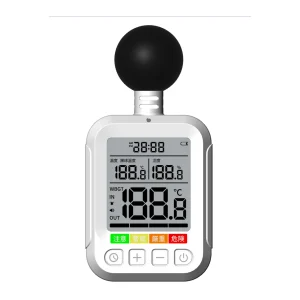
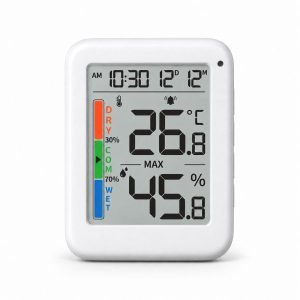
At YGhao, we bypass these R&D cycles by using pre-validated hardware cores. By selecting a platform where the housing, sensor integration, and power management are already production-ready, the focus shifts from tooling fabrication to final branding and firmware calibration. This approach turns a three-month wait into a matter of weeks, ensuring the device is built on a foundation that has already cleared the factory floor’s reality check. If you aren’t using a proven core, you aren’t just building a product; you’re funding a 12-week experiment in mold-making.
Technical and Commercial Benchmarks for Sensor Platforms
How do you distinguish a professional-grade sensor platform from a consumer-grade toy when the spec sheets look identical? The difference rarely lies in the advertised range, but in the stability of the readings under real-world stress. For industrial procurement, the sensor’s drift rate is the primary indicator of long-term reliability. A platform that claims high accuracy but lacks a defined drift threshold will often fail within three months of deployment, leading to costly field replacements.
| Platform Model | Sensor Accuracy (RH/Temp) | Typical Lead Time | MOQ | Compliance Status |
|---|---|---|---|---|
| YGhao-S100 | ±2% RH / ±0.3°C | 3–4 Weeks | 500 Units | CE/RoHS/FCC |
| YGhao-S200 | ±3% RH / ±0.5°C | 2–3 Weeks | 1,000 Units | CE/RoHS |
| Pro-Industrial | ±1.5% RH / ±0.2°C | 6–8 Weeks | 2,000 Units | CE/RoHS/REACH |
Beyond the raw numbers, the housing material dictates the sensor’s response time and longevity. Many low-cost platforms use plastics that trap moisture or off-gas, which artificially skews humidity readings over time. When evaluating a supplier, verify whether the housing is vented for airflow or sealed for protection; a mismatch here results in sluggish data that lags behind actual environmental changes.
Finally, distinguish between component-level compliance and final-product certification. A sensor module might be RoHS compliant, but that does not guarantee your finished device will pass electromagnetic compatibility (EMC) testing. Always request the full test report for the specific configuration you intend to order, as this is where most procurement projects encounter unexpected customs delays. A reliable platform is one where the manufacturer has already documented the path to final-product certification, saving you from the risk of a failed compliance audit at the port of entry.
Choosing Your Development Path: Fast-Track vs. Full Custom
When you are sitting on a production schedule with a hard launch date, the debate between a Full Custom build and a Fast-Track platform usually comes down to one question: how much of your budget are you willing to sink into tooling before you see a single finished unit? Most buyers assume that custom means better, but in the thermometer hygrometer market, ‘custom’ often just means a longer wait for a mold that might need three revisions before it hits the right tolerance.
The Fast-Track Path
If you need to hit shelves in 6 weeks, you aren’t building a new housing; you are selecting a proven, off-the-shelf platform and applying your branding. This is the standard move for seasonal retail where the window of opportunity is narrow. You lose the ability to dictate the exact chassis geometry, but you gain the ability to ship immediately. The risk here is low because the tooling is already paid for and the electronics are already certified. If you are a new entrant or testing a market, this is the only way to avoid the cash-flow drain of a 12-week mold-making cycle.
The Industrial OEM Path
For industrial use, the math changes. You aren’t worried about the shelf-appeal of the plastic; you are worried about whether the sensor will drift after 5,000 hours of operation. This is where the Full Custom path—or at least a highly modified OEM platform—becomes necessary. You need Custom Logic For specific data-logging intervals or ruggedized housing that can survive a warehouse environment. This path requires a higher upfront investment in engineering, but it prevents the hardware from becoming a bottleneck when your client’s requirements evolve.
When you are mapping your volume requirements to the most cost-effective platform tier, look at the failure points of your last project. If the delays were in the firmware or the sensor calibration, you need a partner with deep R&D capacity. If the delays were in the physical assembly or the customs clearance of a new, uncertified design, you need to stick to the Fast-Track path. The most successful procurement managers don’t chase the most complex design; they chase the one that actually arrives on the loading dock on time.
Procurement Realities: Where Sensor Projects Usually Break
Most sensor projects don’t fail because the hardware is bad; they fail because the procurement process treats the factory like a black box. If you aren’t defining the tolerance ranges and compliance paperwork before the first unit hits the line, you aren’t managing a supply chain—you’re just waiting for a customs hold.
If the sample passes, production will too.
A sample is just a showroom piece. It doesn’t tell you how the line handles component variance or calibration drift over a 5,000-unit run. If your quote doesn’t explicitly define the acceptable tolerance range for mass-produced units, you’re gambling on the factory’s internal QC. Ask for a staged inspection plan that shows exactly what gets checked at each milestone, not just a final sign-off.
Firmware lock-in is just a software detail.
If you can’t update the device logic after deployment, you don’t own the product—you own a brick. A sensor that drifts in the field is a minor annoyance if you can push a firmware patch; it’s a total recall if you can’t. Before you sign the PO, verify the hardware architecture supports remote logic adjustments. If the supplier can’t show you the update path, assume they haven’t built one.
Customs documentation is a ‘later’ problem.
Anyone who has shipped DDP into the EU or US knows the surprise isn’t the freight; it’s the four hours of REACH and RoHS paperwork on a Friday afternoon. If these documents aren’t finalized before the container is loaded, you are already behind schedule. At YGhao, we run these compliance audits during pre-production because waiting until the goods are at the port is a guaranteed way to trigger a week-long hold. If the paperwork isn’t ready before the shipment leaves, the delay is already baked into your cost.
Define your constraints before the first unit is manufactured, or prepare to pay for the rework after the first batch is rejected.
How to Audit Your Thermometer Hygrometer Supplier
Once the sensor platform benchmarks are set, the question is whether the factory floor can actually replicate that performance across a 5,000-unit run without the drift that plagues early-stage prototypes. A golden sample is easy to build; the real test is whether the factory has the calibration infrastructure to keep the defect rate under 0.3% on the 12th batch, not just the first.
| Ask | Expected Evidence | Red Flag | Responsible Party |
|---|---|---|---|
| Calibration Protocol | In-house chamber logs | Third-party only | Engineering |
| Batch Consistency | Last 12-batch report | “Standard” deviation only | QC Manager |
| Firmware Access | Audit-ready source code | Black-box binary | R&D Lead |
| Defect Rate | 12-month rolling data | No historical tracking | Procurement |
Most procurement teams fixate on unit price while ignoring the calibration infrastructure that actually prevents field failures. If a supplier cannot show you their in-house calibration chambers or explain their batch-testing protocols, you are essentially buying a sensor that has never been verified against a reference standard. Anyone who has managed a large-scale deployment knows that the “standard deviation” provided in a sales deck is often a best-case scenario. Ask for the 12-month defect rate report instead. If they cannot produce it, they aren’t tracking their own failures, which means your team will be the one doing the QC when the shipment arrives.
Avoid suppliers who treat firmware as a “black box” that cannot be audited or updated. If a sensor drift issue emerges after deployment, you need the ability to push logic updates without recalling the entire fleet. If you are currently vetting a supplier, request their 12-month defect rate report and a sample of their Calibration Protocol before signing a bulk contract. Contact our team to download our full technical spec sheet or to book a 20-minute video factory audit.
Next Steps: Partnering with YGhao for Your Custom Project
Now that the technical benchmarks for your sensor platform are set, the focus shifts to Your Custom Project Transitioning from a lab-tested prototype to a reliable production run. Most delays at this stage don’t come from the sensor itself, but from misaligned firmware expectations or missing compliance paperwork that only surfaces when the first batch hits customs.
YGhao handles the engineering support by mapping your specific application requirements against our existing production lines. We don’t just hand over a unit; we verify that your firmware load-out matches the hardware calibration and that the final assembly meets the regulatory standards for your target market. If you are moving from a fast-track integration to a full custom build, we need to lock the tooling schedule before component lead times shift.
To get started, request our current technical spec sheet or a sample unit for your internal validation. If you have a specific OEM/ODM requirement, reach out to our engineering team directly to discuss your project scope and get a realistic lead-time estimate for your first 5,000-unit batch.