Optimizing Your Custom Digital Clock Bulk Order: Pricing and MOQ Strategies
Beyond the Unit Price: The Real Cost of Custom Digital Clocks
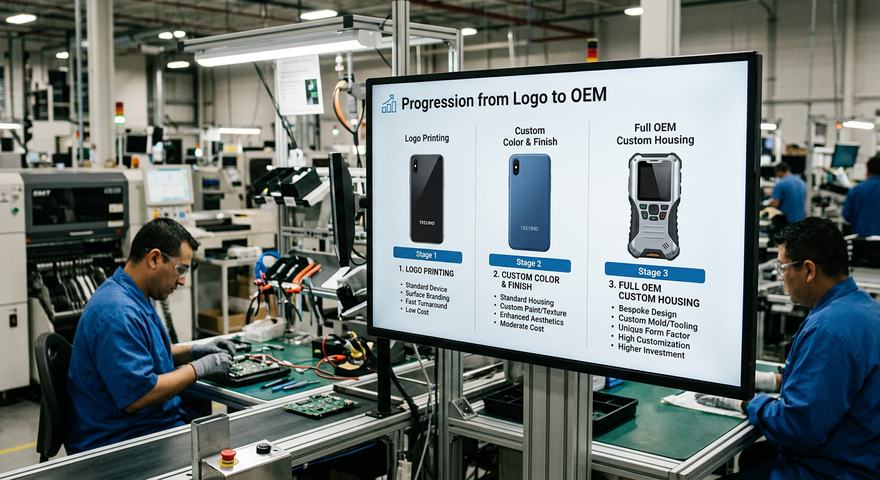
Understanding the investment and lead time required for different levels of customization.
Most buyers fixate on the unit price, but that number is often a distraction. The real cost of a custom digital clock project isn’t just the BOM; it’s the amortization of tooling, the hidden lead-time impact of design iterations, and the compliance paperwork that only surfaces when a container hits customs. If you are looking at a quote that seems too good to be true, check if it covers a simple logo print on an existing chassis or a true OEM development. The former is a commodity purchase; the latter is an engineering project.
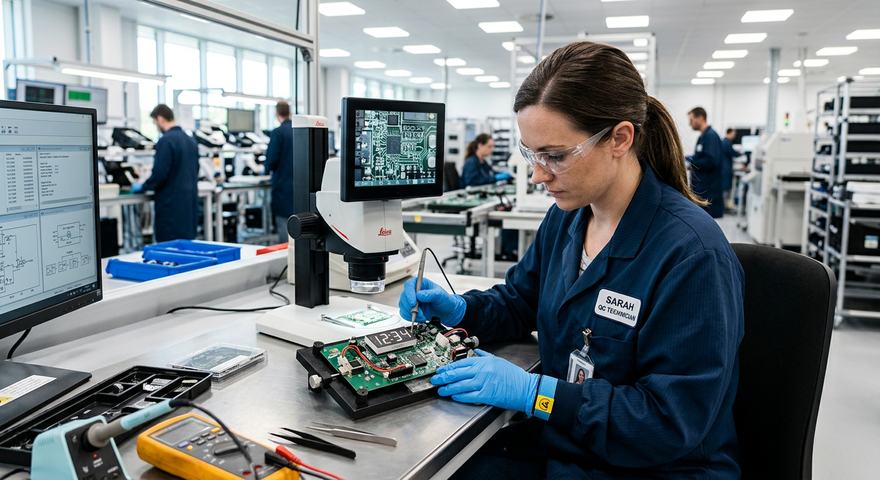
Rigorous QC processes are essential for maintaining BOM stability and product reliability.
When you move from simple branding to full-chassis customization, you are paying for a production asset. That tooling investment must be spread across your total volume, which means your per-unit cost is drastically different for a 500-unit pilot run versus a 10,000-unit rollout. If you don’t lock your design before the mold-cutting starts, you will pay for every engineering change in both cash and calendar days. A 3-week turnaround for a logo print is standard, but a custom housing project will reliably push your lead time to 12 weeks or more.
| Customization Level | Typical MOQ | Tooling Investment | Lead Time Impact |
|---|---|---|---|
| Logo Print (ODM) | 500+ units | Negligible | 3 weeks |
| Custom Housing (OEM) | 3,000+ units | High (Amortized) | 12 weeks |
| Full R&D / New PCB | 10,000+ units | Very High | 16+ weeks |
Evaluating Manufacturing Capabilities: A Procurement Decision Matrix
How do you actually distinguish a primary manufacturer from a trading company when you’re sourcing custom digital clocks? The answer isn’t in the brochure; it’s in who owns the tooling and the PCB design. A factory-direct partner manages these in-house, while a trading company often acts as a middleman, treating your design as a series of external variables. That fragmentation is where most lead-time delays and quality inconsistencies begin.
When you’re vetting a supplier, don’t just ask for a quote. Ask for the test reports for CE, FCC, and RoHS compliance that correspond to the specific components in your build. If a supplier can’t provide these for the exact materials they plan to use, you’re taking a significant risk at customs. A capable manufacturer will have these on file; a middleman will often have to scramble to get them from their own sub-suppliers.
| Evaluation Factor | Factory-Direct | Trading Company | Primary Procurement Risk |
|---|---|---|---|
| Technical Control | In-house R&D/Tooling | Outsourced/Fragmented | Design drift & QC gaps |
| MOQ Thresholds | Fixed by line capacity | Negotiable/Aggressive | Hidden cost spikes |
| Lead Time | Stable (Direct control) | Variable (Third-party) | Schedule slippage |
| Compliance | Direct test reports | Indirect/Resold | Customs rejection |
For repeat orders, the biggest risk is BOM stability. At YGhao, we lock the BOM after the pilot run to ensure the components in your first 500 units match the 5,000 units you order later. Trading companies often swap components to chase lower spot prices, which can cause performance issues that only show up after the product is in the field. If you are planning a run of 5,000 units or more, ask for a capacity report to confirm they have dedicated lines for your volume. If they can’t show you the production floor or explain their QC process on the line, they don’t have the control you need for a reliable, long-term supply.
Production Realities: Avoiding Common Customization Pitfalls
On a 5,000-unit run, the difference between a successful launch and a warehouse full of dead stock often comes down to how you handle the ‘Cosmetic Customization’ path. Buyers often assume a logo change is just a print job, but if your brand guidelines require strict color-matching, the factory needs to calibrate their pad-printing machines and run test samples before the main batch starts. If you don’t lock these specs before the first unit hits the line, you end up with inconsistent branding that forces a costly rework. The mistake is treating cosmetic changes as a minor detail rather than a technical requirement that needs its own sign-off phase.
The Full OEM Tooling Trap
Moving to a custom housing—the ‘Full OEM’ path—is where most projects stall because of the tooling sign-off milestone. Buyers frequently treat the first sample as a final product, forgetting that the mold-making process is a rigid, irreversible step. If you discover a design flaw after the steel is cut, you are looking at weeks of delay and significant re-tooling costs. This is the ‘Artwork Lock’ trap: making late-stage design changes after the tooling is already in production. Every minor tweak to the housing geometry or the PCB mounting points resets the production clock, inflating costs and pushing your delivery date into the next quarter.
Defining QC boundaries is the only way to prevent these stalls. ‘High quality’ is not a spec; it is a subjective target that leads to disputes at the inspection table. Before the first batch is scheduled, you must define measurable defect rate targets—such as an Acceptable Quality Limit of 0.65 for critical defects—and ensure the factory is testing for your specific environmental requirements, not just basic functionality. If you are currently finalizing your technical specs, ask your supplier for their internal QC report on the last 12 batches to see if their ‘high quality’ matches your definition.
Technical Handover: Vetting Your Partner and Starting Your Project

A thorough technical handover ensures your design translates correctly to the production line.
What document actually stops a production line from stalling on your first custom digital clock run? It is rarely the CAD file. It is the technical spec sheet that defines material tolerances and component sourcing. A design that looks perfect on a screen often hits a wall when the factory realizes a specific capacitor or housing plastic isn’t available in the required grade. Before you sign a PO, move past the sales deck and into the engineering reality of the factory floor.
Treat the handover as a technical audit, not a file transfer. Ask for a full spec sheet that includes component sourcing lists and power consumption profiles. If they cannot provide a bill of materials (BOM) that matches your design, they are likely sourcing components on the spot, which introduces massive variance. Verify that they hold valid CE, FCC, or RoHS documentation for your specific region; customs officials do not accept ‘we are working on it’ as a substitute for a test report.
If you want to see the truth, book a 20-minute video factory audit. A real manufacturer will have no issue walking you through their QC stations and showing you the actual production line where your units will be assembled.
If you have your design files ready, contact the YGhao engineering team to review your specifications and get a project quote. We can flag potential bottlenecks in your housing or PCB layout before you invest in tooling, keeping your custom digital clock project on schedule.