Sourcing a Custom Digital Clock for Large-Scale Corporate Branding
Why Scaling Custom Digital Clocks Requires More Than Just a Logo
Moving from a one-off prototype to a 500-unit run often reveals hidden issues with screen contrast, casing fit, and PCB stability. Most buyers assume that if the first sample looks right, the production run will follow suit. That is where the budget usually breaks. When you scale, you aren’t just buying more units; you are moving from a lab environment to a factory line where tolerances shift and materials behave differently under heat and pressure.
At YGhao, we insist on Pantone-matched physical proofs before the line starts, because a digital mockup never shows how the plastic actually catches the light. Don’t treat your first sample as a showroom piece. Treat it like a stress-test candidate—if it fails on your desk, it will definitely fail in the field. Prioritize tooling consistency over the lowest unit price; batch-to-batch variation is the fastest way to ruin a corporate gift’s perceived value.
If you are managing the procurement, your biggest risk isn’t the unit cost—it’s the cost of a recall or a batch of unusable inventory. Ask your supplier for their specific QC process for the final assembly stage. If they cannot show you how they handle screen alignment or button tactile feedback across a 500-unit run, you are essentially gambling on the factory’s mood that day. A reliable partner will have a clear, documented path for these checks. If you are ready to move past the prototype phase, contact our engineering team to review your current spec sheet for production readiness.
The 500-Unit Procurement Checklist: What to Demand from Suppliers
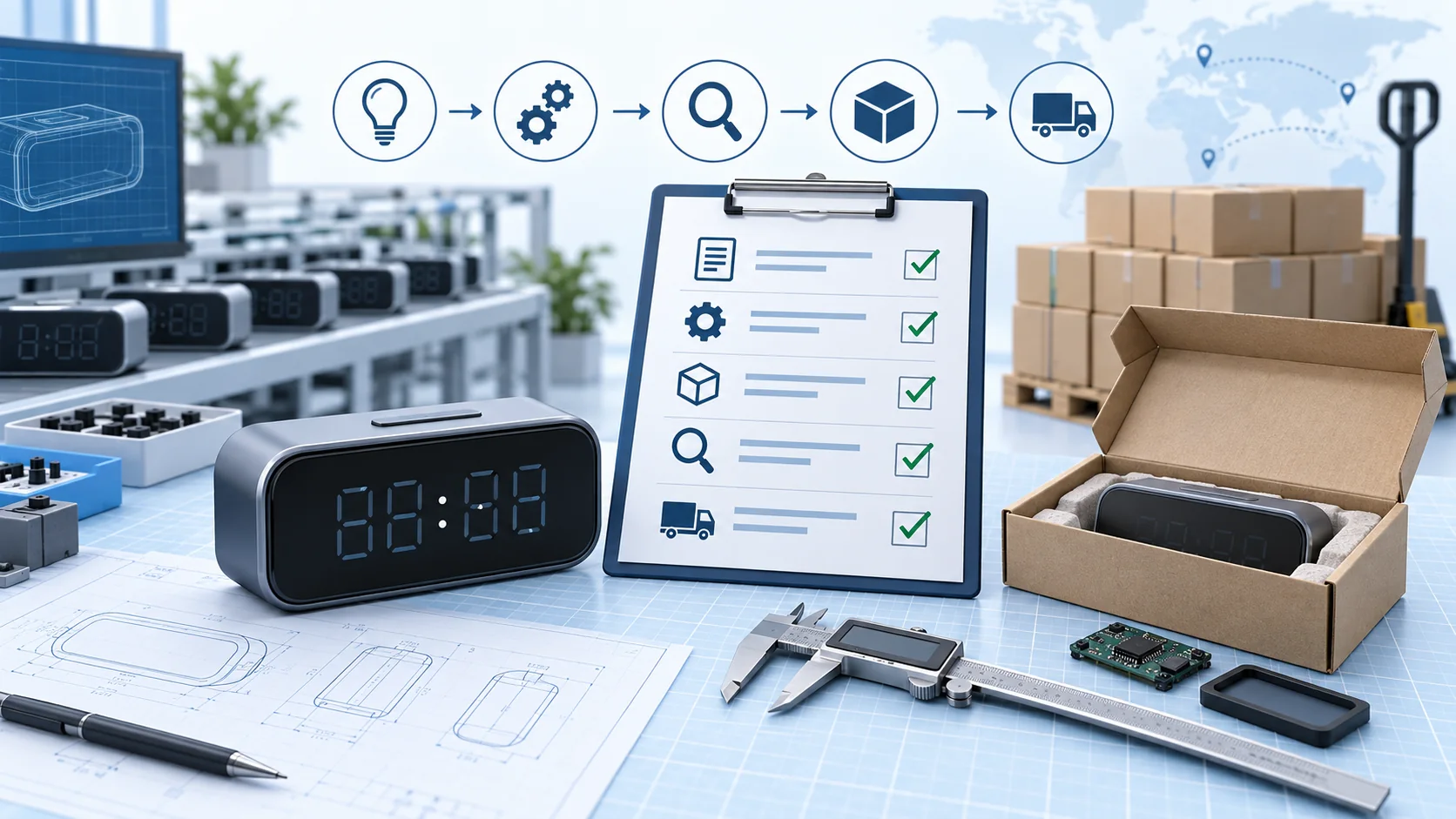
A structured procurement checklist helps bridge the gap between prototype and industrial-scale production.
How do you know if a factory is actually ready for a 500-unit run, or if they are just going to treat your order like a glorified prototype? Most procurement teams get stuck on the unit price, but the real cost is hidden in the rework required when the 50th unit doesn’t match the first. You need to stop asking for ‘quality’ and start asking for the specific technical controls that prevent batch drift. If a supplier can’t show you these, they aren’t running an industrial process—they are just building by hand.
| Feature | What to Ask For | Why It Matters |
|---|---|---|
| Tooling | Hardened steel molds | Prevents casing flash and alignment drift |
| QC | 0.3% AQL or better | Keeps defect rates below the ‘annoying’ threshold |
| Compliance | Market-specific test reports | Prevents customs seizures on arrival |
| Lead Time | 30-45 days from proof sign-off | Protects against ‘rush’ shortcuts that break quality |
Don’t take a ‘yes’ for an answer on compliance. If you are shipping to North America, ask for the specific FCC or UL test reports for the exact model you are ordering. If they say they have them but can’t send the PDF, assume they don’t. Similarly, define your Acceptable Quality Limit (AQL) in the contract. A 0.3% AQL means you are setting a hard boundary on how many dead pixels or casing scratches you will tolerate before the batch is rejected. Without this, you are at the mercy of the factory’s internal definition of ‘good enough.’
Finally, look at the Unit Procurement Checklist they use on the floor. If they don’t have one, they are relying on the operator’s memory, which is exactly where the consistency breaks down on a 45-day production cycle. If you are ready to review your current spec sheet for production readiness, contact our engineering team to see if your design is ready for the line.
Common Procurement Traps That Break Large-Scale Orders
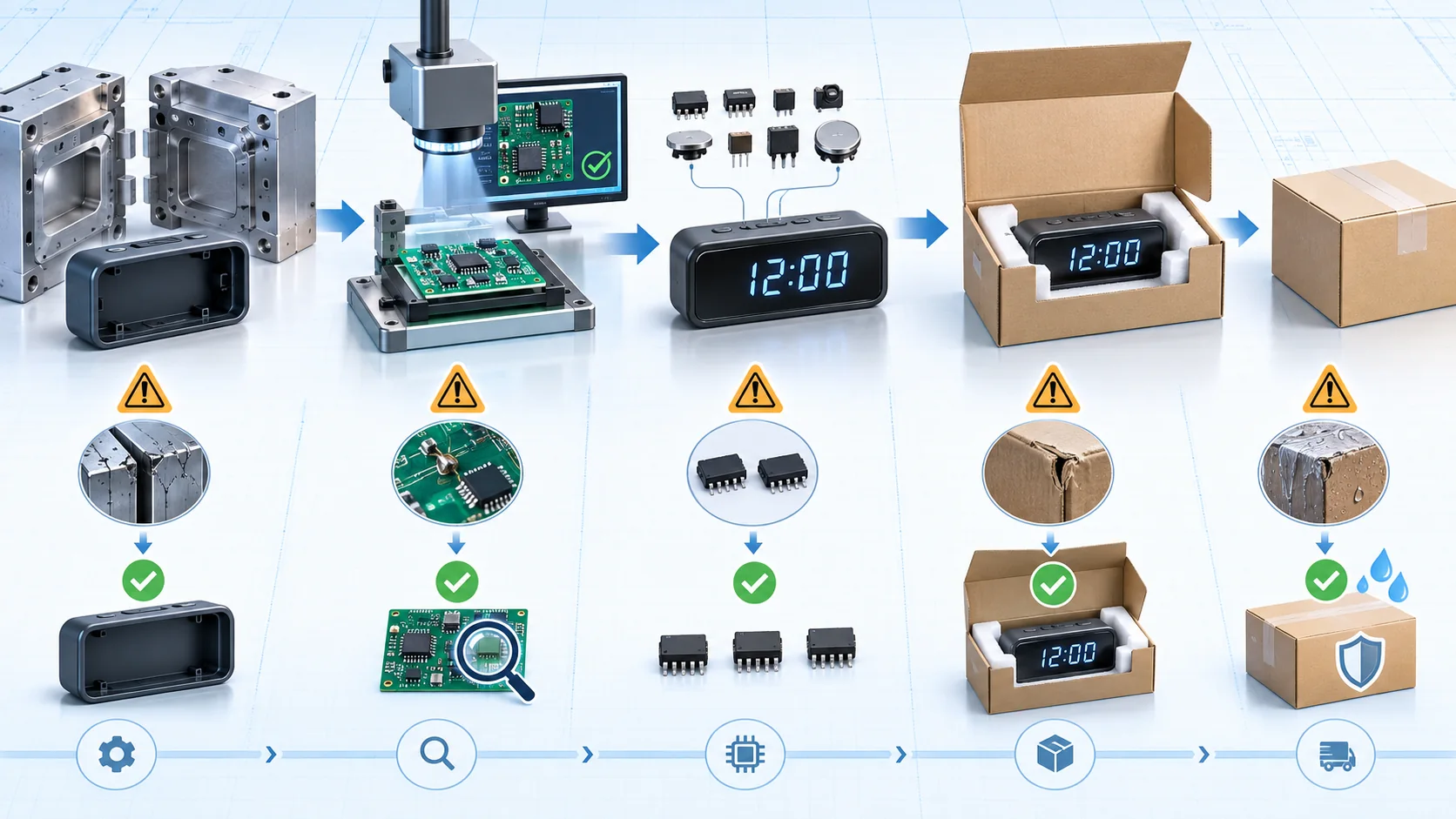
Identifying and mitigating production risks early prevents costly errors during the tooling phase.
Custom digital clock projects often look solid on a spec sheet, but the gap between a prototype and a bulk run is where most budgets evaporate. A design that works in a lab setting can fail under the realities of a factory floor if the technical requirements aren’t locked down before the first cent is spent on tooling.
Consider the ‘Logo Fade’ trap. Standard screen printing on ABS plastic peels without UV-curing. If the supplier doesn’t mention the curing process, assume it will rub off. We’ve seen studios lose entire batches because they assumed the quote included professional-grade finishing. If the curing process isn’t explicitly written into the PO, it isn’t happening. Similarly, the ‘Power Supply’ Mismatch is a classic error. A clock that works in the factory might fry in the destination office if it isn’t rated for the local grid. If you are shipping to North America, verify the voltage and plug type in your technical requirements before production starts.
Managing Production Risks
Changing a design after the mold is cut forces a total cost reset. This ‘Tooling Reset’ error is the fastest way to blow a timeline. Lock your artwork and dimensions before the first cent is spent on tooling. Likewise, color-matching is a frequent point of failure. Document your Pantone codes in the PO. If the final batch is ‘close enough’ but not exact, you have no leverage without that written spec.
These risks In North America and beyond are rarely about malice; they are about the gap between what you assume is standard and what the factory considers ‘complete.’ Is your supplier ready to fill that table for a real batch?
Finalizing Your Order: Verification and Engineering Consultation
What is the one thing that separates a successful 500-unit run from a shipment of expensive paperweights? It is the final verification. Most buyers treat the pre-production sample as a finished product, but you should treat it as a diagnostic tool to find where the factory’s process breaks down.
Demand a pre-production sample that includes your actual branding and packaging. If they send a generic unit, they aren’t ready for your project. Review the supplier’s QC report format; if it doesn’t explicitly cover display functionality and battery life, ask them to add those steps. Build a 5-day buffer into your lead time for final inspection and customs paperwork—don’t let the shipping date be the same as your event date.
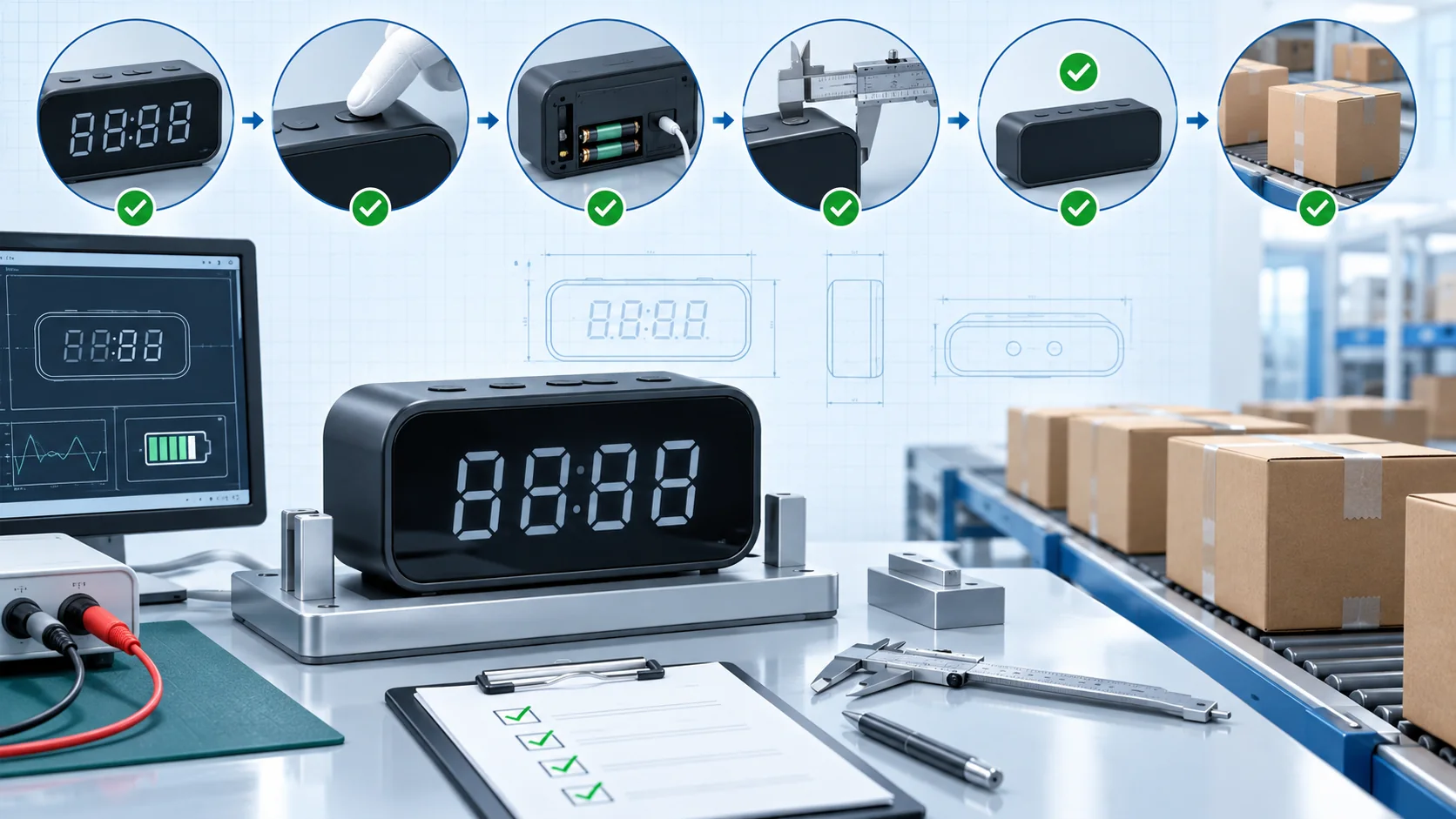
Final verification is the last line of defense against batch defects.
Engineering Consultation How: Contact the YGhao engineering team to request a full technical spec sheet or a custom project quote for your 500+ unit order. Finalizing Your Order requires this level of technical sign-off to ensure the production line is calibrated to your specific tolerances.