How to Choose an HVAC Thermo-hygrometer That Prevents Building Commissioning Failures
Why Commissioning Sign-Off Often Hangs on a Fraction of a Percent of Relative Humidity
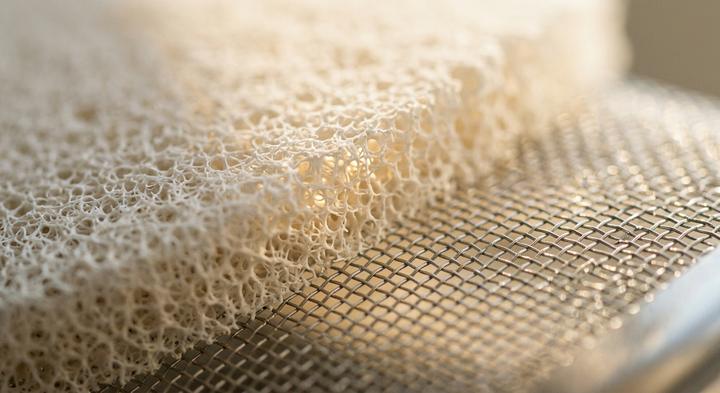
Industrial-grade sensor caps utilize porous barriers to protect sensitive elements without sacrificing response time.
At 6:00 AM on a building handover deadline, a commissioning agent watches an automation dashboard flash yellow because a single duct-mounted thermo-hygrometer reads 52% relative humidity instead of the required 49.8%. That 2.2% drift might seem academic to the drywallers packing up their tools, but on a high-spec commercial project, it halts the entire automation sign-off. When environmental controls fail to settle within these razor-thin tolerance bands, local inspectors running ASHRAE 90.1 compliance audits will hold up the occupancy permit. The result isn’t just a delayed schedule; it’s immediate liquidated damages and frozen contractor payouts.
The breakdown rarely stems from a faulty controller code; it happens because of the physical gap between heavy construction and system startup. During this dry-run phase, delicate capacitive sensor membranes sit exposed to airborne concrete curing emissions, highly alkaline silica dust, and constant structural vibration long before the HVAC system runs its first clean air cycle. Standard commercial thermo-hygrometer units, built with open plastic slots, offer zero physical protection against these micro-abrasive particles, permanently shifting the sensor’s dielectric properties. When you measure Relative Humidity At the duct, you are often reading the damage from three weeks of construction dust, not the actual air state.
Preventing this hold-up means looking past the accuracy numbers on a datasheet to evaluate how the probe is physically built. Industrial-grade instruments, like the thermo-hygrometer probes from YGhao, isolate the delicate sensor chip behind sintered stainless steel filter caps that block particles down to 5 microns without suffocating the gas permeability needed for fast response times. If a sensor cannot survive the dust of an active job site before the HVAC system is even turned on, its factory-calibrated precision is useless. When reviewing instrument submittals, the physical design of the protective cap is the only detail that determines whether a sensor will actually pass the audit on handover day.
The Engineering Specs That Separate Lab Standards from Floor-Ready Sensors
How do I tell if a high-precision thermo-hygrometer will actually survive active duct environments?
The difference between laboratory precision and field survival comes down to how the sensing element handles extreme moisture cycles and particulate contamination. While standard commercial submittals often highlight a tight nominal accuracy like ±1.5% RH, this rating can degrade rapidly when exposed to the high velocity currents and dust of a newly commissioned ventilation shaft. Engineers must audit the underlying physical technology and calibration lineage to ensure their environmental control loops remain stable after handover.
This exposes the “precision trap”: paying a premium for a ±1.5% RH nominal specification is a waste of capital if the sensor drifts by 1% per year anyway under active thermal loads. Selecting capacitive polymer elements over resistive alternatives directly solves this. Capacitive elements handle extreme condensation recovery without permanent calibration shifts because their microscopic dielectric polymer layer allows moisture to cycle freely without dissolving the active substrate. Resistive sensors, which rely on conductive salts, can physically degrade or lose calibration permanently when fully saturated.
| Buyer Type | Decision Factors | Sensor Fit | Primary Risks | Verdict |
|---|---|---|---|---|
| Commercial HVAC | Heavy construction dust, high velocity, cost-to-durability ratio | Capacitive polymer probe with a sintered stainless steel guard | Particulate buildup clogging the element, causing permanent drift | Specify high-porosity sintered metal caps; avoid unshielded element types. |
| Pharma & Cleanroom | Strict ISO/IEC 17025 compliance, chemical washdown resistance | Remote split-sensor probe with IP66-rated stainless steel housing | Outgassing from cleaning agents like VHP shifting the calibration baseline | Mandate multi-point NIST calibration; reject generic factory compliance slips. |
| Datacenters | Rapid response times under continuous high thermal loads | Bypass duct probe with high-porosity PTFE protective filter | High-velocity dust abrasion and static charge corrupting the signal | Deploy fast-recovery capacitive elements; verify hysteresis is locked below ±0.8% RH. |
Spec Sheet Auditing and Traceability
To ensure long-term stability, engineers must trace calibration reports rather than accepting general factory guarantees. A generic “certificate of conformity” is merely an internal declaration, not an accredited third-party verification. Always demand multi-point NIST-traceable data detailing hysteresis limits and reaction times mapped directly to your submittal documents. At YGhao, we verify our industrial-grade sensor probes under simulated peak load chambers to ensure actual performance matches the documentation before delivery. This prevents the commissioning delays that occur when uncertified sensors fail initial inspections.
Matching the Thermo-hygrometer to the Building Classification: Three Engineering Scenarios

Different building classifications require specific physical mounting to withstand unique environmental stresses.
An HVAC lead on a site walk looks at the submittals, realizing the stock 200mm duct sensor will slam straight into the internal turning vanes of a supply elbow. This is a physical clearance failure that stalls sign-off. Every Building Classification dictates its own mechanical layout and microclimate. Instead of trying to force standard catalog parts into non-standard ducts, we focus on Three Engineering Scenarios On how physical adaptations—like matching insertion depth or choosing a sintered metal guard—prevent field failures before handover day.
Critical Limits In Sterile Spaces
In a surgical suite or compounding cleanroom, a 3% relative humidity spike triggers an immediate infection-control alert. These spaces operate under strict compliance Limits In ASHRAE Standard 170, meaning a thermo-hygrometer must react instantly while enduring daily chemical washdowns. Standard plastic hoods quickly degrade under vaporized hydrogen peroxide (VHP). To survive, the sensor probe requires a sintered stainless steel or porous PTFE filter cap to shield its capacitive chip without lagging response times. In these Sterile Spaces, we seal the housing to IP65 and mount the sensor elements on extended, heavy-walled probes that sit clear of turbulent boundary layers.
Balancing Multi-Zone Commercial Offices
Balancing Multi-zone dampers in commercial offices often fails because sensors are mounted on exterior-facing partition walls. These perimeter surfaces act as thermal heatsinks, transferring external temperature spikes directly to the wall-plate sensor and causing reading drift. When Managing Exterior Wall Drift in drafty Zone Commercial Offices, mounting an uninsulated room transmitter results in continuous, wasteful cooling cycles. The fix is simple but often ignored: specify room sensors with thick, rear-insulated gasket bases that isolate the sensing element from the wall’s internal temperature. Combine this thermal break with a high-grade capacitive sensor certified for an annual drift under 1% relative humidity, and you eliminate the need for monthly recalibration visits.
High Density Data Centers and Airflow Dynamics
In modern server halls, the main threat is the dry, high-velocity recirculated air drying out static-sensitive electronics. Siting Probes directly in these high Velocity Aisles requires a delicate balance; a short probe reads only stagnant boundary air near the duct skin, while an oversized probe bends under extreme airflow drag. Designing for high Density Data Centers requires rigid, custom-length stainless steel probes with aerodynamic, low-profile protective mesh caps that prevent static buildup without restricting bypass air. For high-velocity paths, always size the probe to cross exactly one-third of the duct width and shield the tip with a low-profile stainless steel mesh rather than a bulky plastic hood.
Three Sourcing Missteps That Lead to Failed Environmental Audits
A bulk sensor shipment fails its environmental audit because procurement treated submittal paperwork as a checklist formality. Three core decisions determine whether these instruments pass commissioning or require an expensive replacement run.
“Factory-calibrated” means every thermo-hygrometer in the box is ready for the inspector.
A generic calibration slip is usually a batch-level stamp, not an individual NIST-traceable record. When an auditor demands serialized proof, a generic paper slip leads directly to Failed Environmental Audits Three weeks before handover. If the supplier cannot deliver a multi-point calibration report mapped directly to each unit’s serial number, the shipment is uncertified. Demand sample certificates before production, and verify that the serialization scheme matches your building’s automation layout.
Sourcing a sensor with the highest spec-sheet accuracy—say, ±1% RH—is the safest path.
Spec-sheets are written for clean labs, but active construction sites are thick with drywall dust and concrete spray. An unprotected ±1% thermo-hygrometer element will clog and drift immediately when air handlers start. Instead of chasing paper-thin tolerances, check the physical filtration. Look for sintered stainless steel or PTFE membrane caps. A rugged ±2% sensor will pass an audit months down the line, whereas an unprotected lab-grade instrument drifts before drywall dry-out is complete.
Mounting configurations are just hardware variations; the core sensor works the same.
Using wall-mount housings for high-velocity duct runs ruins commissioning schedules. When sourcing teams swap form factors to shave minor unit costs, installers end up improvising—mounting wall sensors directly on cold outer walls or inside supply diffusers. The resulting localized condensation and thermal bridging make high-accuracy sensors read complete nonsense. Cross-reference the mechanical drawings against physical housing specs before releasing the deposit; a wrong bracket ruins the sensor.
To ensure a smooth sign-off, verify that the physical filter cap matches the job-site dust load and that every serial number has a corresponding multi-point calibration certificate before the shipment leaves the factory.
Vetting the Factory: The Sourcing Engineer’s Quality Assurance Checklist
While physical casing specs protect sensors from harsh environments, the internal calibration is what actually determines whether a building passes handover on day one. To verify this capability, The Sourcing Engineer should utilize a rigorous Quality Assurance Checklist While auditing the manufacturer’s actual testing loops, ensuring the hardware performs to its physical datasheet.
| Ask | Expected Evidence | Red Flag | Responsible Party |
|---|---|---|---|
| Point Calibration | Certified test reports proving actual physical chamber verification at 25%, 45%, and 65% RH. The supplier must show physical test results for each target level rather than relying on a software-generated curve that merely shifts the digital offset. | Flat calibration curves or identical values across different sensor batches, indicating software-estimated data or copied reports. | Sourcing Procurement Specialist |
| Serial Mapping | Individual sensor serial numbers permanently laser-etched on the probe housing and mapped directly to digital calibration files in the supplier’s database. | Suppliers charging an extra premium for calibration files or blanking out serial numbers on bulk quality control reports. | Sourcing Procurement Specialist |
| Chamber Infrastructure | Video verification or on-site audit of active, calibrated climate chambers operating on the secondary production line. Ensure the reference instruments have active, unexpired calibration certificates. | Outsourced testing claims with no visible testing Chamber Infrastructure or outdated calibration stickers on the reference chambers. | Lead Quality Assurance Manager |
| Shipment Release | Signed quality assurance manager release forms verifying batch-specific drift tolerances before customs clearance paperwork is generated. | Pre-printed, unsigned QC slips packed in bulk shipment boxes without individual batch tracking numbers. | Export Logistical Sign |
| Environmental Stress Screening | Documentation of 48-hour thermal burn-in cycles to eliminate early-life component failures before final calibration is performed on the sensor element. | High out-of-box failure rates or rapid calibration drift detected immediately upon arrival at the destination port. | Factory Production Director |
Anyone who has spent a Friday afternoon sorting out a customs hold because of lazy paperwork knows that a pre-printed, unsigned slip is worse than nothing. At YGhao, we run every single batch through our own in-house environmental chambers to verify accuracy across the entire operating spectrum, with our Lead Quality Assurance Manager signing off on every physical certificate. This isn’t just about avoiding a yellow light on an HVAC commissioning dashboard; it’s about protecting your margin from unexpected field callouts and shipping delays.
Shoring Up the Submittal Package: Securing Verified Sensors for Your Next Commissioning Cycle
While mapping thermo-hygrometer specs to building classifications protects against upfront design errors, those choices only matter if they survive the submittal package review and the chaotic environment of the job site before power is turned on. A submittal package often falls apart over the physical interface matchup—specifically, confirming whether your thermo-hygrometer sensors output Modbus RS-485, BACnet MS/TP, or traditional 0-10V analog signals directly to the controller before the purchase order is finalized. When this detail is glossed over on paper, the commissioning agent is left troubleshooting mismatched baud rates or wiring polarity on a cold morning instead of wrapping up the handover. At YGhao, we coordinate our manufacturing with these exact field realities to keep projects on track. We schedule our standard batch production to offer a reliable 15-day typical lead time for calibrated runs, ensuring your sensors arrive exactly when the mechanical installation window opens, backed by a 12-month factory warranty that protects the hardware under harsh, active-site conditions.
Before submitting your final equipment list for your next commissioning cycle, make sure the engineering documentation is bulletproof. You can download our complete technical drawings to verify the dimensional clearance of our duct probes, or request a sample calibration certificate to inspect our NIST-traceable testing protocols under simulated humidity loads. If your project demands custom measuring ranges or specific enclosure configurations, contact our engineering team directly to verify your layout and secure a factory-direct quote for your custom project.