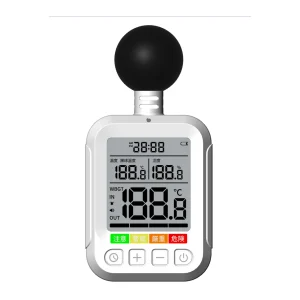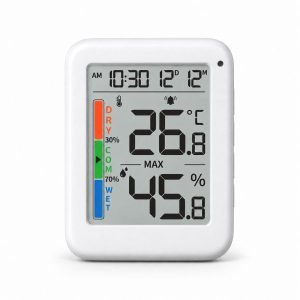
How to Select an Industrial-Grade Thermo-hygrometer: The 2026 B2B Procurement Playbook
The Hidden Failure Points in Industrial Humidity Audits: What Happens Before Installation
Buying an industrial thermo-hygrometer based solely on a ±2% RH catalog spec is a fast way to guarantee an 8% drift within thirty days of line installation. Sourcing teams frequently treat instrument procurement like buying fasteners—comparing unit prices on a spreadsheet and assuming “±2%” means the same thing on a dusty factory floor as it does in a pristine calibration lab. It doesn’t. When unshielded capacitive elements are deployed in demanding environments like GMP pharmaceutical cold storage or washdown-heavy food processing lines, continuous high humidity or chemical vapor saturates the polymer layer. The element drifts permanently, rendering the device useless long before the first scheduled recalibration. The real problem isn’t the chip itself; it is the physical microclimate created by the housing.
This housing microclimate is where most off-the-shelf instruments fail. When enclosure venting is restricted or poorly placed, it creates a stagnant thermal pocket around the sensor element, introducing a severe temperature lag that skews relative humidity calculations. For a cleanroom operator, a fifteen-minute delay in detecting a humidity spike can ruin an entire batch of moisture-sensitive product. To avoid this, technical buyers must look past the glossy catalog cover and insist on raw engineering details: sintered metal or PTFE filters rather than cheap plastic mesh, and high-flow housing designs. Direct industrial manufacturers like YGhao design around these physical floor conditions, providing verified physical specs and factory-direct testing baselines that prove how an instrument behaves under simulated 72-hour continuous saturation before capital is committed.
How to Read a Thermo-hygrometer Spec Sheet: The Core Physical Metrics
How do I read a thermo-hygrometer spec sheet to compare vendor bids?
Most datasheets show idealized laboratory performance that degrades the moment the sensor hits a humid cleanroom or dusty packing line. To compare bids honestly, you have to look past the headline accuracy percentages and check the underlying physical choices: sensor chemistry, thermal mass response times, and protective filter housings. Focusing on these physical metrics is the only way to avoid buying a device that drifts out of spec within its first month of operation.
| Buyer Type | Core Decision Factors | Physical Fit | Primary Risks | Procurement Verdict |
|---|---|---|---|---|
| Pharmaceutical & Cleanroom | Chemical resistance to sterilization agents; low drift over 12 months. | Thin-film capacitive polymer with conformal coating; NIST trace at 1.5% RH. | Vaporized hydrogen peroxide (VHP) sensor degradation. | Reject vendors who cannot provide raw multi-point calibration certificates. |
| Food Processing & Cold Chain | Rapid recovery from washdown; fast thermal response. | $t_{90} \le 15$ seconds; sintered stainless steel probe guard. | Water logging behind the filter; sensor saturation. | Avoid plastic mesh covers; specify sintered metal or open-cell PTFE guards. |
| Dust Manufacturing | High particulate loading; abrasion resistance. | Heavy-duty PTFE filter; interchangeable, hot-swappable probe head. | Silt buildup choking off air passage to the sensor chip. | Mandate modular probes so you can swap heads without rewiring the transmitter. |
| Facility Management | Long-term stability; low maintenance cost across large networks. | Standard capacitive element; porous plastic cap; Modbus RTU interface. | High labor costs for annual field calibration. | Focus on bulk pricing and modular sensor heads that permit fast bench-swaps. |
Engineering Verification and Sourcing Actions
When you review a Spec Sheet, don’t just take the manufacturer’s word on the headline tolerance. Demand to know if the $t_{90}$ response time was measured in moving air or a dead chamber—static tests hide slow sensors. At YGhao, we test our custom probes under a continuous 72-hour humidity load before they leave the factory to ensure they don’t drift the moment they are installed. Make your suppliers provide multi-point, NIST-traceable calibration data for each batch, rather than a generic compliance slip. If a vendor hesitates to show you the actual calibration curve of a test unit, they are expecting you to do their quality control on your own line.
Siting the Sensor: How Facility Conditions Dictate Your Custom Spec

Controlled industrial environment representing cleanroom humidity monitoring conditions.
The 4:00 AM sanitation shift at a sterile drug packaging line starts with a chemical washdown that routinely eats through standard instrument casings before the first batch is run. Sourcing teams often look at a catalog page and assume a generic NEMA rating is enough, only to watch the sensor drift within weeks. If you do not design for the microclimate on your floor, you will end up overpaying for mismatched hardware. To define Your Custom Spec The engineering team must evaluate three physical environments where stock wall monitors fail. To prevent rapid failure, YGhao configures custom protective sintered filters, split-probe setups, and specialized venting configurations that shield the underlying sensor chip without delaying its thermal response.
Scenario A: The Pharmaceutical Cleanroom Maintaining Sterile Control
In this setting, the main threat to sensor longevity is the periodic vaporized hydrogen peroxide (VHP) cycles used to sterilize the space. Standard thermo-hygrometer polymers absorb these oxidizing agents, which permanently shifts the sensor baseline and triggers false out-of-tolerance alarms during compliance audits. The reliable workaround is a split-probe configuration. The transmitter electronics remain outside the sealed chamber, while a hermetically sealed, stainless steel probe projects through the wall. Pair this with a replaceable sintered PTFE filter, which allows VHP gas to flow past without depositing corrosive liquids onto the sensor board, preserving calibration without losing response time.
Scenario B: The Food Storage Cold Zone Transitions
Managing inventory in The Food Storage Cold chain requires hardware that survives rapid temperature transitions at busy loading docks. Warm-air drafts during summer door cycles cause immediate condensation when they hit cold walls, pushing relative humidity to saturation. When cheap integrated wall-mounts experience this, they suffer from dew-point crossover errors and take hours to dry out. A remote probe with an open-mesh hydrophobic membrane avoids this trap by shedding liquid water while permitting immediate vapor exchange. This customized shell venting prevents thermal hysteresis in high-moisture setups, keeping the sensor element dry while allowing rapid airflow to pass.
Scenario C: Dust Processing Facilities
In dry processing lines—such as concrete batching, timber mills, or bulk chemical packaging—the primary hazard is physical blockage. Fine particulates settle on standard sensor grids, forming a crust that acts as a thermal blanket and traps moisture against the board. This results in lagging readouts that throw off automated dampers. Standard plastic mesh covers are useless here because fine dust easily penetrates the weave. To protect the sensor, use ruggedized metal probes equipped with sintered bronze filters. These filters feature a multi-micron pore structure that stops abrasive wood or chemical dust in its tracks while allowing ambient humidity to diffuse naturally.
Volume Ordering Pitfalls: Sourcing Traps that Drive Up RMA Rates
Three physical vulnerabilities determine whether a bulk shipment of thermo-hygrometers survives deployment or ends up as an expensive pile of return merchandise authorizations (RMAs). Sourcing Traps like these can easily double your expected return Rates. Three specific traps define how procurement teams unknowingly set themselves up for high field-failure rates.
“A standard factory calibration stamp means the sensor will stay accurate through three months of ocean freight and warehouse storage.”
Shipping containers sitting on summer docks regularly hit 60°C with wild, unmonitored humidity swings. Under these conditions, the capacitive polymer inside a thermo-hygrometer shifts its baseline long before the device is wired up on your floor. When the shipment finally arrives, that “factory stamp” is just a piece of historical paper, not a guarantee of current performance. If your incoming QC team skips localized verification, you will end up deploying sensors that are already out of tolerance by 3% to 5% RH. Run a randomized bench-test on a small percentage of every incoming batch using a freshly certified reference unit to catch transit drift before these units are mounted.
“Fully sealed IP67 or IP68 waterproof enclosures are always better for high-humidity monitoring.”
Heavy sealing keeps washdown water out, but it also traps stagnant air inside the sensor housing. Without a specialized micro-porous membrane, a fully sealed enclosure starves the sensing element of air circulation, creating a sluggish local microclimate that takes hours to respond to actual room shifts. Your automated HVAC or process control loops will react to conditions that existed hours ago, triggering over-humidification and spoiled batches. Unless you are fully submerging the instrument, specify sintered metal or PTFE-vented probes that allow fast gas exchange while physically protecting the delicate internal transducer.
“Integrated, hardwired designs reduce manufacturing complexity and lower the initial unit price.”
Vetting the Factory: An Audit Checklist for Mass-Production Sourcing

Industrial calibration and testing lab setup where thermo-hygrometer sensors undergo baseline validation.
How do I run a factory audit on a custom thermo-hygrometer manufacturer before paying the deposit?
If you rely on a PDF catalog, you are guessing. A real physical or video-verified audit is the only way to see if the factory actually runs the calibration machinery they boast about in sales pitches. The matrix below serves as a practical Audit Checklist for technical buyers who need to verify a supplier’s physical calibration rig. This Production Sourcing How protocol focuses on the difference between an idealized laboratory setting and a realistic, high-throughput assembly floor. We use this exact quality framework at YGhao to prevent field drift before any custom thermo-hygrometer units ship.
| Ask | Expected Evidence | Red Flag | Responsible Party |
|---|---|---|---|
| Do they calibrate environmental chambers using reference chilled-mirror hygrometers? | NIST-traceable certificates referencing ISO and IEC 17025 accredited standards with active calibration dates within the last 12 months. | Using cheap, uncalibrated handheld capacitive meters inside the test chamber instead of a real chilled-mirror reference standard. | Lead Metrology Engineer |
| What environmental stress screening and calibration protocols are performed on the active production lines? | Real-time logs from thermal shock chambers (cycling between 40°C and 80°C) and 3-point calibration sheets showing checks at 10%, 50%, and 90% RH. | Calibrating at only a single 50% RH midpoint to save time, bypassing high-moisture stability checks entirely. | Quality Control Director |
| Are sample units subjected to physical, real-world trials on the actual factory floor rather than just software loops? | A physical 72-hour test run log of sample units installed on a working, high-condensation factory line with real temperature fluctuations. | Relying strictly on idealized desktop calibration curves without exposing the physical sensor to cleanroom air or industrial dust. | Quality Assurance Lead |
| Does the sourcing SLA outline enforceable rules for AQL, warranty periods, and out-of-spec replacements? | A signed SLA document specifying an AQL limit of 1.0, a minimum 12 months industrial warranty, and a 14-day turnaround for replacing out-of-spec batches. | Verbal promises of ‘standard industry quality’ without clear, written penalties for high defect rates. | Procurement Manager |
When a factory claims they have ‘world-class testing,’ don’t argue with their sales rep. Send this table to their engineering team instead. A legitimate manufacturer will hand over these logs within 48 hours because they generate them daily; a middleman will stall, blame trade-secret policies, or offer a generic compliance certificate that hasn’t been updated since 2018. If a vendor cannot show you the active calibration curves for their own reference standards, they are asking you to run their quality assurance program on your cleanroom floor.
Protecting Facility Yield: Transitioning to Calibrated OEM Hardware
Now that the physical siting rules are mapped out, protecting facility yield comes down to the actual integrity of your physical sensors on the floor. Even the most carefully planned layout fails if you install cheap, uncalibrated components that drift past their tolerances within a month. In cleanrooms and dry rooms, a thermo-hygrometer isn’t just an indicator; it is a critical instrument keeping batch runs within spec. Sourcing calibrated, durable OEM Hardware While standardizing on chemical-resistant housings and custom venting stabilizes your measurements exactly where they occur. Direct-to-factory customization—like selecting sintered PTFE filters instead of plastic mesh—ensures the sensor survives high-humidity washdowns and chemical cleanings without constant manual intervention or drift-induced audit failures.
This is where buying direct from the manufacturer shifts from a cost-saving measure to a risk-mitigation strategy. At YGhao, we build these hardware protections directly into the assembly line in Dongguan, providing custom-molded enclosures, sintered metal filters, and direct Modbus RS-485 outputs that integrate with your PLC networks without expensive third-party adapters. Because we control the manufacturing process, we bypass trading company markups and keep bulk lead times predictable. To help your engineering team match these specifications against your facility’s exact chemical and thermal exposure profiles, we can provide direct technical datasheets, CAD files, or coordinate a factory-tested sample batch for on-site evaluation. Send us your system requirements to secure the 2026 technical catalog or discuss tailored prototyping options directly with our engineering desk.